

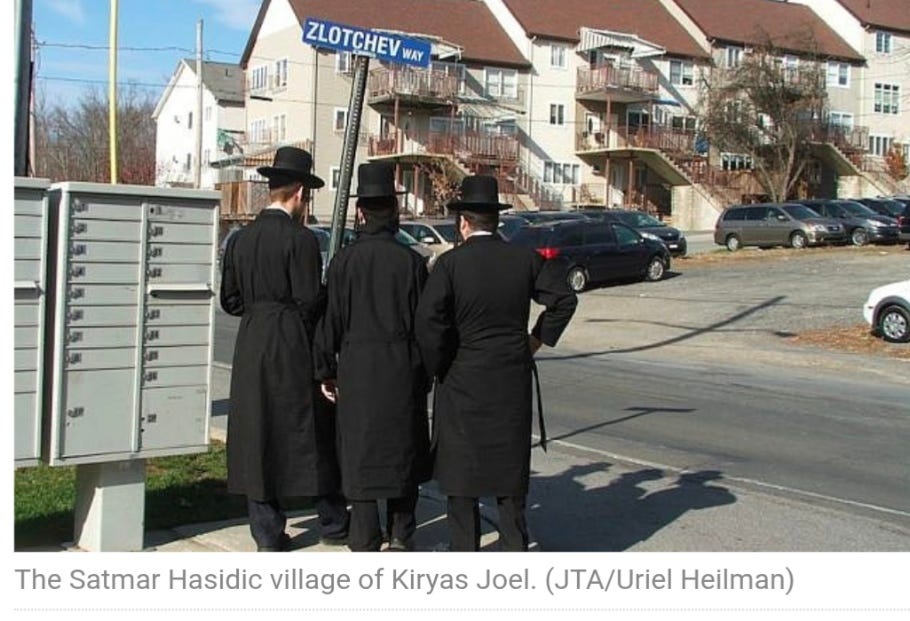
As Baltimore wrestles with the politics of zoning equity and cultural accommodation, it’s worth looking upriver, literally to Kiryas Joel, a village in Orange County, New York, that became the Town of Palm Tree in 2020. It’s home to over 20,000 Yiddish-speaking Hasidic Jews, mostly from the Satmar sect, and it’s a placKiryas Joele where zoning isn’t just about property, it’s about religious life, family structure, and cultural continuity.
🏘️ The Model
Founded in the 1970s, Kiryas Joel grew rapidly, fueled by high birth rates and migration from New York City. As the population expanded, so did tensions with neighboring Monroe over land use, infrastructure, and political control. In 2017, after years of legal battles and annexation disputes, voters approved the creation of a new town named Palm Tree. This allows the Hasidic community to govern its own zoning and municipal affairs.
🚶♂️ Cultural Accommodation vs. Public Friction
Residents of nearby towns often complained that:
- Streets were impassable on weekends due to religious observance and public gatherings
- Zoning variances allowed for dense housing and large expansions that clashed with suburban norms
- The community’s insularity created a sense of exclusion for non-Hasidic neighbors
But for Palm Tree residents, these practices weren’t provocations—they were expressions of faith and family. The ability to walk, gather, and build multi-generational homes was central to their way of life.
🧩 Lessons for Baltimore
Councilman Schleifer’s push for zoning flexibility in Northwest Baltimore echoes some of the dynamics seen in Kiryas Joel:
- A desire to accommodate religious and cultural practices through zoning
- Friction with citywide standards that emphasize uniformity
- Allegations, fair or not, that such accommodations privilege one group over others
The key question isn’t whether Jewish families from New York or New Jersey should be welcomed—they already are, and they contribute to the tax base and civic life. The question is: Can Baltimore create a zoning framework that respects cultural specificity without undermining legal equity?
⚖️ A Path Forward?
Cities like Baltimore don’t need to replicate Palm Tree’s municipal autonomy, but they can learn from its experience:
- Community-based zoning overlays could allow for tailored rules in culturally distinct neighborhoods
- Transparency and public engagement can help defuse perceptions of favoritism
- Legal clarity around terms like “uniqueness” can prevent discretionary enforcement
What does Scliefer have in mind?