

🏛️ Wired Maryland
Sunday Edition | Statehouse Intelligence & Leadership Profile
Sunday, November 1, 2026
🆓 ANNAPOLIS WIRE NOTES & MEDIA ROUNDUP
Quick reads, lateral moves, and verified news from around the Free State.
Stadium Authority Board Session This Week: The Maryland Stadium Authority (MSA) will convene its monthly Board of Directors meeting on Wednesday, November 4, at 2:00 PM at The Warehouse at Camden Yards ahead of upcoming eMMA facility and vendor maintenance reviews.
State Treasurer RFP Submissions Open: The State Treasurer’s Office (STO) continues accepting proposals under RFP# MD529-FY27-001 for Investment Advisor Services supporting state programs ahead of mid-month procurement evaluation cycles.
Employment Compliance Deadlines Approaching: Maryland employers and state vendors are updating internal policy protocols ahead of November state regulatory compliance windows covering workplace leave, minimum wage disclosures, and labor standards.
Public Service Commission Solar Tracking: Energy developers and grid contractors continue filing compliance documentation under PSC Orders 92692 and 92693, enforcing mandatory 100% financial bonding for solar decommissioning and non-wires grid optimization plans.
💡 Have an intelligence tip, contract filing, or statehouse move to report?
Direct email to barry@themarylandwire.com or reach Barry directly via text or phone at 570-447-4395 (text preferred for fastest response; voice calls returned as available).
Election Day is tomorrow: polls 7 to 8, same-day registration still available
Maryland’s general election is Tuesday, November 3 — polls open 7 a.m. to 8 p.m., and anyone in line by 8 p.m. can vote, per the State Board of Elections. Voters must cast ballots at their assigned polling place on Election Day, but same-day registration is available in person with proof of address. Mail-in ballots must be postmarked by November 3 or hand-delivered to a drop box or local board by 8 p.m. The races to watch: Baltimore’s Question I (the Baby Fund), the Ocean City mayor’s race between Matt James and Rick Meehan, and the statewide ballot questions.
Source: TANTV
Truth for Maryland’s $325,000 funder is named: the Progressive Prosperity Caucus
The Banner has identified who’s behind the “Vote Yes for Wes” but “no on Question 3” ads that have dogged the governor’s campaign in the closing days: the Progressive Prosperity Caucus, a controversial nonprofit whose donors it doesn’t have to disclose, gave $325,000 to the Truth for Maryland PAC, according to campaign finance reports filed Friday. Republican strategist Andrew Brightwell, who chairs Truth for Maryland, acknowledged the source of the money and called the group “proud of the progressive support we have received,” while the Moore campaign’s Carter Elliott IV called it “the same dark money group responsible for disinformation campaigns across the country.” Democratic officials in Wisconsin and Nebraska have said they suspect the caucus is a front for Republicans meddling in Democratic politics.
Source: Baltimore Banner
MDE proposes PFAS drinking-water limits: ~150 systems over, $150M in treatment, comments due Nov. 30
The Maryland Department of the Environment has proposed its own PFAS limits for public drinking water (Oct. 30 Maryland Register, proposed action 26-124-P, 53:22 Md. R. 1129), and the state’s own estimate says about 150 of roughly 950 water systems are above them — about 50 owned by local governments, 100 privately owned. MDE puts the capital cost at roughly $150 million (mainly federal grants) plus about $5 million a year in ongoing costs “transferred to ratepayers”; systems must comply by April 26, 2029, with initial monitoring done by April 2027. Maryland would adopt the 2024 federal rule even as EPA proposes rolling back four of six limits (proposals published May 20); Attorney General Anthony Brown filed comments opposing the rollback. No public hearing is scheduled; comments go to Chris Watling at MDE through November 30. One open question: MarylandFeed notes that WSSC Water alone budgets $297.86 million for PFAS treatment — double MDE’s statewide estimate — so the real price tag deserves a second look.
Source: MarylandFeed
Anthony Brown wins a court block on Medicaid work requirements for the medically frail
Attorney General Anthony G. Brown announced Friday that the U.S. District Court for the District of Massachusetts found the Trump administration’s Medicaid work requirements unlawful — a ruling Maryland’s lawsuit helped win. Brown joined a multistate coalition in June challenging an interim final rule that reinterpreted “medically frail” to make it harder for medically vulnerable people to be excused. The state had estimated that 150,000 Marylanders — 45 percent of adults covered through the ACA Medicaid expansion — could lose coverage under the rule, which also would have cost the state about $2 million in administrative burdens. The court issued a permanent injunction and gave the states a six-month stay of enforcement.
Source: MarylandFeed
Winter shutoff protection is on — and only one in four eligible customers is enrolled
Maryland’s winter shutoff protection for low-income utility customers started Sunday and runs through March 31 — and the Public Service Commission’s annual report says only 25,057 of the 97,640 customers certified for the Maryland Energy Assistance Program enrolled last heating season, a 26 percent participation rate. At BGE, the number of customers certified for energy assistance jumped from 12,018 to 57,579, while actual enrollment in the protection program rose only from 11,657 to 13,192. The program (COMAR 20.31.05) sets an equal monthly amount based on a year of usage, minus the household’s energy assistance grant. BGE resumed residential shutoffs in July after a six-month pause, reporting 606 residential shutoffs that month — all customers not classified as low-income.
Source: MarylandFeed
Via The Maryland Wire: Buy Local, They Said
Barry’s free Saturday piece runs the numbers on the state’s own buy-local promise: in 2020 the General Assembly passed House Bill 1488 setting a goal of 20 percent of state food purchases going to Maryland farms and watermen — but in fiscal 2024, out of $97.7 million in food spending, the state bought $238,920 from certified local farms and fish providers: 0.25 percent. The worst offender is the state’s biggest food buyer, the Department of Public Safety and Correctional Services: $39,012,084 on food, $7,055 from Maryland farms — 0.02 percent. And when the legislature passed a bill to fix the machinery, the governor vetoed it — then the legislature overrode him, 127 to 8 in the House, 43 to nothing in the Senate.
Source: The Maryland Wire
Via The Maryland Wire: Maryland’s Threatened Safety Net
Barry’s Saturday piece looks past the Maryland Health Connection’s open-enrollment kickoff to the administrative reckoning scheduled for January 1: an estimated 300,000 to 320,000 low-income Marylanders enrolled under ACA Medicaid expansion face an 80-hour-per-month work, education or volunteer requirement, paired with a shift from annual renewals to six-month redetermination cycles. His frame: the compliance burden doesn’t fall on government agencies — it falls on the state’s safety-net navigation entities, the nonprofit health networks, federally qualified health centers and community outreach organizations, who are being drafted as compliance auditors, activity verification centers and paperwork trackers. The estimated churn risk: more than 150,000 Marylanders.
Source: The Maryland Wire
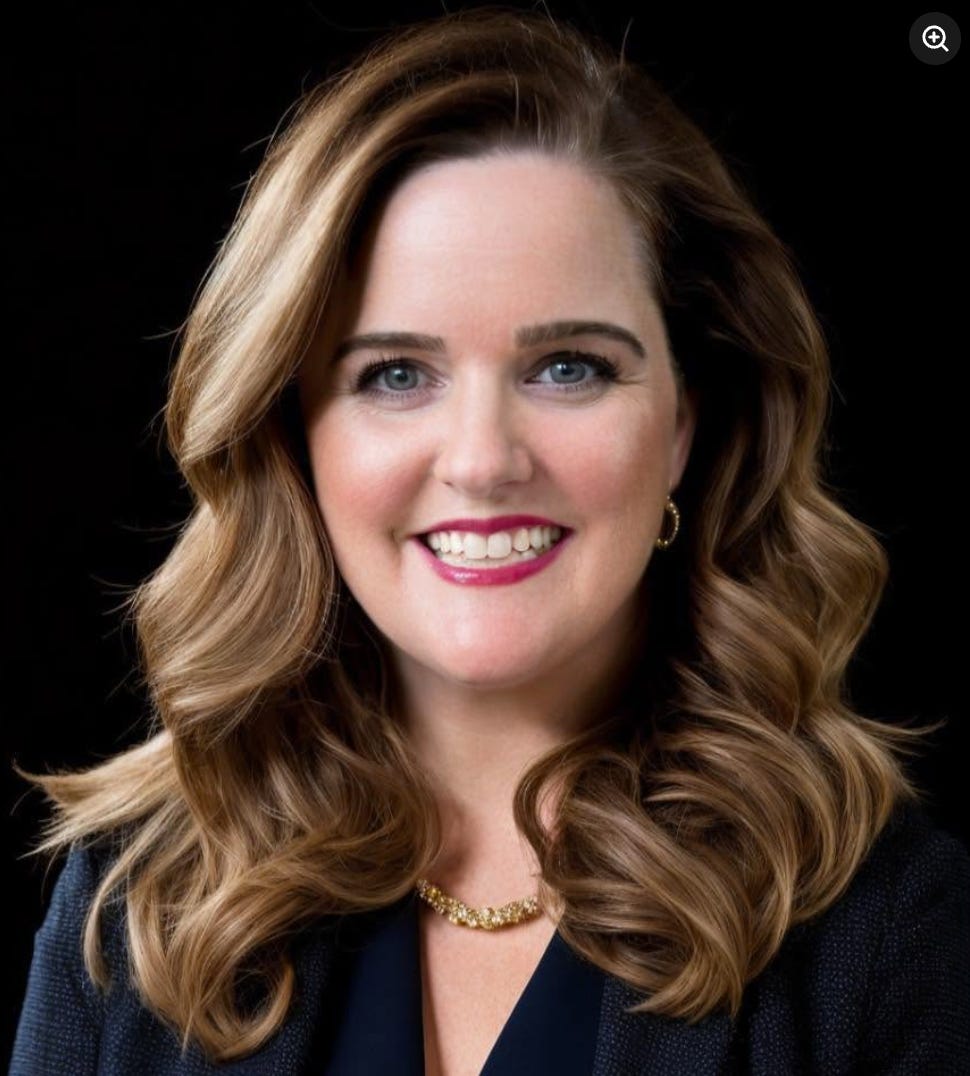
Woman of Distinction: Ariana Kelly
Executive Director, Maryland Commission for Women
From crafting landmark state policy to driving statewide advocacy for women and families, Ariana Kelly has spent over two decades working at the intersection of public service, legislative strategy, and gender equity.
A Legacy of Legislative Impact
Before stepping into her executive role with the state of Maryland, Kelly served for more than 13 years in the Maryland General Assembly—representing District 16 in Montgomery County first as a State Delegate (2011–2023) and later as a State Senator (2023–2024).
Throughout her legislative career, Kelly established herself as one of the state's foremost champions for healthcare, reproductive rights, and family economic security:
* Healthcare & Reproductive Equity: She sponsored over 100 successful pieces of legislation, including the landmark Abortion Care Access Act (2022) and the Contraceptive Equity Act (2016).
* Family & Paid Leave Reform: As the original author and decade-long champion of the Time to Care Act (2022), Kelly helped create Maryland's paid family and medical leave framework.
* Childcare & Working Families: She spearheaded critical efforts to expand child care tax credits and mandate insurance coverage for essential over-the-counter health needs.
Early Career & Advocacy Leadership
Kelly’s commitment to women's policy started long before her time in office. A graduate of the University of Wisconsin-Madison, she worked early in her career as a television producer for the PBS weekly news program To The Contrary. She went on to serve as the Executive Director of NARAL Pro-Choice Maryland and later as the National Campaign Director for MomsRising.org, leading national grassroots campaigns on paid leave, maternal health, and childcare access.
Leading the Maryland Commission for Women
In May 2024, Kelly was appointed by Governor Wes Moore to serve as the Executive Director of the Maryland Commission for Women. In this role, she leads the state advisory body tasked with evaluating policies, advancing legislative recommendations, and driving statewide initiatives to improve the lives of women and girls across Maryland.
Under her leadership, the Commission continues to tackle critical issues—focusing on gender equity in the state workforce, reproductive healthcare implementation, and expanded support systems for wo
rking mothers.