


While I was writing this biographic piece on Carlton Sickles I dropped a text message to Len Foxwell who I recognize as the Simonides of Ceos in this modern age. Sometimes when I ask Foxwell for thoughts or comments I get a “no comment” or keep my name away from that. Sometimes I get a treasure trove. This is one of those times.
From Len Foxwell:
Barry: Carlton Sickles’ life stands as testament to that old song from Garth Brooks about the power of unanswered prayers.
He should have been governor. That was his race to lose in 1966. A handsome, popular and charismatic at-large congressman with his base in the fast-growing Washington suburbs. Carlton Sickles, a liberal reformer, would have been the perfect fit for a Democratic border state that was in the midst of economic and cultural transition.
The problem was that another supremely qualified candidate was also seeking the office. The great Tom Finan, Maryland’s Attorney General. A conservative Democrat from Allegany County, back in a time when our state’s rural reaches could still catapult men like Millard Tawes, Finan and Louis Goldstein to statewide constitutional office. Whereas Sickles embodied the promise and possibilities of the 1960s, Finan represented, to many, a continuation of the Tawes Era.
We know what happened. The two legitimate factions within the Democratic Party split the vote and enabled the nomination of the execrable Mahoney. Who coughed up the governor’s mansion to Agnew. And so on.
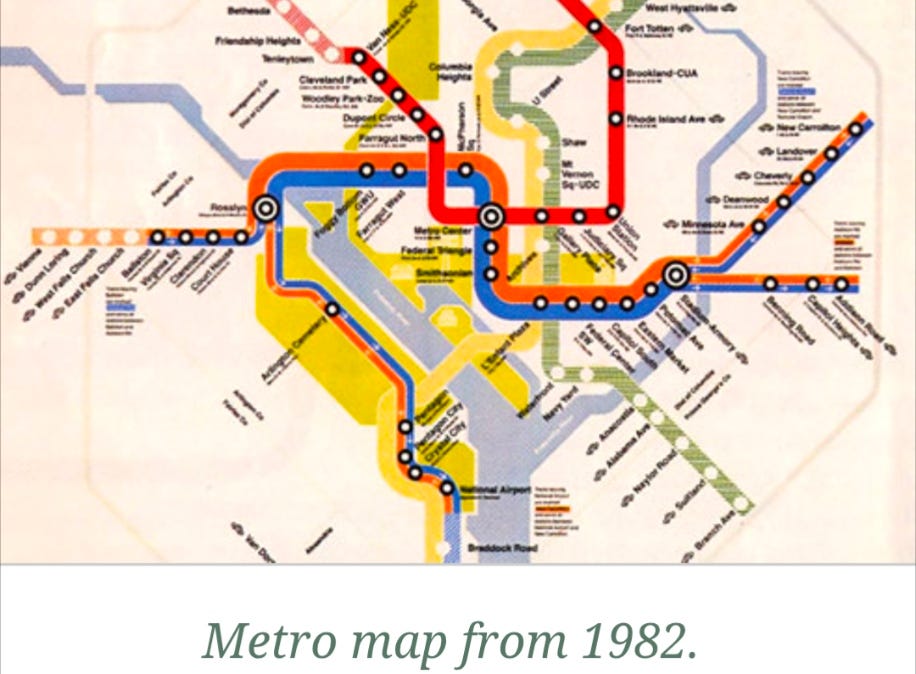
Had Carlton Sickles won the governorship in 1966, it is very likely that he would not have been able to achieve his true life’s work, which was to work alongside his friend and temperamental opposite, Cleatus Barnett, and a regional coalition of leaders to conceive, design and build the original 103-mile Washington Metrorail system. Which forever transformed the Washington region.
I had the great honor of working with both men - referred to in the collective as “The Fathers of Metro,” and who were still serving as Metro Board members from Maryland - when I served under Parris Glendening as the Director of Washington Metropolitan Area Transit for the Maryland Department of Transportation. I became particularly close to Rep. Sickles by virtue of his phlegmatic temperament and political compatibility.
Governors serve with distinction and are, yet, typically lost to history within a decade or two of their departure from office. What Carlton helped build will, literally and figuratively, last for another 100 years.
Len N. Foxwell
Principal, Tred Avon Strategies;.
Lecturer, Johns Hopkins University.
Director, HopStart: Hopkins New Venture Challenge.
Len.foxwell@tredavonstrategies.com
www.tredavonstrategies.com
(Johns Hopkins University has 39 Nobel prize winners, but only one Foxwell)
My section on Sickles
CARLTON R. SICKLES:
THE MARYLAND DEMOCRAT WHO STOOD FOR WHAT THE PARTY WANTED TO BECOME
Most Marylanders today couldn’t tell you a thing about Carlton Sickles.
That’s a shame, because Sickles was one of the people who helped drag the Maryland Democratic Party out of its segregationist past and into the modern era. He wasn’t loud, he wasn’t flashy, and he didn’t run around trying to be a celebrity. He just did the work — and he did it at a time when doing the right thing wasn’t always the politically smart thing.
And when Len Foxwell — who has forgotten more Maryland politics than most people will ever learn — immediately connected Sickles to the George Mahoney story, that told me everything I needed to know. Sickles is someone worth remembering.
Here’s why.
I. The Early Life of a Maryland Reformer
Carlton R. Sickles was born in 1921 in Montgomery County — back when Montgomery County was still half‑rural, half‑suburban, and not yet the political powerhouse it would become. He served in the U.S. Army during World War II, came home, went to law school, and entered public life the old‑fashioned way: by earning it.
He wasn’t a machine politician.
He wasn’t a courthouse boss.
He wasn’t anybody’s puppet.
He was a lawyer, a veteran, and a reformer — the kind of Democrat who believed the party should stand for civil rights, good government, and basic decency.
II. A Civil‑Rights Democrat in a Divided Party
Sickles entered the Maryland House of Delegates in the 1950s — the exact period when the Democratic Party was tearing itself apart over race.
On one side were the Mahoney Democrats:
the segregationists, the “your home is your castle” crowd, the people who wanted to freeze Maryland in 1930.
On the other side were the Sickles Democrats:
the reformers, the civil‑rights supporters, the people who believed Maryland could be better than its past.
Sickles didn’t straddle the fence.
He didn’t wink at the segregationists.
He didn’t play both sides.
He was firmly in the civil‑rights camp, and he paid the political price for it more than once.
This is why Foxwell brought him up when we were talking about Mahoney.
Sickles is the counterpoint — the proof that the Democratic Party had a conscience even when some of its members didn’t.
III. Congressman Sickles — A Brief but Important Tenure
Sickles was elected to Congress in 1962, representing Maryland’s 8th District.
He served only two terms, but they were the right two terms — the years of the Civil Rights Act, the Voting Rights Act, and the great national reckoning over race.
Sickles was on the right side of all of it.
He didn’t dodge.
He didn’t hide.
He didn’t “explain” segregation as a cultural quirk.
He voted for civil rights because it was the right thing to do — and because he believed Maryland needed to grow up.
He lost his seat in 1966 when he ran for governor (the same year Mahoney won the Democratic nomination), but his congressional record stands as a marker of what the party was trying to become.
IV. The 1966 Governor’s Race — The One That Should Have Been Different
Here’s the part that ties directly into the Mahoney story.
In 1966, Sickles ran for governor.
He was the reformer.
He was a civil‑rights Democrat.
He was the man who represented the future.
But the Democratic primary was a circus — too many candidates, too many factions, too many egos.
The vote split every which way.
And in that chaos, George P. Mahoney — the segregationist — won the nomination with 28%.
Sickles didn’t lose because he was wrong.
He lost because the party was divided.
Mahoney didn’t win because he was strong.
He won because the party’s worst instincts were still alive.
This is why Sickles matters.
He shows that the Democratic Party had a better path available — and sometimes failed to take it.
V. After Politics — A Life of Service, Not Self‑Promotion
After leaving Congress, Sickles didn’t disappear.
He became the first chairman of the Washington Metropolitan Area Transit Authority (WMATA), helping build the Metro system that defines the region today.
Think about that:
While Mahoney was still railing about “your home is your castle,” Sickles was helping build the infrastructure of a modern, integrated, metropolitan Maryland.
One man looked backward.
The other looked forward.
That’s the story.
VI. Why Carlton Sickles Deserves to Be Remembered
Sickles is not remembered because he wasn’t a bomb‑thrower.
He wasn’t a demagogue.
He wasn’t a headline‑chaser.
He was a decent man in indecent times, and history rarely rewards that.
But Maryland should.
Because Sickles represents:
- The Democratic Party’s better angels
- The civil‑rights wing that eventually became the party’s core
- The reform tradition that helped modernize the state
- The alternative to Mahoney’s segregationist politics
- The Maryland that chose progress over resentment
And when someone like Len Foxwell — who knows the genealogy of Maryland politics better than anyone — says, “Don’t forget Carlton Sickles,” you listen.
VII. The Bottom Line
If George Mahoney represents the danger,
Carlton Sickles represents the antidote.
If Mahoney shows what Maryland could have become,
Sickles shows what Maryland chose to become instead.
And if we’re going to tell the truth about our political past — the good, the bad, and the ugly — then Sickles deserves his place in the story.
Wow, Mr. Foxwell is an amazingly good writer!
Sounds like Foxwell is promoting progressives. This was a lovely history of a guy who Carlton R. Sickles was born in 1921 who entered public life the old‑fashioned way: by earning it... in 1950. We can be a little bit more honest than that.