

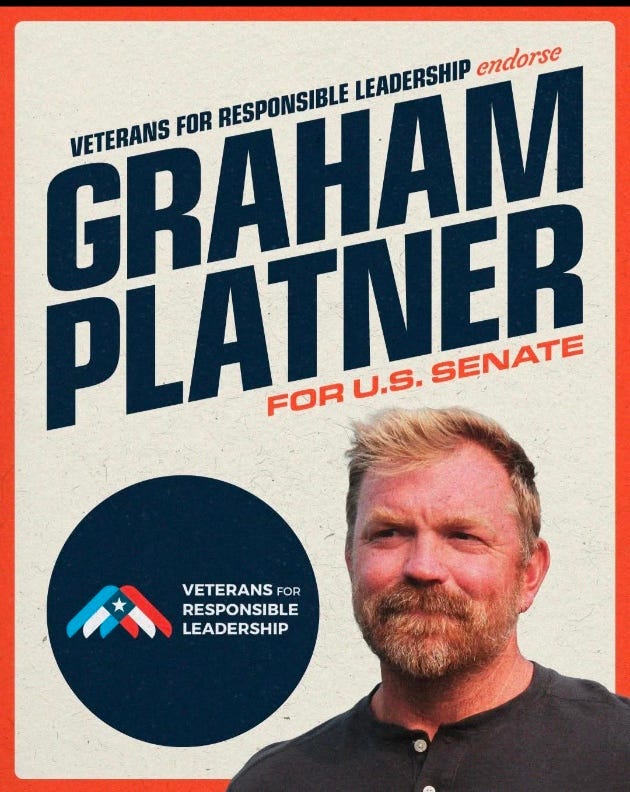
Why Graham Platner Resonates With Rural Young Men — And What It Reveals About the Democratic Party’s Cultural Blind Spot
By Barry O’Connell
Everybody’s Maryland Politics / Maryland Wire
I. The Platner Phenomenon Isn’t About Policy — It’s About Identity
If you want to understand why Graham Platner has traction with white men ages 18 to 29 in rural states like Maine, you have to stop thinking in terms of ideology and start thinking in terms of cultural identity.
Platner doesn’t resonate because of his platform.
He resonates because he breaks the stereotype of what a Democrat looks like in 2026.
To a lot of rural young men, the Democratic Party has become the party of:
- college‑educated professionals
- urban cultural norms
- gender‑neutral language
- elite institutions
- moral lectures
- “don’t say that” politics
Platner is the opposite of that.
He’s a Marine. He’s physically tough. He’s not polished. He doesn’t speak in the language of elite liberalism. He looks like someone who has lived a hard life, not someone who has workshopped his personality with consultants.
Whether people like him or not, he sends a signal that is almost extinct in the modern Democratic Party:
> “You can be a man — a real, physical, imperfect, working‑class man — and still be a Democrat.”
That’s the entire ballgame for rural young men.


II. The Democratic Party’s Cultural Weakness With Men
The Platner resonance exposes something Democrats don’t like to talk about:
The party has a masculinity problem.
Not because Democrats are weak.
Not because Republicans are strong.
But because Democrats have allowed themselves to be perceived as:
- anti‑male
- anti‑working‑class
- anti‑religious
- anti‑white
- anti‑masculinity
Again — perception, not fact.
But perception is what drives identity.
Young rural men feel culturally criticized by the Democratic Party.
They feel talked down to.
They feel blamed for everything wrong in America.
They feel like the party doesn’t like them, doesn’t understand them, and doesn’t want them.
Platner is one of the few Democrats who doesn’t trip that wire.
That’s why he matters.
III. The Tattoo Controversy and the Jewish Response
Platner’s tattoo controversy hits older Jewish voters — especially in the DC/Maryland corridor — in a visceral way.
The Totenkopf is not “just a skull” to them.
It is a symbol tied to the SS and the Holocaust.
Their emotional reaction is real.
It is rooted in history, trauma, and cultural memory.
But that reaction does not erase the other half of the story:
Young rural men don’t read the tattoo that way at all.
They see it as a military‑adjacent, tough‑guy symbol — not a political one.
This generational divide is part of the larger cultural divide.
IV. What Platner Reveals About 2028 — Without Predicting Anything
I’m not predicting outcomes.
I’m not telling anyone who will win.
But I can say this as cultural analysis:
If Democrats continue to bleed young rural men, they will continue to bleed entire regions of the country.
Not because of policy.
Because of identity.
Platner shows that there is still a lane — a narrow one — for Democrats who can speak to:
- toughness
- service
- physicality
- working‑class identity
- non‑elite culture
That lane is small, but it exists.
And that brings us to Wes Moore.
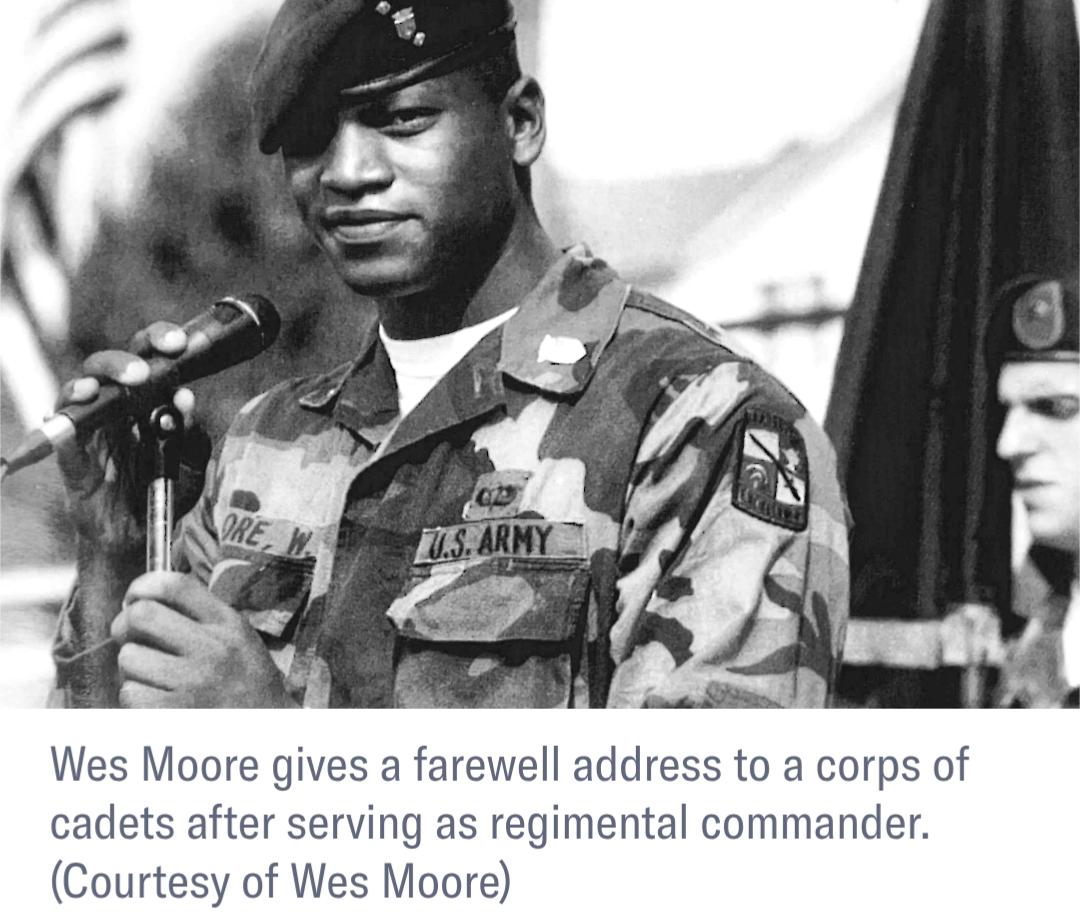
V. Why Wes Moore Fits the Moment — Culturally, And Politically
Again — this is cultural analysis, not campaign advice.
Wes Moore is one of the few Democrats in America who naturally projects:
- physical strength
- military credibility
- discipline
- toughness
- authenticity
- generational energy
Running with Naval Academy midshipmen.
Training with the Johns Hopkins football team.
Cranking out push‑ups like a man half his age.
Serving in Afghanistan.
Living the life, not performing it.
This matters because Democrats have not had a “tough guy” candidate in decades.
John Kerry had medals, but he was perceived — unfairly — as an elitist.
Platner has controversy, but he is perceived — fairly or unfairly — as tough.
Wes Moore is one of the only Democrats who can bridge that gap:
- respected by older voters
- admired by younger voters
- credible to veterans
- relatable to working‑class men
- inspiring to urban progressives
He is the rare Democrat who can walk into a rural gym, a Baltimore rec center, a VFW hall, and a college campus and not feel out of place.
That is not strategy.
That is sociology.
VI. The Takeaway
Platner’s resonance with rural young men is not about him.
It’s about what he represents:
A Democratic Party that has lost touch with a huge portion of the country — men who want to feel respected, not lectured.
Wes Moore represents the opposite trend:
A Democrat who embodies strength, service, and physical presence — the traits young men still admire.
If Democrats want to understand the cultural landscape heading into 2028, they need to understand this:
> Masculinity is not going away as a political identity.
> The only question is whether Democrats will ignore it or learn from it.