

Who Really Controls Hospital Money in Maryland
Rate-Setting, HSCRC, and the Quiet Center of Power (Part Two)
If Part One explained who profits from the Maryland hospital lobby, Part Two explains how power is actually exercised.
Because in Maryland, hospital money does not flow from markets alone. It flows through a regulator most patients have never heard of, few legislators fully understand, and hospitals work relentlessly to shape.
That regulator is the Health Services Cost Review Commission — HSCRC.
If Annapolis has an invisible government, HSCRC is its central bank.
Maryland’s singular system
Maryland is the only state in the country where hospital rates are set by a state commission rather than negotiated entirely through private insurers or federal programs.
That makes Maryland exceptional — and exceptionally vulnerable to capture.
HSCRC determines:
How much hospitals can charge for inpatient and outpatient services
How global budgets are structured and adjusted
How revenue growth is constrained or expanded
How risk is shifted between hospitals, insurers, and the public
Under the federal waiver and now the AHEAD framework, Maryland hospitals trade freedom for predictability. They accept revenue caps in exchange for stable income streams insulated from volume swings.
That bargain is sold publicly as cost control and system stability.
But stability for whom is the real question.
Why hospitals care more about HSCRC than the legislature
Hospitals lobby Annapolis because Annapolis writes the statutes. But hospitals live and die by HSCRC decisions.
A small regulatory adjustment can:
Shift tens of millions of dollars between systems
Determine whether a marginal service line survives
Reward or punish consolidation strategies
Quietly subsidize failure or lock in dominance
That is why hospital lobbyists spend so much effort keeping HSCRC debates technical, incremental, and largely invisible.
Legislators may fight over a bill for 90 days. HSCRC decisions shape hospital behavior for years.
Global budgets: shield and sword
Global budgets are the cornerstone of Maryland’s system.
In theory, they:
Incentivize hospitals to keep people healthy
Discourage unnecessary admissions encourage efficiency
Provide predictable funding for essential services
In practice, global budgets also:
Lock in historical advantages for large systems
Make it easier to absorb competitors through acquisition
Allow service reductions without immediate revenue loss
Reward administrative sophistication over community need
Hospitals argue that any disruption to global budgets threatens access and stability. That argument has historically ended many legislative conversations.
Under the current House, it is increasingly being met with a follow-up: Access for whom, and stability at what cost?
The illusion of neutrality
HSCRC is often described as an independent, technocratic referee.
Formally, that is true.
Substantively, the commission operates inside a dense web of influence:
Data provided primarily by hospitals themselves
Technical models that favor large, well-staffed systems
Constant engagement from the Maryland Hospital Association and aligned stakeholders
A political environment where “don’t break the waiver” has functioned as a veto
This does not require corruption. It requires alignment.
When regulators, hospitals, and senior policymakers all prioritize system continuity, reform becomes something to manage, not pursue.
That alignment is now under strain.
The legislature’s growing discomfort
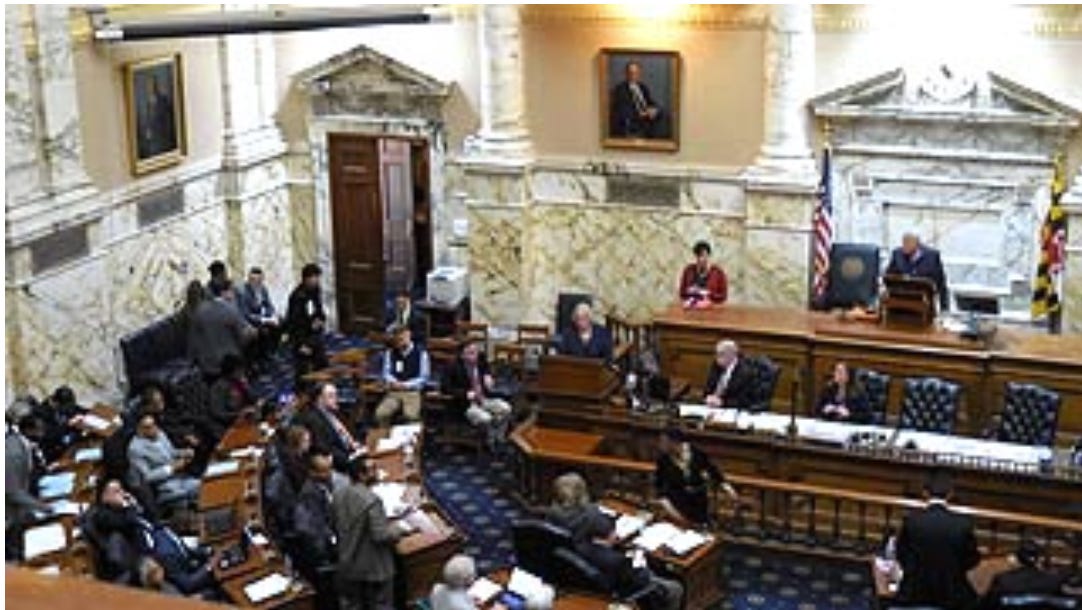
Younger legislators and new committee leadership are beginning to treat HSCRC less as a black box and more as a public institution exercising immense power with limited transparency.
Expect pressure in the coming sessions for:
Clearer explanations of how rate decisions are made
Public reporting on cross-subsidies and uncompensated care
Tighter legislative guardrails on consolidation and closures
Explicit equity and access metrics baked into rate-setting
Hospitals will frame these moves as dangerous politicization.
Reformers will frame them as overdue accountability.
That tension will define the next phase of Maryland healthcare politics.
Rural hospitals and the politics of mercy
HSCRC’s role becomes most visible when rural hospitals teeter.
Special adjustments, keep-alive subsidies, and targeted relief packages are routinely justified as protecting access. Often, they do. Sometimes, they delay the inevitable.
The political danger is not compassion. It is complacency.
Legislators are increasingly asking whether rate-setting is being used to:
Preserve essential care, or Mask long-term abandonment while protecting system balance sheets
That question is uncomfortable — which is exactly why it is now being asked.
Who actually has leverage
So assume a conflict between:
A hospital system
HSCRC staff and modeling
Legislative leadership demanding change
Who wins?
Historically, hospitals have prevailed by aligning HSCRC caution with legislative risk aversion. That triangle protected the system.
As House leadership becomes more cohesive around access, labor, and equity, that triangle loosens.
Hospitals still have enormous leverage. But it is no longer automatic.
Why lobbyists fear sunlight here most
Lobbyists thrive where complexity discourages scrutiny.
Rate-setting is complex by design. It rewards insiders fluent in actuarial language, waiver compliance, and regulatory nuance.
If legislative committees begin pulling HSCRC decisions into public hearings, that complexity becomes a liability rather than a shield.
That is why the rate-setting fight is the most consequential front in the hospital lobby’s future.
The Bottom Line
HSCRC does not merely regulate hospitals. It structures their world.
For decades, that structure insulated hospitals from the kind of political volatility seen in other states. It also insulated them from accountability that many legislators now believe is overdue.
The question is no longer whether Maryland’s system will change.
The question is whether it will change quietly, inside regulatory rooms, or publicly, under legislative scrutiny.
Next in the series:
Rural Hospitals, Consolidation, and “Last-Bed” Politics: Who Decides When a Community Loses Its Hospital?
That is where rate-setting meets real lives — and where the hospital lobby’s next test awaits.