

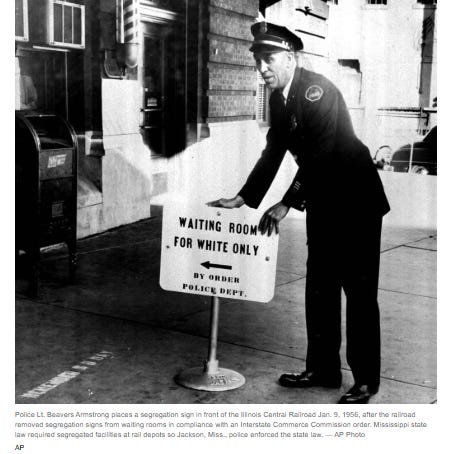
When “Whites Only” Didn’t Mean Everyone Who Looked White
In the United States up through the 1940s, many homes were sold with racial covenants written directly into the deeds. Most people assume these covenants were aimed only at keeping Black families out of certain neighborhoods. But the reality was broader, and in some ways more insidious.
A friend once told me about buying his home in a new development. He knew the men who built the houses, and they confided that they weren’t supposed to sell to him because he was Armenian. They sold it anyway, because they knew him personally. That story has always stuck with me.
Today, Armenians, Turks, and most Eastern Europeans are considered “white.” But in the 1940s, they were not. The sign that said “Whites Only” did not mean Catholics, Jews, Italians, Poles, Armenians, or Greeks. It meant primarily White Anglo-Saxon Protestants (WASPs) — the narrow cultural elite who defined themselves as the “true” white Americans.

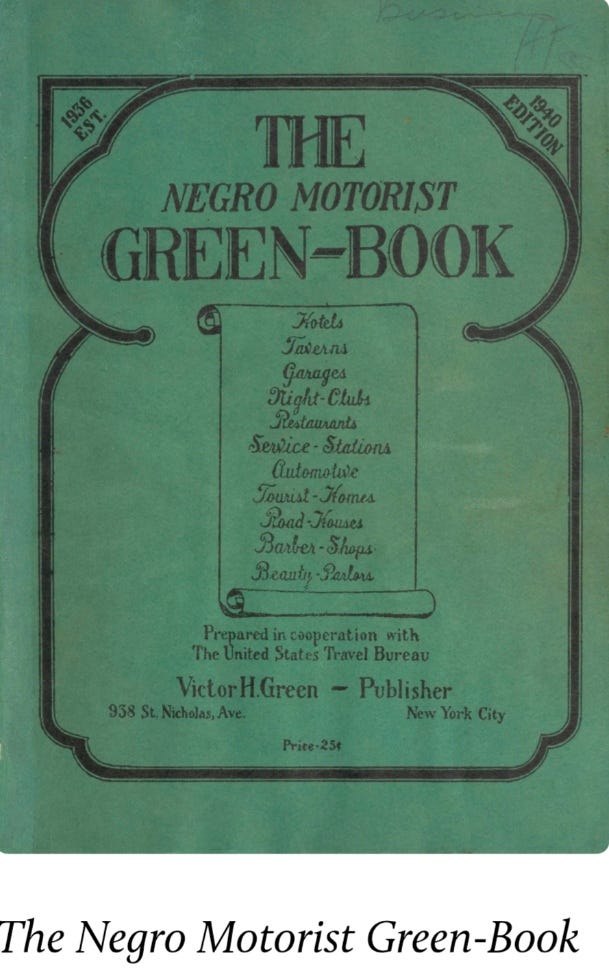
The Narrow Definition of Whiteness
- WASPs were Protestants of English or Northern European descent.
- They excluded Catholics, Jews, and many Southern and Eastern Europeans.
- Of course, African Americans, Asian Americans, and Native Americans were categorically barred.
- In practice, “whites only” was shorthand for preserving WASP dominance, not a broad census category.
The Irony of History
Over time, groups once excluded — Italians, Poles, Armenians, Jews — were gradually absorbed into the mainstream definition of “white.” The boundaries of whiteness shifted, proving that race is not a fixed biological reality but a social construct designed to protect privilege.
And here’s the irony: descendants of those once excluded sometimes perpetuate racism today, forgetting that their own families were once outside the circle of “whites only.”
Why This Matters Now
This history is not just a curiosity. It’s a reminder that exclusion has always been about maintaining power, not about inherent differences. It challenges us to look at how we define belonging today — and whether we are repeating the mistakes of the past by drawing new lines of division.
Call to Action: Beyond Tolerance
Tolerance is not enough. Tolerance says, “I’ll put up with you.” Love says, “You are my neighbor, and I will embrace you.”
If racial covenants taught us anything, it’s that the boundaries of belonging are fragile and often arbitrary. We must go beyond tolerance and commit ourselves to loving our neighbors — all of them — without reservation, without condition, and without exception.
As someone who was stationed in Mississippi as a member of the US Air Force in 1953, I definitely agree with the thrust of this opinion piece. The people in command off the base demanded rigid segregation based on the color of one's skin and leaving the base meant traveling only with a companion or companions whose skin color resembled yours if you knew what was good for you. I remember a couple of my friends being sad because they could not go into town together. Since the locals seemed to be still, in their own minds, fighting the Civil War, we were also defined as either Yankees or Rebels. (Of course, that only became obvious when you started talking.)
When I started living in Maryland as a civilian. I noticed that some of that Mississippi attitude was also here in the law and customs. So I immediately joined the National Association for the Advancement of Colored People to join in the battle to overturn and overcome those laws and customs.
The part of of article with which I disagree concerned the mention of "whites," but it's no big deal. The only white-skinned people of whom I'm aware are albinos. However, there are a lot of "pinks", as if it matters, As I see it, whatever our skin color, we're all members of the human race and deserving of equal respect and equal treatment under the law.