

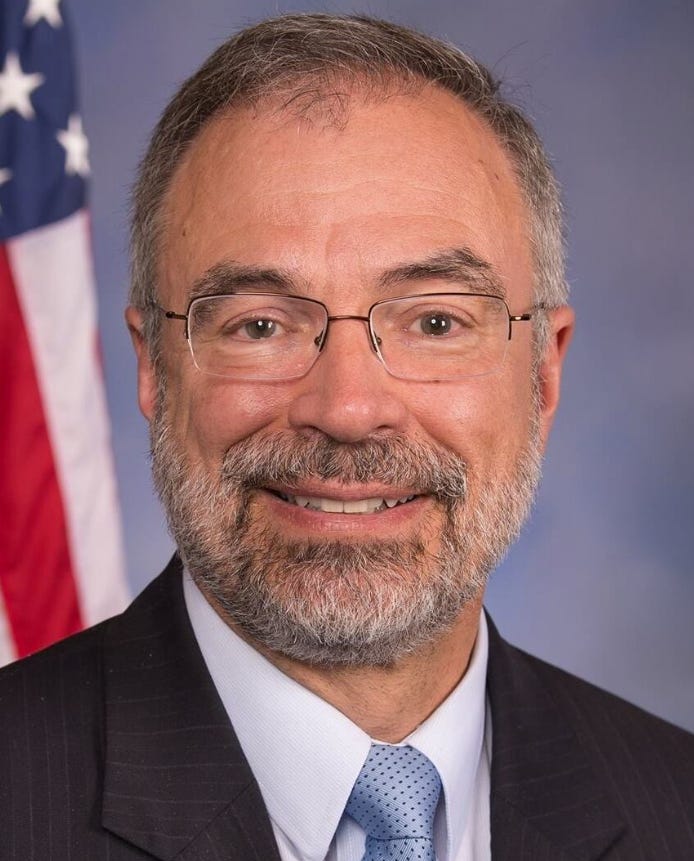
THE ANDY HARRIS QUESTION:
Who Is the Man Behind Maryland’s Most Familiar Unknown Name?
Most Marylanders know the name Andy Harris the way they know the name of a distant cousin: vaguely, peripherally, and with a sense that they should probably know more. He’s been in Congress for fifteen years. He’s the state’s lone Republican in Washington. He chairs the House Freedom Caucus. His name appears in headlines, fundraising emails, and cable‑news chyrons. And yet, for many Marylanders, the question persists:
Who is Andy Harris?
To understand him, you have to start far from the Eastern Shore — in post‑war immigrant neighborhoods, in the operating rooms of Johns Hopkins, and in the Navy Medical Corps during Desert Storm — long before he became the most durable conservative figure in Maryland politics.
FROM BROOKLYN TO BALTIMORE: THE IMMIGRANT SON WHO BECAME A DOCTOR
Andy Harris was born in New York City in 1957, the son of Eastern European immigrants who fled the devastation of World War II. His father, Zoltán, was a Hungarian anesthesiologist; his mother, Irene, was Polish. Harris grew up in Queens, attended the elite Regis High School in Manhattan, and followed his father’s path into medicine.
He arrived at Johns Hopkins University in the late 1970s, earning a BS in biology, an MD, and later an MHS in health policy and management. Hopkins would shape him — not just professionally, but politically. He lived in a one‑room apartment, worked nights in the blood bank, and built the identity he still leans on today: Andy Harris, M.D., the physician‑legislator.
For nearly three decades, he practiced anesthesiology at Hopkins and later at hospitals on the Eastern Shore. His peers repeatedly named him a “Top Doc” in Baltimore Magazine.
THE NAVY DOCTOR
Harris’s military service is one of the most consistent pillars of his public biography. He joined the Navy Reserve Medical Corps during the Reagan era, eventually commanding the Johns Hopkins Naval Reserve Medical Unit. His unit was activated during Operation Desert Shield and Desert Storm, treating active‑duty personnel, veterans, and returning POWs at Bethesda Naval Hospital.
He served from 1988 to 2005, reaching the rank of Commander (O‑5).
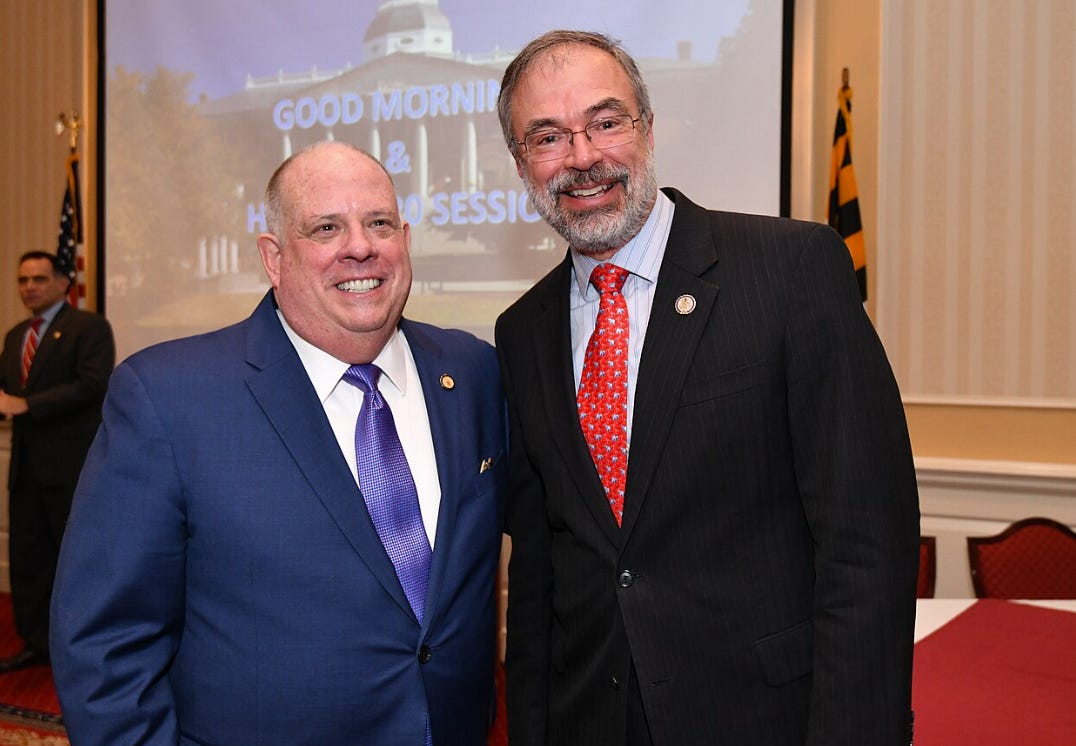
THE POLITICIAN: A REBEL FROM THE START
Harris entered politics in 1998, running for the Maryland Senate and defeating incumbent Vernon Boozer in a primary upset that foreshadowed the rest of his career: anti‑establishment, ideologically driven, and willing to challenge his own party.
He represented Baltimore and Harford County in the Senate for twelve years, serving on health committees, the alcoholic beverages subcommittee, and as Minority Whip.
In 2010, he won the 1st Congressional District seat — a district he did not always live in, a fact that periodically surfaces in Maryland political chatter. His home base has shifted between Baltimore County and the Eastern Shore over the years, fueling criticism that he is more of a Baltimore‑area conservative than a Shore native.
THE PERSONAL STORY: FAMILY, LOSS, AND REINVENTION
Harris married his first wife, Sylvia “Cookie” Harris, in 1981. They had five children together. Cookie, a well‑known conservative activist, died in 2014. Harris remarried in 2017 to Nicole Beus, a former Capitol Hill staffer.
The congressman’s personal life has occasionally drawn attention — particularly the remarriage, the age gap, and questions about residency — but he rarely discusses it publicly. His political identity is built around medicine, military service, and ideology, not biography.
THE LEGISLATOR: LOW OUTPUT, HIGH INFLUENCE
Here is where the Andy Harris paradox becomes clearest.
On paper, Harris is one of the least prolific bill authors in Congress. GovTrack’s analysis shows he introduced only two bills in the last Congress, with no bipartisan cosponsors, no Senate companions, and no bills passed. His legislative productivity is consistently near the bottom of the House.
But that’s not where his power lies.
Harris is a power broker, not a bill writer.
He chairs the House Freedom Caucus, the ideological engine of the modern GOP. He sits on the Appropriations Committee, chairing the Agriculture Subcommittee, where he shapes funding for food safety, rural development, and the FDA.
He is a reliable vote for:
- Abortion restrictions
- Immigration enforcement
- Reduced federal regulation
- Culture‑war legislation
And he is a vocal opponent of:
- Offshore wind development in Maryland
- EPA actions at Sparrows Point
- Short‑term spending deals
- Most Democratic priorities
His influence comes from ideological leverage, not legislative craftsmanship.
THE MAN MARYLANDERS KNOW — AND DON’T KNOW
Andy Harris is, in many ways, the most familiar unknown figure in Maryland politics. He has represented the state longer than most Marylanders have been voting. He is the only Republican in the delegation. He is a doctor, a veteran, a Freedom Caucus chair, and a fixture of conservative politics.
And yet, because he rarely appears in statewide media, rarely campaigns outside the Shore, and rarely sponsors major legislation, he remains a political figure people recognize without truly knowing.
He is a man shaped by immigrant parents, elite medical training, military service, and ideological conviction — a doctor who became a legislator, a legislator who became a faction leader, and a faction leader who became a symbol of Maryland’s red‑blue divide.
Most Marylanders know his name.
Very few know his story.
And almost no one agrees on what he is.
Andy Harris uses veterans for photo ops and then votes against veteran's benefits.
Booooooooooooooooooooooooooooooooo