

The Car, the Cop, and the Line You Don’t Cross: Maryland’s Quietest Power Structure
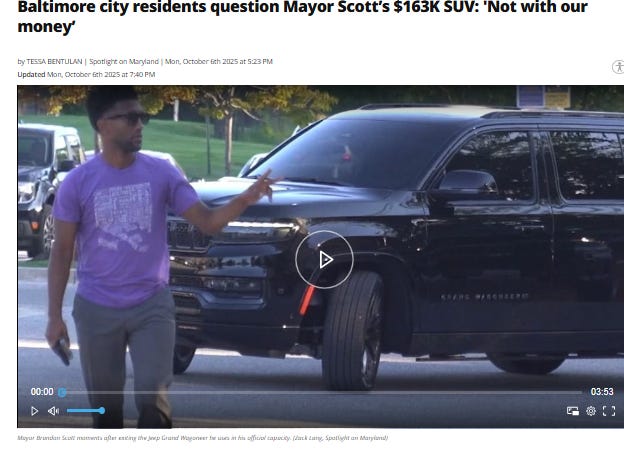
In Maryland politics, the most coveted accessory isn’t a title, a corner office, or even a plum committee assignment. It’s the black SUV idling outside the building with a sworn Maryland State Police officer behind the wheel. That’s the real status symbol — the one that says you’ve reached the rarefied air of the state’s constitutional officers.
But the SUV comes with something else:
a cop who does not work for you.
A cop who answers to the law, the Maryland State Police chain of command, and the union — not to your schedule, your impatience, or your political ambitions.
And Annapolis learned that lesson the hard way.
🚓 Who Actually Gets the Car and the Cop?
Maryland hands out executive‑protection drivers sparingly — almost grudgingly. Only four statewide officials qualify:
- Governor
- Attorney General
- Comptroller
- State Treasurer
These are the only people with sworn MSP drivers and state‑owned SUVs. Everyone else — no matter how powerful, loud, or self‑important — drives themselves.
Who does not get a driver?
- Speaker of the House
- President of the Senate
- Cabinet secretaries
- Agency heads
- Legislators
- Judges
- Anyone else with a business card
The Speaker and Senate President do receive State House security during session, but that’s building protection — not a chauffeured lifestyle.
If they want a sandwich, they’re in the drive‑thru like the rest of us.
🛡️ The One Time Someone Tested the Limits
Years ago, a previous Maryland Attorney General — respected, accomplished, and well‑liked — had a moment of impatience. Running late, he urged his MSP driver to speed. The trooper refused. The AG insisted. The trooper held the line.
The AG told him to pull over.
He took the wheel himself.
The trooper filed a complaint through his union.
The story hit the papers.
It didn’t become a scandal, but it became a lesson.
And when that same AG later ran for governor, the incident resurfaced as one of the defining narratives of the campaign — not because it was damning, but because it was memorable. It was the kind of story that sticks: a powerful official pushing a cop, and the cop pushing back.
No one was harmed. No laws were broken. But the message was unmistakable:
You don’t tell a Maryland State Police officer to break the rules.
Not even if you’re the Attorney General.
Especially not if you’re running for governor.
🔥 The Unspoken Rule Since Then
After that episode, every constitutional officer — and every staffer who’s ever whispered advice into their ear — knows the truth:
You do not screw with the cops.
You don’t tell them to speed.
You don’t tell them to run lights.
You don’t tell them to “just go, nobody will notice.”
Because someone will notice.
And nobody wants to read about themselves in:
- The Washington Post
- The Baltimore Sun
- The Capital Gazette
- Maryland Matters
- Or worse — in a Maryland Wire headline written with a raised eyebrow and a smirk.
One incident was enough to set the norm for a generation.
🏙️ Counties: Where the Rules Get Interesting
Maryland’s counties have their own ecosystems of perks and protection.
Prince George’s County
Two officials get cars and sworn drivers:
- County Executive
- State’s Attorney
Everyone else — including the Council Chair — drives themselves.
Baltimore City
- Mayor — full BPD executive protection
- State’s Attorney — vehicle and sworn driver
Baltimore’s threat environment makes this standard.
Montgomery, Baltimore, Anne Arundel, Harford, Howard
- County Executives often get a vehicle
- Drivers vary
- Sworn police drivers are rare
- State’s Attorneys may receive protection depending on threat assessments
But none of these counties hand out police drivers like party favors.
All of it is a privilege. Public service is a privilege.