

When Ambition Becomes Betrayal
Edward Burroughs built his political brand by accusing Prince George’s County leaders of corruption. Nearly a decade later, the questions are about his own power, his own alliances and his own handling of public money.
By The Maryland Wire Editorial Board
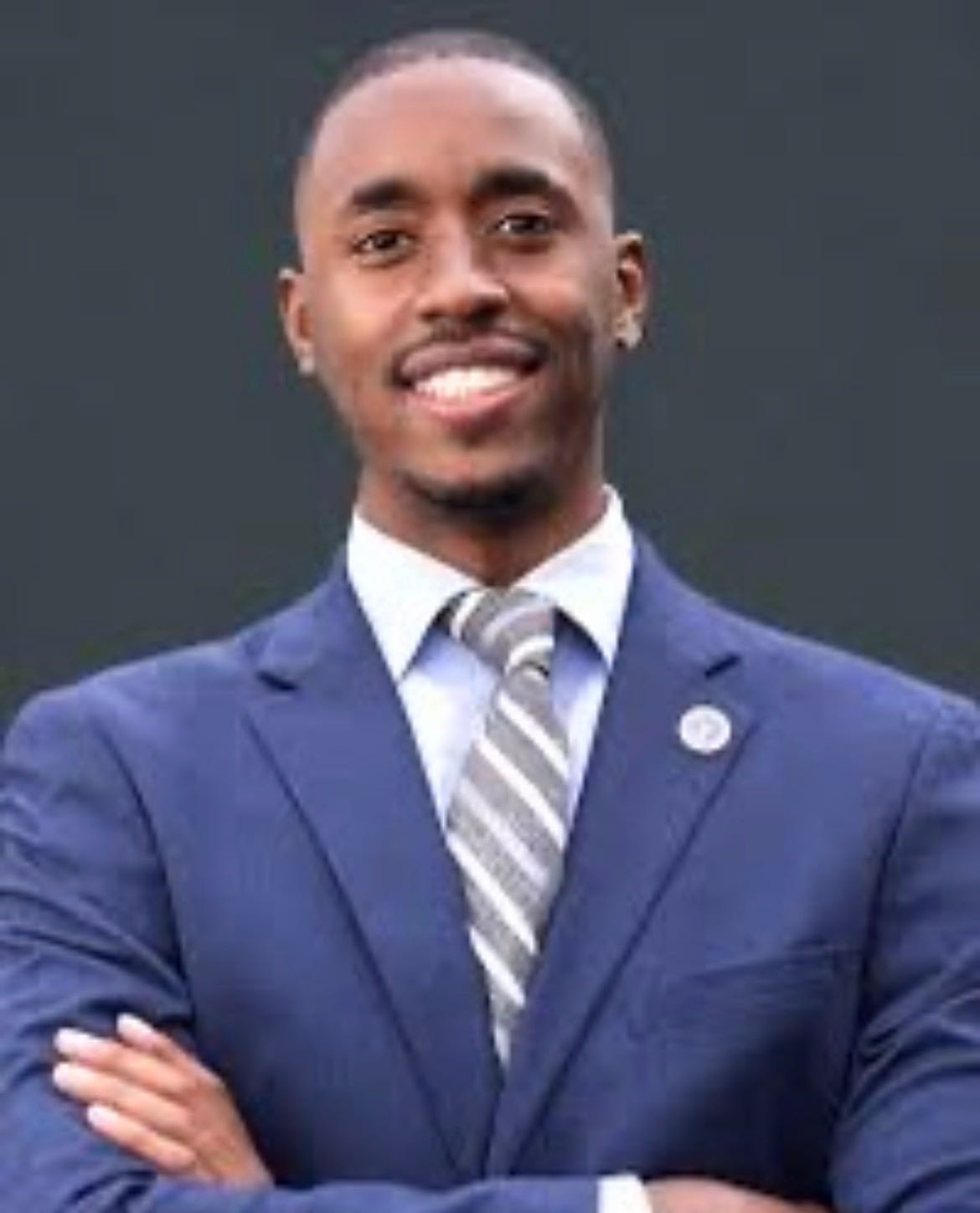
Edward Burroughs rose from school-board dissenter to chairman of the Prince George’s County Council.
There is whistleblowing, and then there is political arson dressed in a whistleblower’s suit.
In 2017, Edward Burroughs III helped turn legitimate concerns about Prince George’s County school records into an explosive public narrative involving fraud, corruption and conspiracy. He challenged the leadership of Prince George’s County Public Schools and presented himself as the fearless young reformer willing to confront the powerful people in his own party.
It worked.
Burroughs gained visibility. Republican Governor Larry Hogan gained a weapon. Prince George’s County Executive Rushern Baker III, a Black Democrat running to become Maryland’s first Black governor, absorbed the political damage.
That history matters now because Burroughs is no longer the young outsider demanding answers. He is the chairman of the Prince George’s County Council, helping decide how public money moves, who receives it and which arrangements deserve the public’s trust.
Nearly a decade after demanding extraordinary scrutiny of other leaders, Burroughs should have no objection to receiving exactly the same treatment.
The allegations that arrived at the perfect political moment
In June 2017, Burroughs and three other school-board members alleged that grades and student records had been manipulated to inflate graduation rates. They claimed students had received credits they had not earned and suggested employees were pressured to graduate academically ineligible students.
The allegations were serious and deserved an independent review. But they did not emerge in a political vacuum.
Baker had just entered the Democratic gubernatorial primary. His stewardship of Prince George’s County schools, including improving graduation rates, was part of the case he was making to voters. Hogan was already governor and preparing to seek reelection.
Burroughs handed Hogan a ready-made argument against Baker: If the graduation gains could be portrayed as fraudulent, Baker’s record of executive leadership could be portrayed as fraudulent too.
Hogan ordered a state investigation and called for a “complete, thorough and exhaustive” examination. The controversy immediately escalated from an internal dispute over school administration into a statewide political indictment of Prince George’s County leadership. The Washington Post reported that the allegations intensified tensions around Baker, his appointed school leadership and his campaign for governor.
Bob Ross, then president of the Prince George’s County NAACP, joined the effort. Ross appeared at a protest where demonstrators marched into a school-board meeting behind Burroughs while singing “We Shall Overcome.” Former national NAACP leader and gubernatorial candidate Ben Jealous also attended. Contemporary reporting described Burroughs as the de facto leader of the board’s young dissidents.
The symbolism was powerful. So was the political result.
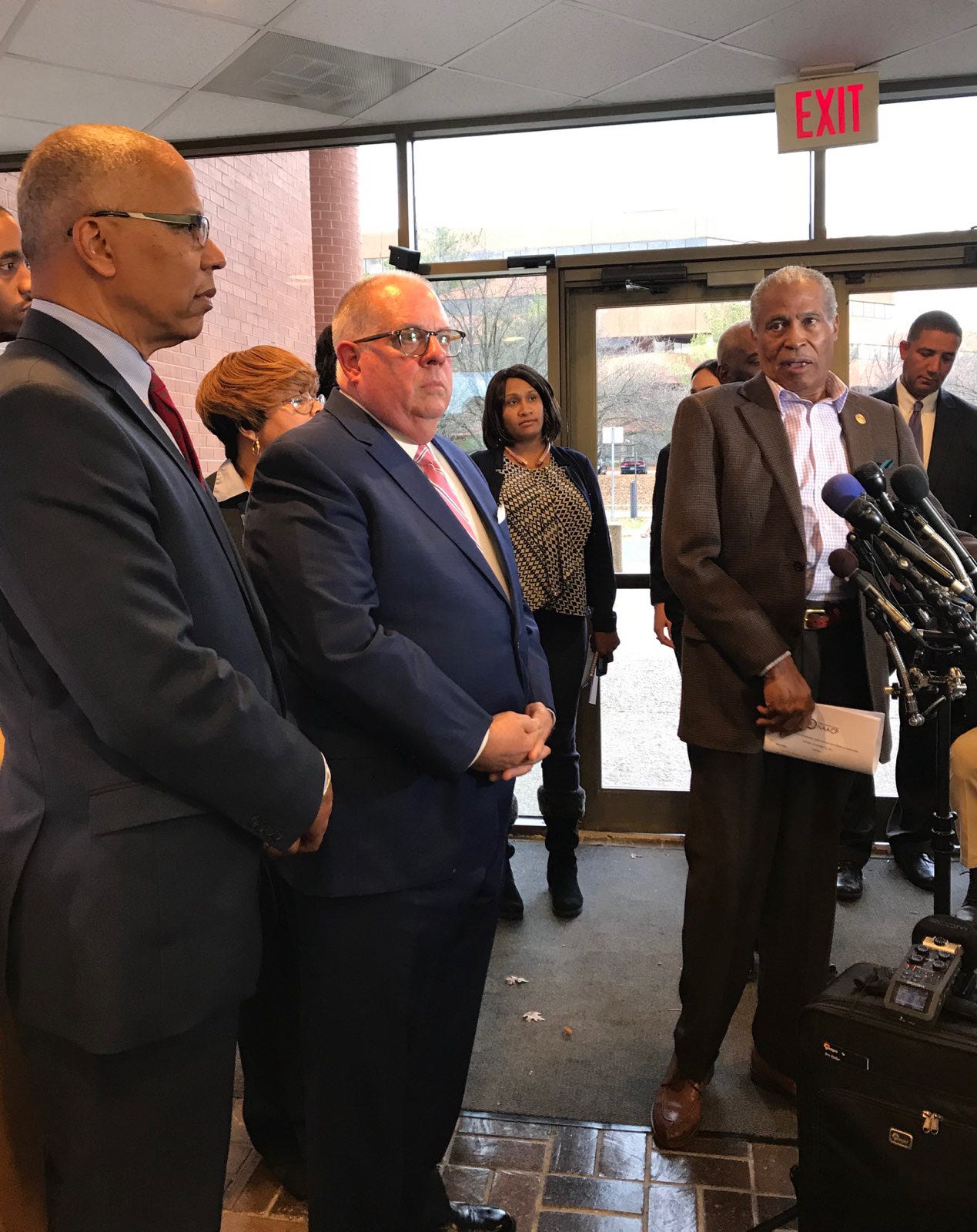
The school controversy unfolded as Baker sought the Democratic nomination to challenge Hogan.
What the investigation found and what it did not
The state retained Alvarez & Marsal to examine the allegations. Its audit found genuine and disturbing failures.
Nearly 5 percent of the sampled graduates appeared not to have met graduation requirements. Investigators could not determine the eligibility of approximately 25 percent because records supporting grade changes were incomplete or missing. The review also identified excessive absences, inconsistent grading procedures and inadequate management controls.
Those were not imaginary problems. Students, parents and taxpayers were entitled to answers.
But the audit did not establish that Baker, school-system CEO Kevin Maxwell or senior administrators had directed a systemwide criminal conspiracy to falsify graduation rates. School officials emphasized that distinction. Burroughs responded that the audit was too limited to determine intent because investigators could not compel interviews and lacked access to certain communications.
That was a fair criticism of the audit’s limitations. It was not proof of the larger conspiracy.
The difference mattered, but it became lost beneath words such as “fraud,” “corruption” and “wrongdoing.” Hogan later described thousands of grade changes as questionable even though identification for review did not mean every change was improper. FOX 5 reported that the audit reviewed a sample drawn from more than 5,000 students with late grade increases, not 5,000 proven cases of fraudulent changes.
Hogan benefited politically from the broadest interpretation. Burroughs benefited from being seen as the courageous insider exposing his own institution. Baker and Prince George’s County carried the stain.
This is why some residents reasonably view Burroughs’s actions as political betrayal. Not because a Black Democrat must remain silent to protect another Black Democrat. Accountability cannot depend on party or race. The betrayal was allowing allegations broader than the evidence to become ammunition for a white Republican governor against a Black county executive seeking to make history, while Burroughs’s own political stature grew from the wreckage.
The damage did not stop with Rushern Baker
Baker suffered the clearest political injury, but he was not the only Black leader caught in the fallout.
Monique Whittington Davis served as deputy superintendent and was one of Maxwell’s first senior leadership selections. Her portfolio included human resources, systemic improvement, state and federal programs, school performance and supervision of employees responsible for monitoring graduation rates.
Davis was once viewed as a possible successor to Maxwell. By June 2018, that possibility had effectively disappeared. She left the deputy superintendent’s office and returned to Anne Arundel County as a regional assistant superintendent, the same title she held before joining the Prince George’s executive team.
The Washington Post described her as the first high-level administrator to depart as leadership changes approached. The paper also noted that she supervised employees involved in monitoring graduation rates. The Washington Post documented Davis’s departure and the responsibilities under her office.
No public finding established that Davis ordered fraudulent grade changes. She was not criminally charged. Yet her professional trajectory changed as the scandal consumed the administration around her.
That is what institutional collateral damage looks like: the accusation travels farther than the proof and careers are altered before the public ever receives a complete account of individual responsibility.
The controversy also reached her husband, then Delegate Dereck E. Davis, personally and politically. He was a prominent Prince George’s Democrat, a Baker ally and a supporter of the governance structure under which Baker appointed school leadership. His wife’s departure, the collapse of Baker’s signature education narrative and the public discrediting of that governance model all struck close to him.
The available record does not show that Dereck Davis was accused of changing grades, investigated or formally punished. His subsequent advancement to Maryland State Treasurer demonstrates that the controversy did not derail his career. But it affected his family, weakened a major political ally and placed a policy structure he supported under intense suspicion.
The damage was larger than a collection of political résumés. Black principals, teachers and administrators across a predominantly Black school system were forced to work beneath a public cloud of “fraud” and “corruption.” Thousands of Black students with legitimate diplomas watched the value of their achievement debated in public. Prince George’s County, one of the nation’s most important centers of Black political and economic power, became a Republican talking point about failed Black governance.
That broader consequence should not be minimized. Accountability was necessary. Converting documented control failures into an unproven narrative of coordinated criminal conspiracy was something else.
There is no reliable evidence connecting Christian Rhodes or Davion Percy to Burroughs’s 2017 allegations, the state audit or the disputed grade changes. Their names should not be pulled into this history without records establishing an actual role. The same evidentiary discipline Burroughs demanded from others must apply here too.
The outsider now controls the table
Time has a sense of humor. It occasionally has a subpoena.
Burroughs is now the youngest person known to have chaired the Prince George’s County Council. He is no longer shouting questions from the edge of power. He helps set the agenda.
That brings us to the current controversy involving casino-generated money and a nonprofit selected to administer assistance to former federal workers.
In 2025, Burroughs and 100 Black Men of Prince George’s announced a $1 million Federal Employee Relief Fund. Approximately $800,000 came from revenue generated by MGM National Harbor. Under Maryland law, that money was restricted to programs benefiting residents within six miles of the casino. The fund was therefore concentrated largely in District 8, which Burroughs represents. The Washington Post reported on the fund, its geographic restriction and the nonprofit partnership.
Helping displaced federal workers is a worthy objective. The legal restriction on the MGM revenue also explains why the assistance was geographically limited.
But a worthy purpose does not erase the public’s right to inspect the process.
If the nonprofit’s leadership includes Burroughs’s friends or political allies, that relationship should be disclosed and documented. At present, publicly available reporting does not independently prove that personal relationship or establish that the organization was selected unlawfully. It also does not answer the most important procedural questions.
Was the nonprofit chosen through competition? Were other qualified organizations considered? What written criteria governed the selection? What administrative fee will the organization retain? What financial controls protect the money? What role did Burroughs personally play? Were any relationships disclosed? Will the public receive a complete accounting of recipients, outcomes and unused balances without compromising recipients’ privacy?
Those questions do not accuse anyone of stealing money. They test whether the process is fair.
State law restricts certain casino-generated revenue to communities within six miles of MGM National Harbor.
District fairness cannot become personal discretion
Burroughs has argued that District 8 has not received its proper share of funding and public investment. That complaint may have merit. Communities surrounding MGM National Harbor should see measurable benefits from hosting one of Maryland’s largest gaming and entertainment operations.
But “our district deserves more” cannot quietly become “I decide which connected organization receives it.” There is a difference between correcting geographic inequity and concentrating discretion in the hands of one elected official.
That is precisely why the selection records matter.
If the process was competitive, release the scoring. If it was not competitive, identify the legal authority and explain why. If no personal relationship influenced the award, disclose the relevant relationships and let the documentation settle the matter. If the nonprofit is qualified, its finances and performance should withstand scrutiny.
Burroughs established the standard himself in 2017: Good intentions are insufficient. Officials must produce records. Systems must have controls. Public confidence requires independent verification.
He cannot now ask the public to accept press releases where he once demanded evidence.
The same standard, nearly ten years later
Burroughs’s rise contains an uncomfortable symmetry.
In 2017, he alleged that powerful officials were using a public system to manufacture favorable outcomes while avoiding accountability. Nearly a decade later, questions surround a public-funding arrangement promoted under his leadership and administered through a private nonprofit.
The two matters are not factually identical. The 2017 audit concerned student records and graduation eligibility. The current questions concern nonprofit selection, casino-generated revenue and public accountability. No available evidence establishes that Burroughs or the nonprofit committed a crime.
The connection is the standard of leadership.
Burroughs built his career by insisting that appearances were not enough and that leaders should welcome investigation. He helped elevate unproven conspiracy claims that weakened Rushern Baker and strengthened Larry Hogan. He benefited from the political attention that followed.
Now the spotlight belongs to him.
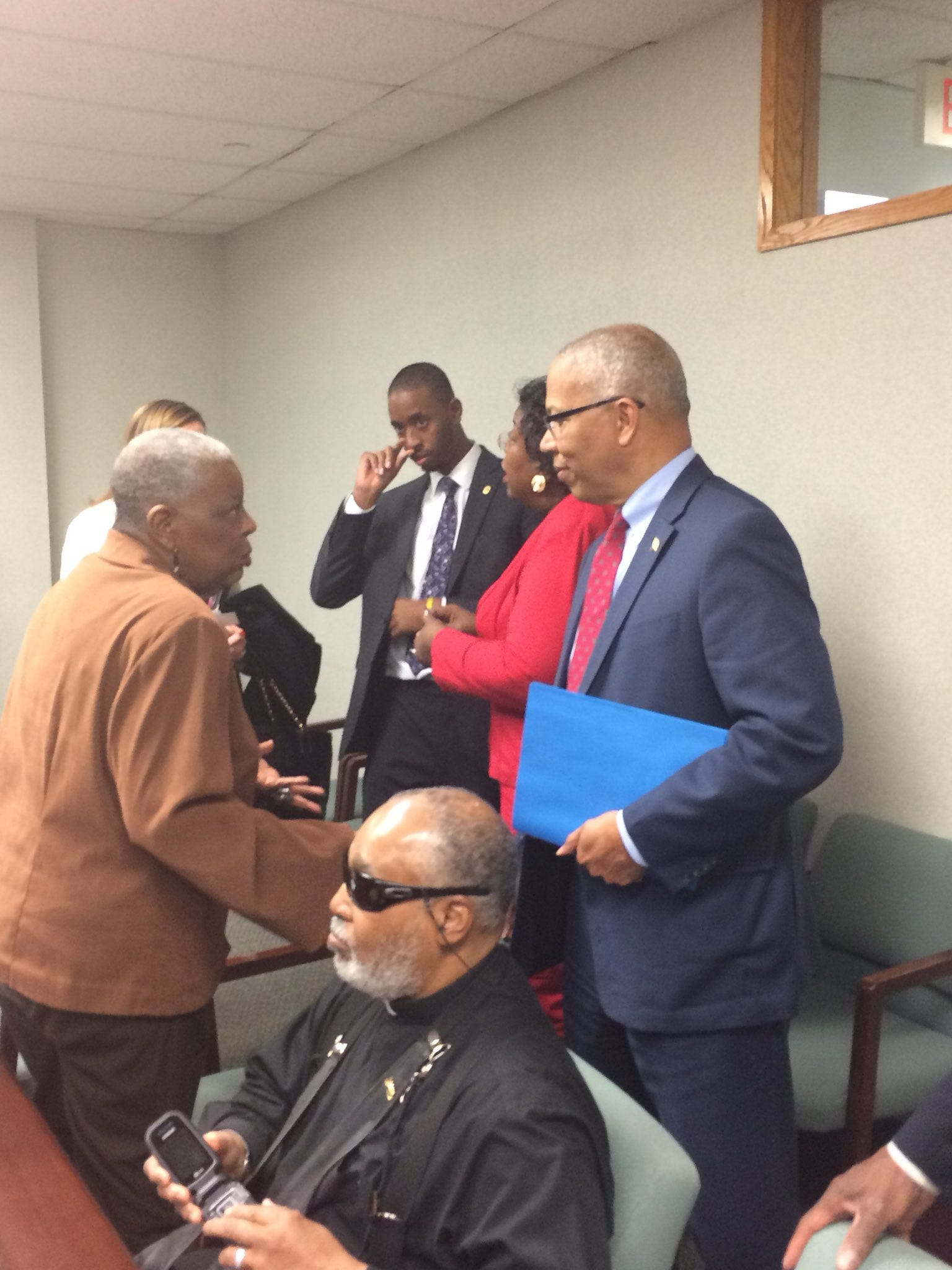
The public deserves the records necessary to determine whether community money was distributed fairly. (Edward center picking his nose and Boyd Rutherfordno right who was elected to a second term because of Edward.)
Prince George’s County should demand the complete record: the nonprofit-selection process, evaluation materials, conflict disclosures, agreements, administrative costs, payment controls and performance reports.
If everything was fair, transparent and lawful, the documents will demonstrate that.
If the process relied on friendship, political proximity or private discretion, the public deserves to know that too.
Edward Burroughs became politically prominent by telling Prince George’s County not to trust its leaders without proof. Nearly ten years later, he should live comfortably under the rule he helped create:
The question Prince George’s County must now ask is simple: Which Black leader’s career will be damaged and sold down the river next to advance someone else’s political ambition?
Show us the records.
Sources and Further Reading
The Washington Post: Hogan calls for an investigation into alleged tampering with graduation rates, June 25, 2017
The Washington Post: State lawmakers seek a broad probe of Prince George’s graduation rates, June 22, 2017
FOX 5 DC: Grade-fixing report says approximately 5 percent of sampled students should not have graduated, November 6, 2017
The Washington Informer: Prince George’s NAACP presses Hogan on the school-system probe, December 1, 2017
The Daily Record: Hogan urged by NAACP to push for changes in Prince George’s schools, December 12, 2017
The Washington Post: Deputy superintendent Monique Whittington Davis leaves the embattled school leadership, June 25, 2018
The Washington Post: Prince George’s County creates a relief fund for displaced federal workers, November 6, 2025
Editor’s note: This commentary distinguishes documented findings from questions that remain unanswered. It does not allege that Burroughs, 100 Black Men of Prince George’s or any associated person committed a crime.