

What If Wes Moore Looked South?
A Maryland View of the 2028 Democratic Map
Maryland’s governor is going to win re‑election. That much is clear. Wes Moore is popular, well‑funded, and running in a state that knows him, likes him, and isn’t in the mood for drama. He’ll have to do the usual events, cut the ribbons, shake the hands, and keep the lights on — but barring an asteroid strike, the outcome is not in doubt.
Which raises a question that nobody in Annapolis will ask out loud but everyone in national politics is quietly gaming out.
If Wes Moore ever chose to look beyond Maryland, where would he look first?
The answer is not Iowa.
It’s not New Hampshire.
It’s South Carolina.
And the reasons have nothing to do with ambition and everything to do with political physics.
Below is the four‑legged stool that explains why.
Leg One: The Money — and the Maryland Advantage
Moore has already demonstrated that he can raise money at a level that surprises even seasoned operatives. He entered his re‑election cycle with roughly $7 million in the bank — and likely more by now — which is an extraordinary number for a Maryland governor.
If he ever chose to compete in South Carolina, he wouldn’t be starting from zero. He’d be starting from a war chest.
And here’s the part Maryland readers will appreciate:
South Carolina is a far cheaper media market than Maryland.
Maryland candidates must buy Baltimore, Washington, and often Philadelphia just to reach their own voters. South Carolina candidates buy Charleston, Columbia, Greenville‑Spartanburg, and Myrtle Beach — all dramatically less expensive.
A candidate who can raise Maryland‑level money and spend it in South Carolina‑level markets is not just competitive. He’s omnipresent.
Leg Two: The Viability — A State That Fits His Profile
South Carolina is the first Democratic primary in 2028. It is also the first state where Moore’s biography, identity, and message align naturally with the electorate.
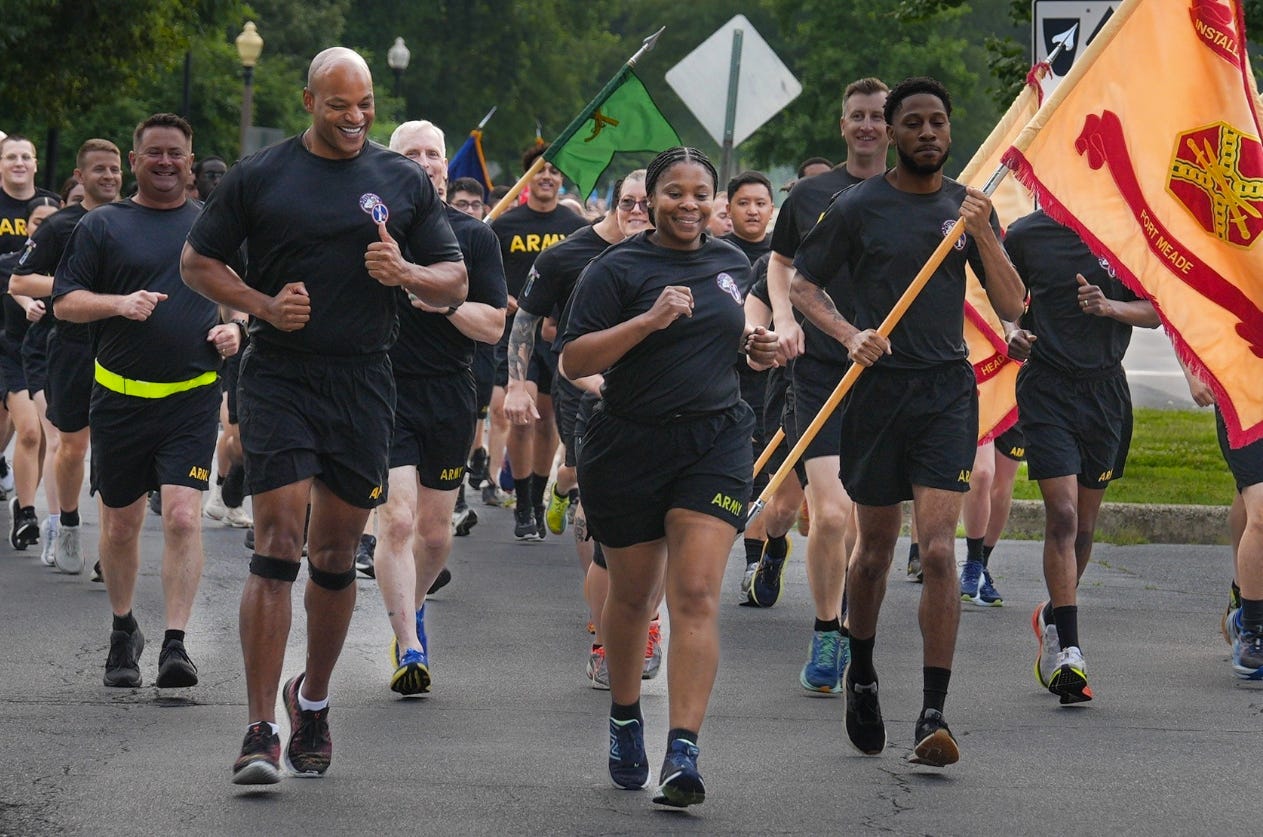
The Democratic primary electorate in South Carolina is majority Black, heavily church‑anchored, and deeply responsive to candidates who speak fluently about service, duty, and community. The Democratic Primary draws on one of the largest pool of Militaey family of the country. Moore’s life story — military service, public service, and a narrative rooted in resilience — resonates in a way that is not theoretical. It’s cultural.
He would not be the first candidate to stumble in Iowa and New Hampshire only to find his footing in South Carolina. The state has a long history of elevating candidates who speak to its voters with authenticity rather than performance.
A third‑place finish in New Hampshire and a fourth‑place finish in Iowa are not disqualifying. A win in South Carolina is transformative.
Leg Three: The Relationships — Helping Democrats in Tough Places
If Moore ever wanted to build goodwill in South Carolina, he wouldn’t need to “campaign.” He could simply show up where Democrats are fighting uphill battles and offer a hand.
South Carolina has dozens of races — congressional, legislative, mayoral — where a well‑timed visit from a nationally recognized Democrat could make a measurable difference. These are not glamorous races. They are the ones where a few hundred votes can flip a seat from red to blue.
Charleston’s SC‑01.
Florence and Marion in SC‑07.
Richland County legislative races.
North Charleston mayoral contests.
Even a state senate race in Lexington County, where Democrats rarely get outside help.
A governor from Maryland showing up in those places would not be forgotten. Not by the candidates. Not by the donors. Not by the county chairs. Not by the pastors. Not by the voters.
And certainly not by the people who keep score in South Carolina politics.

Leg Four: The Influence Network — The Fundraiser Effect
This is the part campaigns never talk about publicly but always talk about privately.
Fundraisers build influence in a way rallies never can.
The people who attend a fundraiser in Florence or Orangeburg or Columbia for a local candidate are not casual voters. They are:
- lawyers
- doctors
- business owners
- church deacons
- civic leaders
- county party officers
- the people everyone else listens to
A Black lawyer in Florence who shakes Wes Moore’s hand at a fundraiser is not just a donor. He’s a node. A multiplier. A validator. Someone who will talk about that meeting to clients, colleagues, neighbors, and church members.
And if Moore were to host a small, early reception — the kind with the higher ticket price and the 6:00 p.m. start time — those attendees are the ones who shape opinion in their communities.
Send them home with a framed, signed photo — not just a printout in an envelope, but something ready for the brag wall — and suddenly Moore’s face is hanging in law offices, medical practices, barber shops, and real estate firms across the most important state in the 2028 primary calendar.
That’s not campaigning.
That’s planting seeds.
And South Carolina is a state where seeds grow fast.
A Final Thought
None of this requires an announcement. None of it requires a hint. None of it requires a whisper of 2028.
A Maryland governor could simply say he’s visiting a friend in South Carolina — which happens to be true — and while he’s in the neighborhood, he could help a few Democrats who could use a boost.
The people he helps today will remember him in two years.
The people who meet him today will talk about him tomorrow.
And the people who see his photo on a brag wall will ask, “Who’s that?”
That’s how influence is built.
That’s how networks form.
That’s how possibilities take shape.
And that’s why, if Wes Moore ever chose to look south, South Carolina would be ready to look back.
A Quiet Offer, Sitting in Plain Sight
And if any of this ever became something the governor wanted to explore, the logistics aren’t complicated. I’m in South Carolina. Columbia the capitol is my backyard. If his team ever wanted to line up a visit — no fanfare, no headlines — all it would take is a phone call. We could grab a cup of coffee, and while he’s here, I could put him in front of the people who matter: the local leaders, the influencers, the donors, the folks who shape opinion long before the national press shows up. South Carolina rewards relationships, and I’m close enough to help him build the right ones.