

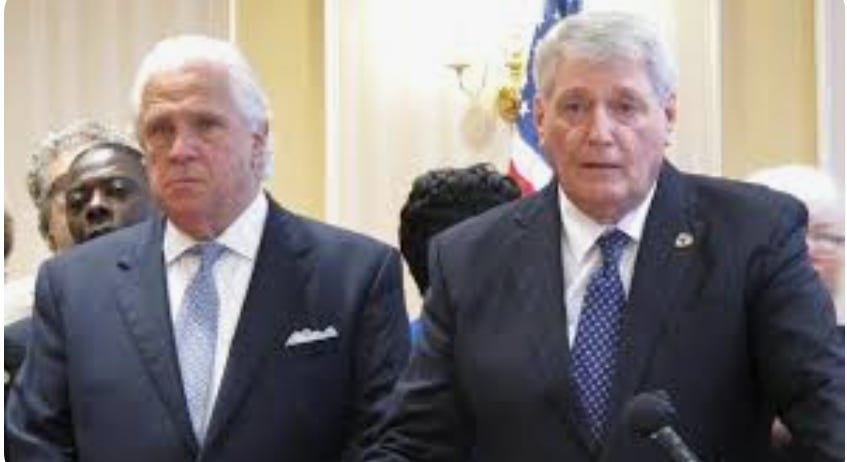
The House Moves, the Senate Blocks, and Annapolis Feels Like Mike & Mike All Over Again
Annapolis is supposed to be entering a new era — new governor, new speaker, new committee chairs, new energy. But if you walk across the marble floors from the House chamber to the Senate side, it becomes clear that only half the building got the memo.
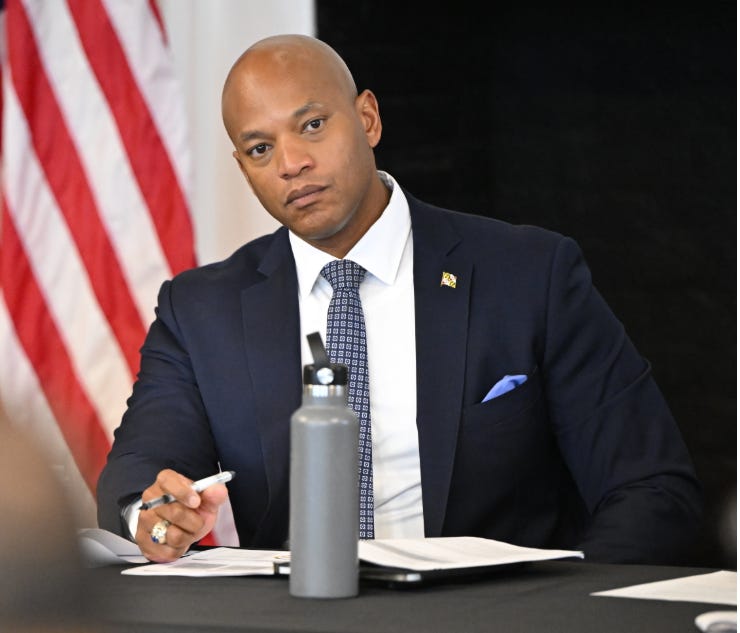
Because while the House of Delegates is lining up behind Governor Wes Moore, ready to move his redistricting bill with speed and enthusiasm, the Maryland Senate is still operating like the old Mike‑and‑Mike machine — the same institutional muscle memory, the same gatekeeping instincts, the same “we’ll decide what moves and when” posture that defined Annapolis for decades.
And at the center of that machine sits Senate President Bill Ferguson, who may be younger than Mike Miller but is unmistakably cut from the same cloth when it comes to guarding the Senate’s prerogatives. The difference, as many in Annapolis quietly note, is that Ferguson is less affable, less forgiving, and far less inclined to bend when the governor wants something the Senate doesn’t.
The House: A New Speaker, a New Direction, and a Willing Partner for Moore

On the House side, the shift is unmistakable.
Speaker Joseline Peña‑Melnyk has ushered in a younger, more progressive leadership team. Committee chairs are more aligned with the governor’s priorities. The appetite for big, structural legislation is real. And when C.T. Wilson introduced the redistricting bill, the House didn’t blink — it moved.
Fast hearings. Fast committee action. A clear path to the floor.
The House is signaling something important:
They are ready to govern with Moore, not around him.
This is the chamber where Moore’s agenda still has oxygen.
The Senate: Old Rules, Old Guard, Old Playbook

Then there’s the Senate.
Ferguson has already made it clear — publicly, repeatedly — that he opposes mid‑cycle redistricting. He’s warned of national retaliation. He’s invoked the election calendar. He’s framed the bill as a strategic risk.
But beneath the talking points is the real story:
The Senate is still the Senate.
The culture hasn’t changed.
The power structure hasn’t changed.
The unwritten rules haven’t changed.
And Ferguson is using every tool Mike Miller left behind — committee bottlenecks, leadership discipline, procedural slow‑walking, and the quiet but unmistakable pressure of lobbyists who still treat the Senate as their home turf.
In other words:
The bill will pass the House.
It will hit a wall in the Senate.
And everyone in Annapolis knows it.
The Political Risk for Ferguson
But this time, the old playbook carries new risks.
If Ferguson blocks the governor’s bill, he opens himself to a line of attack that practically writes itself:
- He protected Trump’s map.
- He protected Republican incumbents.
- He protected the status quo.
- He protected the utilities while Marylanders’ gas and electric bills went up drastically.
Those aren’t policy critiques — those are primary election critiques, and they land differently in a Democratic electorate that is younger, more progressive, and far less deferential to Annapolis hierarchy than it was in the Miller era.
If this fight becomes a referendum on whether Ferguson is standing with Moore or standing in the way, the Senate President could find himself in unfamiliar territory:
politically vulnerable.
And if he starts to feel that vulnerability — if polling, donor chatter, or district‑level pressure suggests he could actually lose his seat — then the calculus changes.
Because the one thing even the old Senate machine has always understood is this:
self‑preservation beats institutional preservation.
The Governor’s Leverage
Governor Moore can’t order the Senate to act.
He can’t force a vote.
He can’t compel Ferguson to move the bill.
But he can do something else:
He can make the cost of inaction higher than the cost of cooperation.
If the redistricting bill becomes the defining fight of the session — if it becomes the question Democratic voters ask in June — then Ferguson’s position becomes less secure, not more.
And that’s where Moore’s leverage lies.
Not in procedure.
Not in rules.
Not in legislative mechanics.
But in political pressure, the one force even the Senate cannot fully insulate itself from.
The Bottom Line
- The House will pass the bill.
- The Senate will block it — unless the politics change.
- Ferguson is relying on the old Mike‑and‑Mike machine to hold the line.
- Peña‑Melnyk is steering a House that’s ready to work with the governor.
- The real question is whether this fight becomes a liability for Ferguson in a primary.
If it does, the Senate President may discover that the old tricks don’t work as well in a new political era.
And if he believes his seat is at risk, the governor’s bill might suddenly look a lot less dangerous than the alternative.
How would Ferguson be helping the utility companies by not going with the new map?