

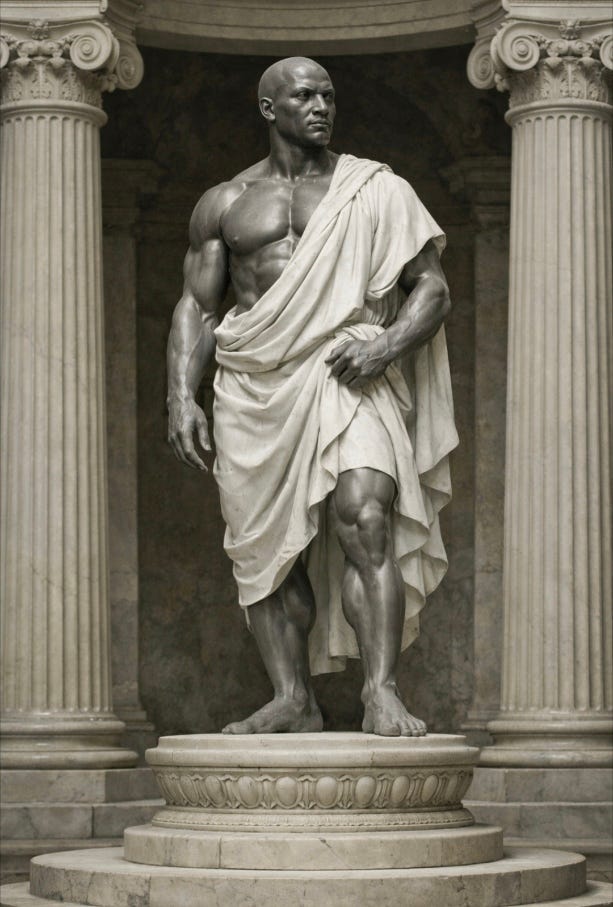
Wes Moore and the New Pantheon: Maryland’s First Future‑Builder Governor
Maryland has had governors who managed the state.
Maryland has had governors who presided over eras.
Maryland has even had governors who left their mark on infrastructure, on culture, on the machinery of government.
But Maryland has never had a governor who tried to build the future of the Democratic Party the way Wes Moore is doing right now.
A governor who doesn’t just govern — he organizes
In 2026, Moore endorsed over 200 candidates across every corner of Maryland politics — school boards, sheriffs, county councils, state legislators, congressional candidates, and even out‑of‑state allies.
That number is not normal.
That number is not typical.
That number is not “Maryland politics as usual.”
It is historic.
And the results?
93% of Moore’s endorsees won or are winning.
That is not a governor dabbling in politics.
That is a governor building a statewide machine for the next generation.
Contrast: The governors who didn’t build
Maryland’s political history is full of governors who were strong personalities, effective administrators, or memorable figures — but not party‑builders.
- Martin O’Malley was a national figure, but he never built a statewide Democratic bench.
- William Donald Schaefer was a force of nature, but his endorsements were sporadic and personal, not strategic.
- Parris Glendening governed competently but never constructed a statewide political network.
- Larry Hogan avoided down‑ballot endorsements almost entirely.
- Ehrlich, Mandel, Hughes, Agnew — all operated in eras where governors stayed out of local races.
None of them built the future.
None of them built the bench.
None of them built the next generation of Maryland leadership.
Wes Moore is doing all three.
A governor who campaigns like a party chair
Moore didn’t just endorse.
He showed up.
He campaigned in Frederick, Baltimore, Annapolis, Randallstown, Columbia, Gaithersburg, Capitol Heights, Fort Meade, and Washington, D.C.
He visited polling places with local candidates.
He attended victory parties.
He raised money.
He lent his operation.
He put his name, his time, and his political capital on the line.
This is not normal gubernatorial behavior.
This is movement leadership.
The last time Maryland saw something like this
To find a governor who reshaped the future of Maryland politics, you have to go back to the Civil War era — to Oden Bowie, the architect of the post‑war Democratic machine.
Bowie built the party.
Bowie built the bench.
Bowie built the statewide Democratic identity.
But Bowie built for his era.
Moore is building for ours.


Has Wes Moore surpassed Oden Bowie?
If the modern era of Maryland politics begins with the Civil War, then the pantheon of Democratic governors has always had Bowie at the top — the machine‑builder, the organizer, the architect.
But Bowie never endorsed 200 candidates.
Bowie never campaigned statewide for dozens of down‑ballot leaders.
Bowie never built a multiracial, statewide coalition that stretches from Cumberland to the Eastern Shore.
Bowie never operated in a national environment where governors are expected to be both executives and movement leaders.
Wes Moore is doing all of that.
It is not unreasonable — and it is historically defensible — to argue that:
Wes Moore has surpassed Oden Bowie as the greatest party‑building Democratic governor in the modern history of Maryland.
Not because Bowie was small.
But because Moore is big.
A governor building the future
Moore’s endorsement strategy is not about 2026.
It is about 2030, 2034, 2040.
It is about building a Maryland Democratic Party that is:
- Capable of governing for decades
This is not a governor who is content to manage Maryland.
This is a governor who is building Maryland.
And in the long pantheon of Maryland governors, that is how legends are made.
I wonder what criteria he used in deciding who to endorse. I noticed he endorsed candidates from all points on the Party spectrum. His 93% record of having endorsed the winner looks like he was trying to build political capital with the most likely winners.
While I applaud the expansive direction the current administration pursues, I cannot say that the administration has included 18 officially designated rural counties as part of the platform.
An agritourism EO issued July 28, 2025 has no policy bodies, and as a result its directives remain non operationalized.
A $50 million dollar fund - Equitech Growth Fund, created to address underrepresented communities, has no oversight. Its Commission which created a 10-year strategic plan submitted June 2025 was sunset the same month. Program staff advances selected projects to the management organization’s CEO - TEDCO.
The Board is notified post decisions, and despite 600k being carved out for Fund administration, applicants are turned away for requesting project eligibility guidance: “we are understaffed.”
Further: 99.9 percent of businesses are small business in the state representing 50% of the private workforce. Yet, other than one commission supporting minority and women owned enterprise that is government procurement support, there is no state small business enterprise agency.
The state also offers few grant programs for small business.
What we now have is the DECADE ACT and a Future Board. But no sensible economic development framework for enterprises providing taxable revenue and job creators. Things this state is desperate for and could offset persistent multi billion dollar budget shortfalls.