

Moving On Up: Why Wes Moore’s Latest Numbers Spell Real Trouble for Dan Cox
By Barry O'Connell
Back in the 1970s, TV viewers watched George Jefferson pack up his belongings and march on up to a deluxe apartment in the sky. Watching the latest statewide polling out of Annapolis this week, you get the distinct sense that Governor Wes Moore is staging his own version of Moving On Up—not just toward a second term in the Government House, but potentially onto the national stage down the road.
According to a new statewide poll conducted by Blended Public Affairs in partnership with Perry Jacobson, Marylanders are liking what they see. Moore’s job approval rating has risen to 56 percent, giving him a healthy +17 net approval rating. That is a noticeable jump from July 2025, when his net standing sat at +8.
When you stack Moore up against his Republican challenger, former State Delegate Dan Cox, the match-up isn't just tilted—it looks like a blowout in the making.
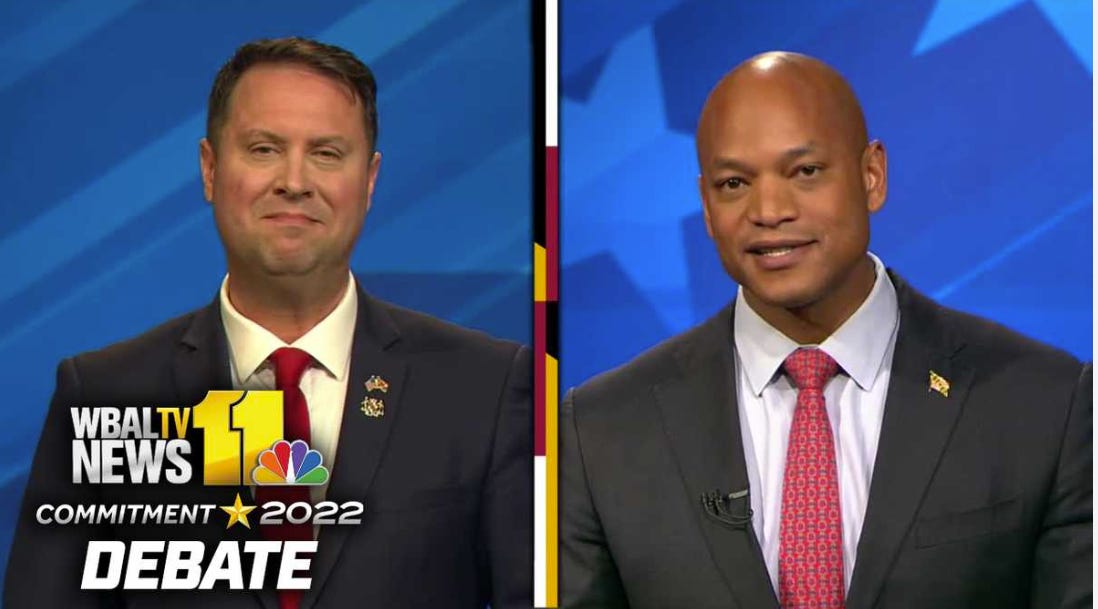
The 58–31 Reality Check
If the election were held today, the poll shows Moore leading Cox 58% to 31%.
Rather than a personal critique, the hard numbers tell a clear structural story: Dan Cox has hit a hard ceiling. After years of campaigning across the state, Cox remains stuck in the lower thirties, unable to expand his coalition beyond the deep-red pockets of the state.
Meanwhile, Moore is doing something that few modern chief executives manage in a polarized political climate: he is outrunning his own party. While the Maryland Democratic Party at large sits at a modest 50 percent approval, Moore commands 56 percent. He is capturing independents and moderate voters who might otherwise be skeptical of unified Democratic control in Annapolis.
STATEWIDE POLING SNAPSHOT (Blended Public Affairs / Perry Jacobson)

Wes Moore Job Approval:    [████████████████████████████ 56%] (+17 Net)
MD Democratic Party:       [█████████████████████ 50%]
Head-to-Head vs. Dan Cox:  [█████████████████████████████ 58%] vs. [█████████████ 31%]
Why the Momentum is Shifting
Governors don't move up in the polls on good vibes alone; voters react to measurable outcomes. The polling momentum aligns with several tangible data points across Maryland over the past year:
Public Safety Metrics: State-level homicides have dropped by 44%, non-fatal shootings are down over 50%, and Baltimore recorded its lowest July homicide total on record, bolstered by targeted state investments and multi-agency coordination.
Economic Expansion: The state added 17,800 jobs through the first half of 2026—growing at nearly double the national rate—while private investments like AstraZeneca’s $2 billion expansion in Montgomery County and Frederick have signaled strong corporate confidence.
K-12 Education Results: Backed by three consecutive record-setting education budgets ($10.1 billion in state funding this past year), Maryland test scores hit a five-year high in English and Math, while statewide teacher vacancies dropped by 25%.
Kitchen-Table Policy: Measures like raising the minimum wage to $15/hour, delivering $300 million in direct energy relief, and passing consumer privacy protections against surge-pricing at grocery chains have resonated with families feeling the pinch of inflation.
The Road Ahead
While Washington politics remains engulfed in partisan warfare, Moore has maintained a pragmatic, results-oriented posture in Annapolis that makes it hard for opponents to land a punch.
If these polling trends hold through the autumn, Cox won't just face an uphill battle—he'll be facing a runaway train. For Wes Moore, a decisive double-digit victory in November wouldn't just secure four more years in Annapolis; it would solidify his position as one of the rising stars of American politics.
He's moving on up, and right now, the numbers show Maryland voters are more than happy to help him unpack.