

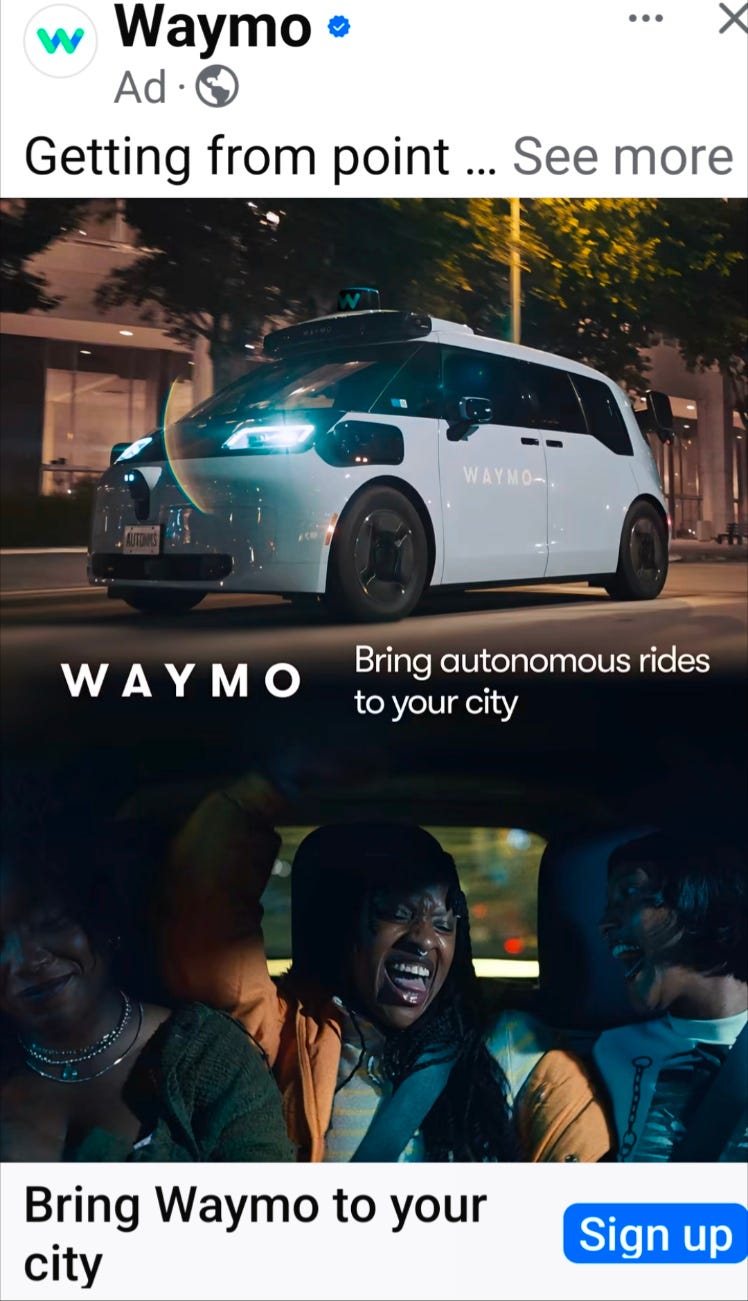
Waymo on the streets of Baltimore
ANNAPOLIS — On the streets of Baltimore, roughly a dozen white Jaguars outfitted with spinning rooftop sensors have been quietly mapping intersections and traffic patterns with human safety drivers behind the wheel.
They are Waymo test vehicles, and for now, they aren't allowed to pick up paying passengers without a human in the front seat. Yet long before a single driverless robotaxi is cleared to take a fare in Maryland, a quiet, high-dollar mobilization is already taking shape in the lobbying corridors of Annapolis—pitting Silicon Valley tech giants, rideshare apps, labor unions, and Maryland’s politically formidable trial lawyers against one another.
What looks on the surface like a debate over futuristic technology is rapidly converging with a much more immediate pocketbook issue: who pays—and how much—when an Uber, a Lyft, or an autonomous taxi crashes on a Maryland road.
