

OP‑ED — “The Most Dangerous Mistake America Can Make: Underestimating Iran”
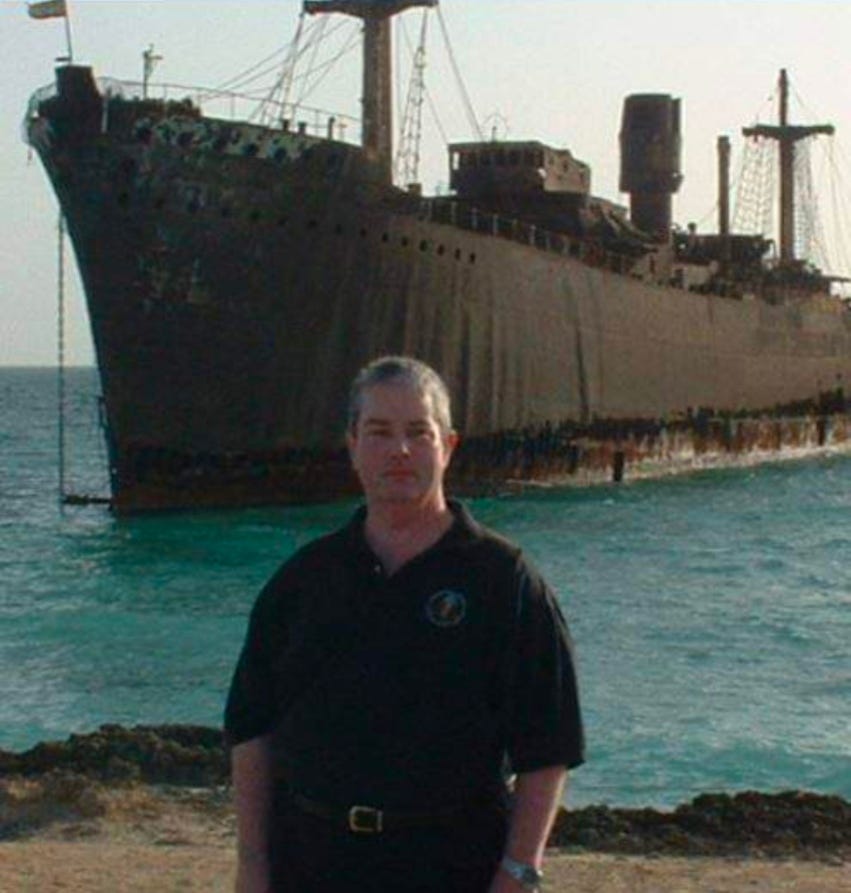
By Barry O’Connell
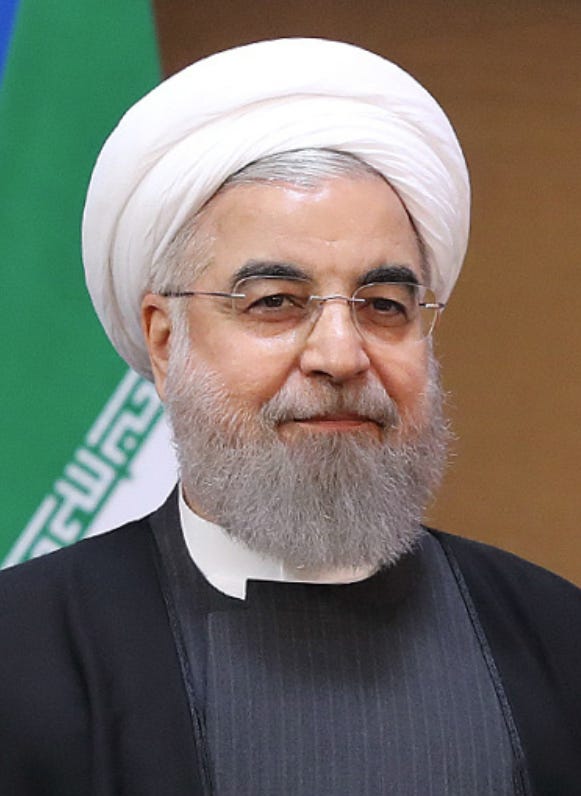
For more than thirty years, I’ve studied Iran — its art, its culture, its politics, and its people. I’ve written for and edited magazines devoted to Iranian history and aesthetics. I contributed to the Scribner’s Encyclopedia of Modern Asia in 2002. And on my last trip to Tehran, I sat across from Hassan Rouhani — then a senior advisor to the Supreme Leader, the rough equivalent of our National Security Advisor — discussing U.S.–Iranian tensions, nuclear policy, and the strategic worldview of the Islamic Republic. Rouhani later became president, but even then, he was one of the clearest windows into how Iran thinks about war, deterrence, and survival.
I say all this for one reason:
Iran is not Iraq. Iran is not Afghanistan. And if we treat it like either, we will walk into the most dangerous strategic miscalculation of the 21st century.
A Wound That Shaped a Nation’s Strategy
To understand Iran’s posture, you have to understand the man who leads it.
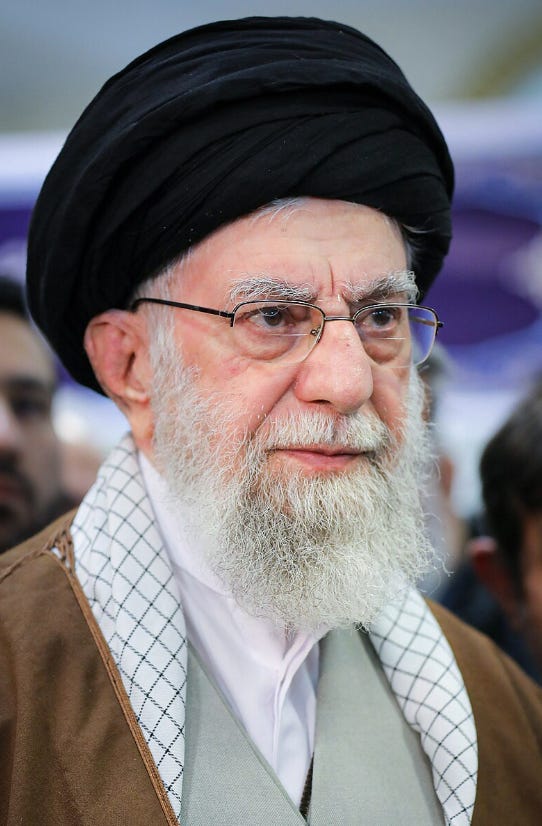
In 1981, a bomb planted by the MEK exploded during a speech by Ali Khamenei. The blast nearly killed him. It left his right arm permanently paralyzed, twisted into a claw‑like shape he still carries today. Iranian officials have long believed the MEK acted with Western intelligence (CIA) backing.
That matters.
Because every morning, the Supreme Leader wakes up in pain — pain he associates with an attack he believes the United States helped enable. When he warned in Hamadan that any U.S. attack would be met with “death by a thousand bee stings,” he wasn’t speaking metaphorically. He was speaking as a man who has survived political violence and spent more than forty years preparing his country for the next blow.
This is not abstract doctrine.
This is personal history turned into national strategy.
A Nation That Builds Underground
Americans build above ground. Our homes, our infrastructure, our communications — all exposed, all visible.
Iranians do not.
Because of climate, culture, and centuries of necessity, Iran has a deep tradition of underground construction:
- subterranean rooms and storage
- tunnel networks in mountains
- deeply buried fiber‑optic lines
- hardened bunkers
- missile sites tunneled into rock
This is normal to them. It is second nature.
For the United States, it means that airstrikes alone cannot sever Iran’s communications or cripple its command structure. It means that Iran’s defensive architecture is literally beneath the surface — invisible, hardened, and built over decades.
A Defense Ecosystem, Not a Rag‑Tag Militia
Americans often imagine Iran as a country defended by irregulars with AK‑47s. That is a fantasy.
Iran’s layered defense includes:
- IRGC: ~150,000 elite ideological troops
- Artesh: ~300,000 regular army soldiers
- Basij: millions registered; hundreds of thousands mobilizable quickly
This is not a disorganized force. It is a population‑scale mobilization system designed for:
- urban warfare
- guerrilla tactics
- attrition
- decentralized command
- rapid recruitment
Iran has studied American tactics for decades. They know how we move, how we supply ourselves, how we communicate, and how we respond under pressure.
If We Put Boots on the Ground, We Enter Their Terrain — Literally
If the United States ever invades Iran, we will not face a conventional army waiting to be defeated in open desert.
We will face:
- fighters embedded among civilians
- ambushes in narrow mountain passes
- IED belts on every approach road
- snipers in apartment blocks
- militias blending into the population
- block‑by‑block urban combat
And every civilian casualty — many of them unavoidable — will be broadcast globally within minutes.
Iran understands that modern war is fought not only on the battlefield but on the screen. They will weaponize every image, every destroyed building, every wounded child, every captured American soldier.
The Thousand Bee Stings: What Iran Really Means
Americans think in terms of decisive battles. Iran thinks in terms of relentless pressure.
The “thousand bee stings” doctrine includes:
- proxy attacks across the Middle East
- cyberattacks on U.S. infrastructure
- maritime disruption
- targeted operations abroad
- hostage‑taking
- psychological warfare
- global media exploitation
They do not need one knockout punch.
They need to make the war feel endless, everywhere, and emotionally exhausting.
The Diaspora Question
There is a large Iranian diaspora in the United States, especially in Los Angeles. Even if 99.9% are loyal Americans — and most are — any intelligence service can find a handful of people to coerce or recruit.
But Iran’s primary tools are not diaspora uprisings.
They are trained operatives, cyber units, and regional proxies.
The danger is not mass mobilization.
The danger is targeted disruption.
The American Assumption That Could Get People Killed
Right now, U.S. strategy seems to rest on a quiet assumption: that Iran will respond proportionally.
We hit a facility.
They hit a facility.
We both calibrate.
But if we cross certain lines — especially a ground invasion or a threat to regime survival — Iran’s incentives change instantly.
At that point, restraint is no longer rational for them.

They may:
- strike U.S. infrastructure
- unleash cyberattacks
- activate Hezbollah and Iraqi militias at scale
- attempt high‑profile kidnappings
- escalate horizontally across the region
This is the escalation ladder we pretend doesn’t exist.
We Cannot Fight the Last War Again
In Afghanistan, we fought an enemy whose leadership we could not strike because it was protected by Pakistan’s intelligence service. We fought on their terms, not ours. We left not as conquerors but as a force pushed out.
Iran watched that.
Iran learned from that.
Iran prepared for something far more sophisticated.
If we treat Iran like Iraq or Afghanistan, we will repeat the same mistakes — only this time, against a nation that has been preparing for us for forty years.
The Cost of Miscalculation
This is not an argument against American strength.
It is an argument for American prudence.
Every American soldier’s life is precious.
Every miscalculation has a human cost.
Every assumption we make about Iran’s weakness is a gift to their strategy.
Iran is not a soft target.
Iran is a brilliant, resilient, deeply prepared nation that has studied us carefully and built a defense designed to exploit our blind spots.
The most dangerous mistake we can make is underestimating them.