

The Line That Was Drawn: Money, Loyalty, and the 2024 Senate Primary
The 2024 Democratic primary for the United States Senate in Maryland was not just a contest between two candidates. It was a referendum on how power is built in this state.
On one side stood Angela Alsobrooks, supported by the core of the Democratic establishment and a broad coalition of leaders who have spent decades building relationships across Maryland.
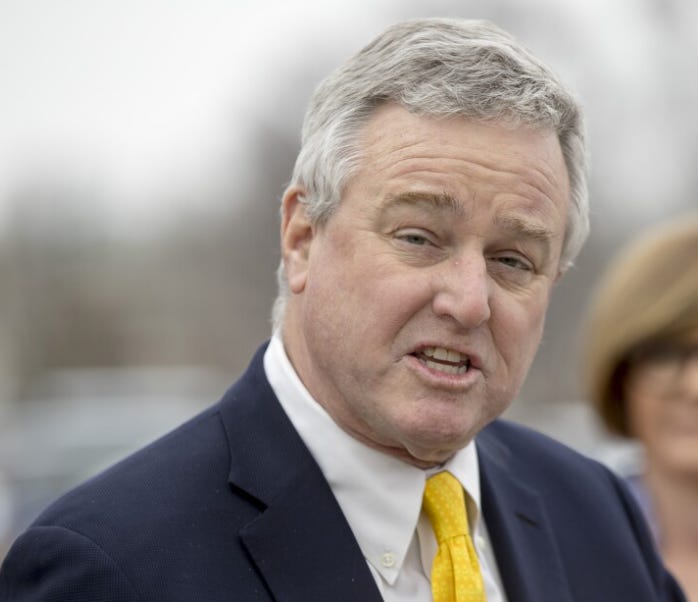
On the other stood David Trone, a billionaire who brought something very different into the race: UNLIMITED PERSONAL WEALTH AND A WILLINGNESS TO USE IT AT SCALE.
The Money That Changed The Conversation
This is not speculation. It is documented.
During the 2022 Attorney General’s race, a super PAC aligned with VoteVets spent heavily in ways that directly benefited Anthony Brown and damaged Katie Curran O’Malley.
Subsequent reporting confirmed that David Trone and his wife were major financial contributors to that same effort.
That sequence matters.
Money went into a super PAC
The PAC intervened decisively in a competitive statewide race
One candidate benefited politically
And two years later, that same candidate endorsed Trone in a high-stakes Senate primary.
One of the humorous points of the Vote Vets Scandal was that if it had been a federal race David Trone’s name never would have come out but it was a state race and David was not smart enough or keenly observant enough to notice that dark money PACs don’t work in Maryland in state races. Consequently, he was embarrassed because he was foolish and apparently somewhat dim-witted.
No one needs to be naïve about how Annapolis works to understand why that raised eyebrows across the state.
The Trone Coalition
Trone did not lack for supporters.
He bought a coalition that included:
Anthony Brown
Dutch Ruppersberger
A number of Prince George’s County officials
Select legislators and local leaders
Some of these endorsements came from policy alignment. Some from regional loyalty. And some, fairly or not, were viewed through the lens of the unprecedented money surrounding the campaign.
In politics, perception is reality.
And the perception in many corners of Maryland was simple: this was a campaign where money carried unusual weight.
Who Stood Their Ground
Against that backdrop, a larger share of Maryland’s Democratic leadership made a different choice.
They backed Alsobrooks.
They resisted the gravitational pull of money.
They chose the candidate who rose through Maryland’s political system rather than attempting to overwhelm it.
This included much of the congressional delegation, statewide leadership, and local officials who saw the race as something bigger than a single election.
They saw it as a question of whether Maryland politics would remain rooted in relationships and trust, or shift toward something more transactional.
The Joanne Benson Exception
There were, as always, exceptions that prove the rule.
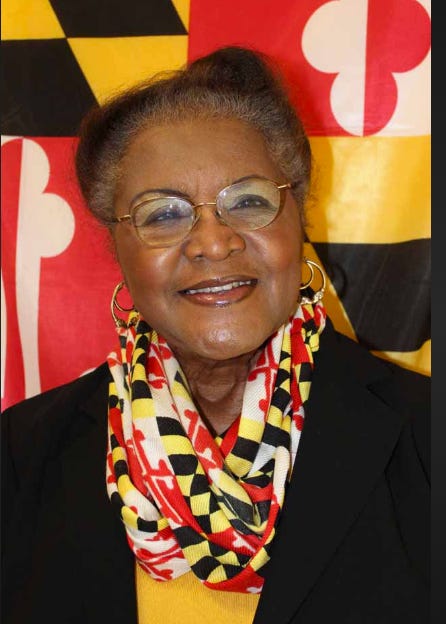
Joanne C. Benson supported Trone, but her reasoning was widely understood to be personal and political, not financial.
After backing Tom Perez in the gubernatorial primary, Benson found herself at odds with the Moore political orbit. Her decision reflected independence and longstanding tensions, not opportunism.
That distinction matters.
What Voters Decided
In the end, Maryland voters made their choice.
They chose honest and decent Alsobrooks.
And in doing so, they sent a clear message:
Maryland’s Senate seat is not something to be overwhelmed with money
Relationships still matter
Trust still matters
And political loyalty cannot simply be bought
The Bottom Line
The 2024 primary drew a line.
On one side were those who aligned with a campaign powered by unprecedented financial resources devoid of moral fiber.
On the other were those who stood with a more traditional Democratic coalition built over time.
Reasonable people can debate motives.
But the facts are clear, and the outcome was decisive.
Maryland Democrats chose the latter.
Is there a reason you mention "divorce" and "drinking problem" and "tragic failure" in the headline yet not cite a single fact about these things? "Perception is reality" is not a valid justification to spread innuendo about cabals and conspiracies. If you find out actual facts about unethical doings, go ahead and cite them.
You have so much to share to readers who'd like to learn more about the goings-on of local and state government; the recent post on "Crossover Day" was a good example. Stick to things you are willing to support with facts, or with quotes from people with names.