

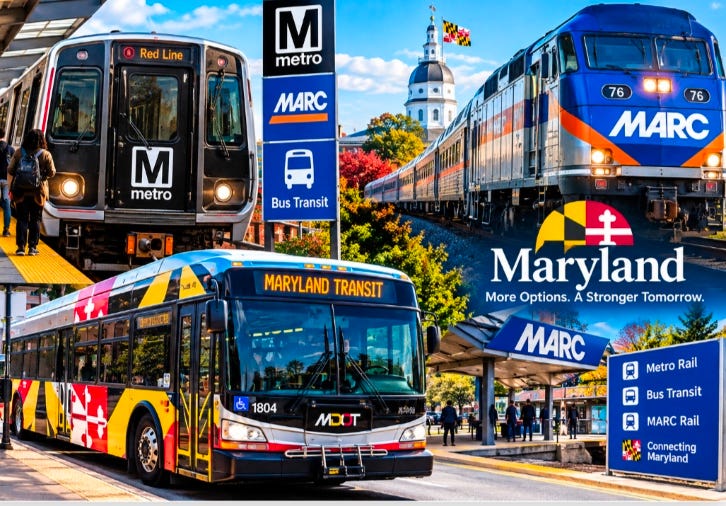
The Transit Multiplier: Why Trimming Regional Mobility Is a False Economy in Annapolis
By Barry O'Connell The Maryland Wire — Statehouse Analysis & Economic Dispatches
ANNAPOLIS — As the General Assembly prepares for another legislative session framed by structural budget deficits and tight Transportation Trust Fund (TTF) balances, legislative fiscal analysts are once again scrutinizing every major line item in state spending.
When revenue falls short, state budget writers naturally look to large capital allocations as immediate sources of relief. But as the statehouse confronts the ongoing squeeze on public infrastructure, one sector illustrates the acute danger of a "false economy" better than almost any other: regional transit funding.
To casual observers, appropriations for WMATA (the Washington Metropolitan Area Transit Authority), MARC commuter rail, and local transit systems often look like massive administrative subsidies—recurring operational costs that can be dialed up or down depending on the state's fiscal mood.
To economic developers, municipal planners, and institutional investors, however, transit funding operates under an entirely different logic. It is not an administrative expense. It is leveraged economic infrastructure.
