

The Vice President Has the Better House
November 7, 2026


The Vice President Has the Better House
November 6, 2026
Forget the titles. Forget the power. Forget the motorcades and the history and the portraits on the wall. I want to ask you a simple question, the kind of question you would argue about over a beer: which is the nicer house to live in — the White House, or the vice president’s house out at the Naval Observatory? I have spent time in the White House, and my impression is that you are living in a combination of government housing and an office building and a museum, with large blocks of the public wandering through it. I did not spend as much time at the Observatory, but my impression was the opposite: a nice house, much nicer to live in, more privacy, fewer crowds, fewer people wandering through the place all the time. It is not a public attraction. So let us settle it the way you settle any argument about houses: room by room, and on comfort alone.
The House That Never Sleeps
Start with the White House, because the numbers are so big they fool you. The Executive Residence is about 55,000 square feet, 132 rooms, 35 bathrooms, six levels. But most of that is not a home. The family actually lives on the second and third floors — the second floor is the heart of it, the Yellow Oval Room, the Treaty Room where presidents do their private reading, the president’s bedroom suite, a private dining room, a family kitchen. The third floor holds the guest rooms and the Solarium, a glass sunroom that started life as a laundry room. The family’s real apartment is about 9,000 to 10,000 square feet — roughly the size of the vice president’s entire house, which tells you something right there.
Now, the tourists never actually get up to those floors. The public tours the state rooms below you — the East Room, the Green Room, the Blue Room, the Red Room, the State Dining Room — on certain mornings, about half a million visitors a year since 9/11, and a million and a quarter a year before it. Add the spring and fall garden tours, the Easter Egg Roll, and the holiday open houses, and the grounds see crowds all year. So the public is not wandering through your bedroom. But that is the point. You live above a museum. The building never sleeps. There are about 96 full-time residence staff and 250 part-timers — butlers, maids, chefs, doormen, florists, curators, electricians, plumbers — run by the chief usher on a budget of about $12 million a year. The press corps works in the West Wing, in the briefing room built directly over Franklin Roosevelt’s old indoor pool, so the reporters literally work on top of the swimming pool. The Oval Office is downstairs, which means your commute is an elevator ride, and you cannot just leave. Every outing is a motorcade. President Obama took to slipping out for walks just to stay sane.
The amenities are the best in the world, and I will give the White House that. There is a bowling alley — built in 1947 as a birthday present for Harry Truman, from his Missouri supporters. There is an outdoor pool, added by Gerald Ford in 1975, with a tunnel to the West Wing so he could swim without going outside. There are tennis and basketball courts — Obama coached his daughter Sasha’s fourth-grade team, the Vipers, on the White House court. There is a putting green, a movie theater — though not right now, because the East Wing came down in October for a new ballroom — and the Truman Balcony, which Truman built over the South Portico in 1948 after Congress refused to pay for it. He did it anyway. There is a kitchen garden on the South Lawn that Michelle Obama planted in 2009. And the family pays for its own groceries. The government covers the official entertaining. Your own dinner is on you.
But listen to the people who lived there. Truman kept a diary, and on January 6, 1947, he wrote: “This great white jail is a hell of a place in which to be alone. While I work from early morning until late at night, it is a ghostly place. The floors pop and crack all night long.” He also called it the great white sepulcher of ambitions. Bill Clinton said he did not know whether it was the finest public housing in America or the crown jewel of the prison system. Barack Obama called it the bubble inside the bubble. Michelle Obama told Laura Bush there were prison-like elements to living there — “But it’s a really nice prison.” And the house literally fell apart under Truman. In 1948 his daughter Margaret’s piano leg fell through the dining-room ceiling, and the family moved out to Blair House while the mansion was gutted and rebuilt, 1950 to 1952. It is a magnificent house. It is also, by the testimony of the men who lived in it, a jail with good furniture.
I once heard Lynda Bird Johnson tell this one herself, and I have never forgotten it. When she was courting Charles Robb — the Marine captain she married in the East Room in December of 1967 — the Secret Service went everywhere with them, including on dates. In the car, they had a choice to make. If the agents rode in the front seat, they could hear everything the couple said in the back, but they could not see them. If they followed in the car behind, they could see the car, but they could not hear a word. So when Lynda and Chuck parked, they had to decide: did they want to be heard, or did they want to be seen? They could not have both. Her father read the Secret Service reports on their courtship at the rehearsal dinner and tore them up as wedding confetti. That is what it is to grow up in the White House. Even your courtship has an audience, and you get to pick only which sense it uses.
The House Behind the Trees
Now drive two and a half miles up Massachusetts Avenue to Number One Observatory Circle, the vice president’s house. It was built in 1893 as the home of the superintendent of the Naval Observatory, for $20,000, in the Queen Anne style, and it was never meant for a vice president. It is about 9,150 square feet, 33 rooms, six bedrooms, on about twelve acres of its own inside a 72-acre wooded campus, with the British Embassy next door. Congress designated it the vice president’s residence in 1974, and it is still legally the “temporary” residence — Congress never got around to making it permanent, fifty years on. Walter Mondale was the first vice president to live there full-time, in January of 1977. Every vice president since has lived there.
Here is the difference that matters. The residence has never been open to the public. Not once. And the Observatory itself stopped offering public tours in 2017 — the Navy’s own FAQ now says it does not offer public tours of its facilities. The whole 72-acre campus is closed to the public, not just the house. You cannot even see the house properly from the street. It sits behind a heavy gate and dense trees, and the loudest neighbors are astronomers.
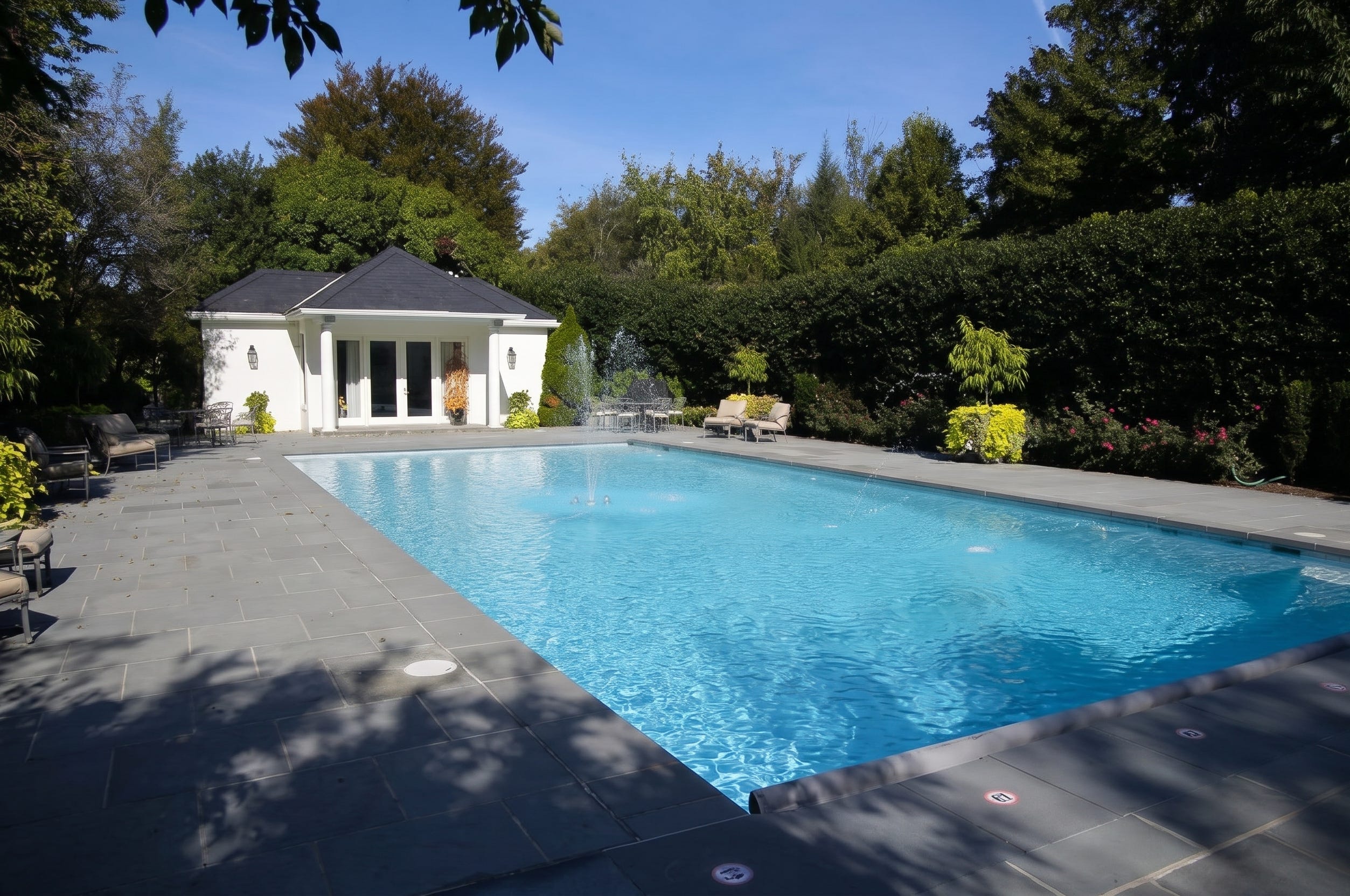
It is smaller, and I will not pretend otherwise. But all of it is yours. Every vice president has left a personal mark on it, which is the surest sign of a home rather than a museum. Dan Quayle put in the pool in 1991 — about $130,000, paid for with private donations, mocked in a recession as the Quayle Commemorative Pool, and Joe Biden later said Quayle was his favorite vice president because of it. George H.W. Bush built a quarter-mile jogging track and a horseshoe pit, and hosted more than 900 parties in eight years. Mike and Karen Pence added a basketball court and a beehive. Joe Biden put up a tree swing for Jill on Valentine’s Day in 2010, and a Family Heritage Garden with stones for the families who lived there, including the pets. The Vances added a chicken coop. You can redecorate the upstairs with your own furniture. Nobody’s curator tells you no.
It is also a 130-year-old Victorian, and it shows. When Mondale moved in, the hot water cut out in the middle of his showers and rust poured from the faucets. His daughter Eleanor, seventeen at the time, woke up one night convinced she saw a fleshless man in her bedroom, fainted, and whispered to the Secret Service that there was a man in her room — agents burst in with guns drawn, and requested that she never do that again. Al Gore waited nearly six months to move in for a $1.6 million renovation — new heating, new plumbing, asbestos out, rewiring. Kamala Harris waited three months in 2021 for a $3.8 million renovation and lived at Blair House meanwhile. Every new vice president waits on a renovation. The house is old, and it is creaky, and the plumbing fails. It is a real house, in other words.
The Kids
Now, the kids. I am not going to name anybody here, and I am not going to tell you anything personal about anybody’s children. But say a family moves in with teenagers — a teenage girl, and a slightly younger teenage boy brother. At the White House, their lives are a parade. Every time they come and go, somebody is watching, and the press is right there. They are not supposed to take pictures of the family constantly, but the coming and going is a show all the same, and that is a lot of scrutiny to put on a teenage girl, and on a somewhat younger teenage boy. At the Observatory, coming and going is not a big deal at all. If they want to get together and go swimming, or play basketball, or hang out and listen to music, it is a real home, and they can do that. If the young lady wants to get her hair done, or the young man wants to get a haircut, it is not nearly the big deal it is at the White House. Nobody is standing there with a camera. That is the difference between living in a house and living in a museum with a bedroom upstairs.
Chelsea Clinton is the proof. She was twelve when her father took office, and they mocked her on national television and radio for how she looked — called her homely, called her ugly, called her weird. Rush Limbaugh put her picture up on his television show as the White House dog. He apologized for it afterward, but the damage was done. Saturday Night Live made a joke of her adolescence in a Wayne’s World sketch when she was thirteen. She has said since that it was older men saying mean things to a twelve-year-old girl, and that a roomful of adults sat down and decided it was a good idea, and nobody in the room said maybe we should not make fun of children. I think a lot of that had to do with how close the press sits to the first family — the gaggle is right there every day, the cameras are right there, and the whole country is watching the house. There is no press gaggle at the vice president’s home. Nobody is camped outside the gate. And we cannot assume everyone is going to be nice from here on out. Children growing up do not need to be under public scrutiny — on the internet, on television, in magazines — during those years. In Chelsea’s day there was no internet. There is now. A house where nobody is watching is a kinder place to grow up than a house where everybody is.
The Open Door
There is one more difference, and it is the one nobody likes to talk about. Years ago, when I was working on counterterrorism response, I raised a scenario in a meeting. It was my job to think about the worst case, and I did. The White House is open and exposed. A truck could pull up in front of it, tarp over the back, and fire rockets from the bed into the building, and if the driver was willing to die doing it, there was not much of anything anybody could do to stop it. That was not a suggestion. It was a threat scenario, raised in a professional meeting, by a man whose job was to think about the worst case before it happened. And my suggestion was the opposite of an attack: semi-close the White House as a ceremonial place — bill signings, dinners, the state occasions — and move the family to Camp David, where they could be protected at a much higher level of security. The vice president’s house does not offer Camp David’s security. But it is two and a half miles from the White House, easy to get to the Senate, easy to get to meetings, easy to get to the Old Executive Office Building. It is central, and it is far more protected and isolated than the White House. A house behind a Navy gate, on 72 acres of trees, is a harder target than a house on a public square.


The Scorecard
So here it is, on comfort alone. Privacy: the Observatory, and it is not close — no tours, no crowds, a Navy gate and 72 acres of trees. Quiet: the Observatory — the White House never sleeps, and the press corps works on top of the swimming pool. Space: the White House, by a lot — 55,000 square feet against 9,150, though the family’s apartment alone is the size of the vice president’s whole house. Amenities: the White House, though the movie theater is currently gone, and the Observatory’s list is respectable — pool, putting green, exercise room, jogging track, basketball court, solarium, garden. Commute: the White House, because the Oval Office is downstairs; the vice president rides 2.5 miles by motorcade every morning. Staff: the White House, 96 full-time against a Navy-maintained household. The museum factor: the Observatory — you live in a house, not in the museum, and you can hang your own pictures. Condition: the White House — gut-renovated and maintained at a high standard, against a Victorian whose pipes fail. Security: the Observatory — the White House is open and exposed, and the Observatory sits behind a Navy gate on 72 wooded acres.
And then there is the testimony of the one man who has lived in both. Joe Biden spent eight years at the Observatory and four in the White House, and he called the White House a gilded cage. Of the Observatory he said it was totally different: “You’re on 80 acres, overlooking the rest of the city. And you can walk out, and there’s a swimming pool. You can walk off a porch in the summer and jump in a pool, and go into work. You can ride a bicycle around and never leave the property and work out.” Joan Mondale told him before he moved in: “You are going to love living in your new house. It’s a home. Not an institution.” The historian who wrote the book on the residence reports that Biden and Obama both agreed the vice president’s house is way better than the White House, as a place to live.
So the vice president has the better house, and the president has the grander address. The White House wins on space and staff and amenities and the shortest commute in American government. The Observatory wins on privacy and quiet and normalcy and the feeling of living in a house rather than an institution. If somebody offered me either one as a home — no power attached, no history, just the house — I would take the one behind the trees. The president gets the palace. The vice president gets to live in a house. And on comfort alone, the house wins.