

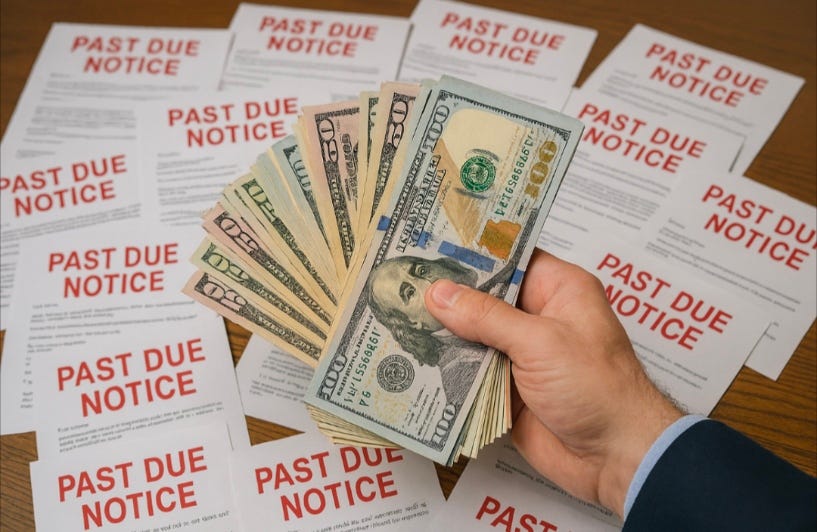
The Surplus That Wasn’t: A Maryland Budget Tutorial for Regular People
Most Marylanders don’t spend their evenings curled up with fiscal reports or revenue projections. They’re busy living their lives — paying bills, raising kids, trying to get through traffic on the Beltway without losing their religion. So when they hear that Maryland ended one governor’s term with a “surplus,” only to have the next governor announce a “deficit,” it feels like political double‑talk.
Let’s slow this down and explain it the way normal people actually understand money.
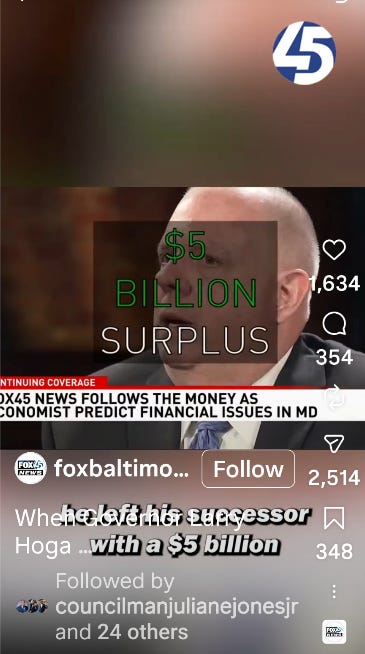
Imagine You Stop Paying Your Rent
Picture this.
You decide — just for the sake of argument — to stop paying your rent or mortgage for six months. You don’t tell your landlord. You don’t tell the bank. You just… don’t pay.
What happens?
Your checking account suddenly looks amazing.
You’ve got thousands of extra dollars sitting there.
You feel rich.
You could even take a screenshot of your balance and brag to your friends:
“Look at all this money I’ve saved!”
But here’s the truth:
You’re not rich. You’re in trouble.
The debt didn’t disappear just because you didn’t pay it. It’s sitting there, waiting for you, growing larger every month.
That’s the difference between having money and pretending to have money.
Maryland’s “Surplus” Worked the Same Way
At the end of the previous administration, Maryland appeared to have a large budget surplus. But much of that “surplus” came from two things:
- Temporary federal pandemic aid — a one‑time sugar rush that made the books look artificially healthy.
- Underfunded obligations — the state equivalent of skipping the rent.
Major bills — Medicaid costs, long‑term education funding, agency staffing needs — were not fully accounted for. They didn’t go away. They were simply not paid yet.
So the bank account looked full.
But the debts were still there.
Then the New Administration Opened the Books
When the new governor came in, the temporary federal money had dried up. The unpaid obligations were still sitting on the table. And the state agencies that had been hollowed out needed to be rebuilt just to function.
Suddenly, the “surplus” vanished — not because anyone mismanaged anything, but because the real bills finally had to be counted.
It’s the same moment when your landlord finally calls and says:
“We need to talk about those six months of unpaid rent.”
Nothing changed except the honesty of the accounting.
Why This Isn’t a Scandal — It’s Just Math
Some people want to turn this into a political story. But the truth is simpler and less dramatic:
- A temporary windfall made the books look good.
- Long‑term obligations were not fully funded.
- When the temporary money disappeared, the structural deficit reappeared.
- The new administration acknowledged the real numbers and began dealing with them.
That’s not mismanagement.
That’s responsible stewardship.
Why This Matters for Marylanders
Budgets aren’t abstract. They determine:
- Whether schools have enough staff
- Whether agencies can process benefits
- Whether roads get repaired
- Whether the state can weather a federal shutdown
- Whether vulnerable families get help when they need it
A government that pretends it has money it doesn’t actually have is a government that will eventually fail its people.
A government that faces the numbers honestly — even when the news isn’t pretty — is a government that can plan, adjust, and protect its residents.
The Takeaway
If you stop paying your rent, your bank account will look great — right up until the moment reality arrives.
Maryland’s “surplus” worked the same way.
It looked good on paper because the real bills weren’t being paid.
The shift from “surplus” to “deficit” wasn’t a collapse.
It was the moment the state stopped pretending and started accounting.
And for regular Marylanders who don’t have time for budget jargon, that’s the simplest, truest way to understand what happened.