

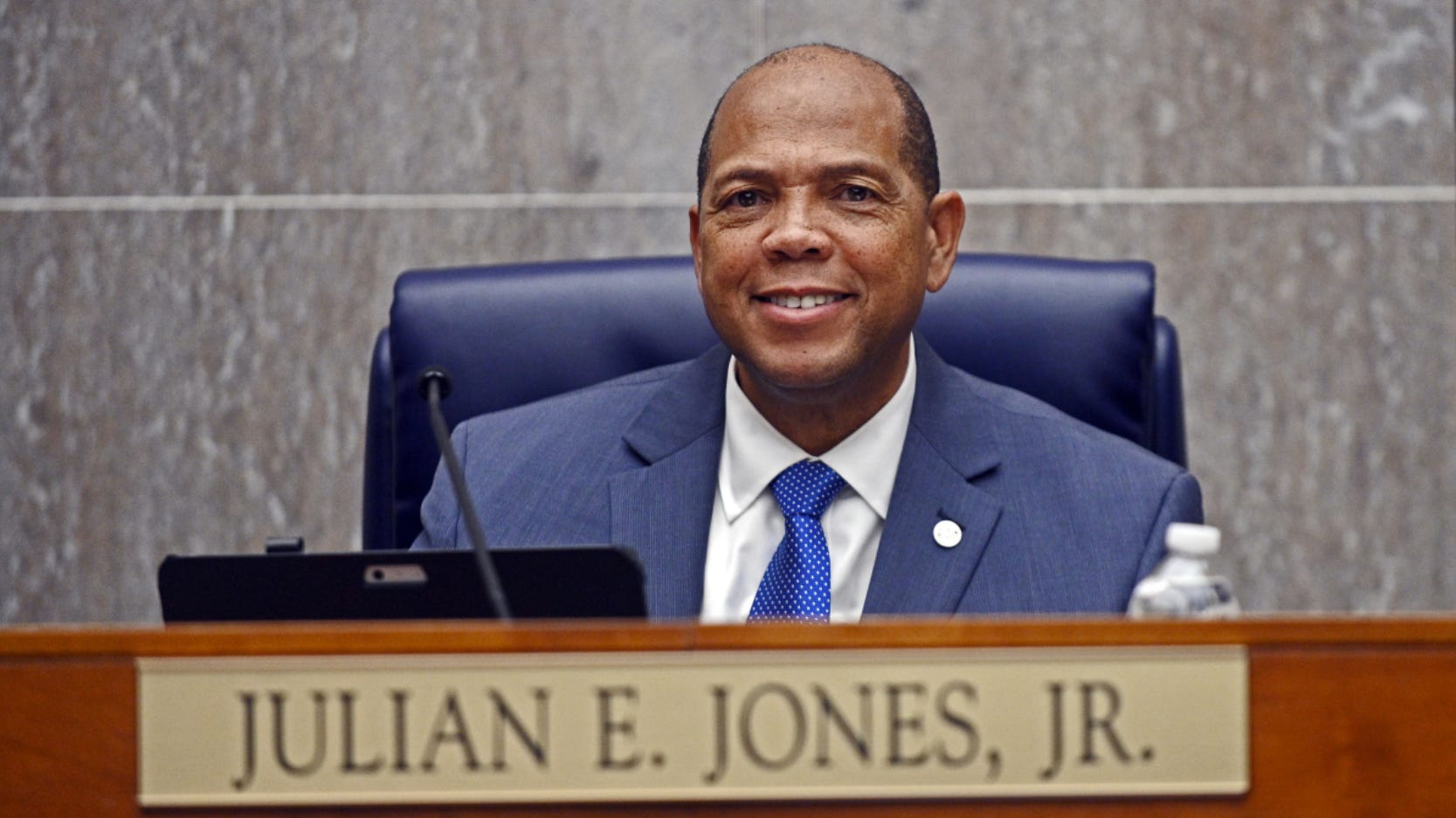
THE STATE OF THE RACE: Baltimore County’s Pension Storm and the Politics It Reveals
Maryland Wire Magazine Feature
By Barry O’Connell
I. The Race That Was Supposed to Be Predictable
For most of 2024, Baltimore County Democrats believed they were headi, WellKnownng into a familiar contest. Three sitting councilmembers — Julian Jones, Izzy Patoka, and Pat Young — were preparing to test their regional strengths in a countywide primary that looked, at first glance, like a classic Baltimore County triangulation: Liberty Road’s political muscle, Towson’s institutional networks, and the Eastside’s restless suburban blocs.
A fourth candidate, Nick Stewart, was expected to run as the energetic outsider — a reform‑minded attorney with a message, a following, and a lane, but not necessarily the structural advantages to break into the top tier.
Then the pension issue surfaced.
And suddenly, the race that was supposed to be predictable became something else entirely.
What began as a quiet legislative change in 2024 — a recalculation of how council pensions are determined — has now become the defining early narrative of the 2026 County Executive race. Whether it becomes a full‑blown scandal or remains a localized controversy is still unclear. But it has already reshaped the tone of the race, the anxieties of the political class, and the questions voters are beginning to ask.
The deeper question, however, is this:
Does the pension issue actually move votes, or is it simply the loudest noise in a race that hasn’t fully begun?
II. The Pension Story: A Flashpoint Without a Verdict
The mechanics of the pension issue are straightforward. In 2024, the council passed legislation tying future pensions to future salaries rather than past earnings. When the Salary Advisory Board later recommended nearly doubling council pay, the implications became obvious: current members could see their pensions rise dramatically.
The public reaction has been uneven.
Some voters are angry.
Some are confused.
Most are not yet fully engaged.
Political operatives — the ones who actually know the precincts, the churches, the community associations — are treating the pension issue as a liability, not a catastrophe. It is a vulnerability that can be exploited, but not yet a defining moral referendum.
The pension story has become a character test, and each candidate is being measured differently.
III. Julian Jones: The Known Quantity
Julian Jones enters this race with something no other candidate possesses: a long, durable, and deeply personal relationship with the Liberty Road corridor, the political heart of Black Baltimore County. For decades, he has been one of the county’s most visible and influential Black elected officials — a figure whose name recognition is not merely high but familiar.
His likability is not a footnote. In Baltimore County politics, likability is a structural advantage. Voters know him. They’ve seen him. They’ve interacted with him. They’ve watched him govern.
Does the pension issue hurt him?
Possibly.
Does it erase his base?
No.
In a county where the Democratic primary electorate is 40–44% Black, and where the Liberty Road corridor remains the decisive bloc, Jones is positioned to win a commanding share — perhaps 70% or more — of that vote. No other candidate has a comparable foothold.
This does not make him inevitable.
But it makes him anchored in a way the others are not.


IV. Izzy Patoka and Pat Young: The Other Insiders
Patoka and Young face a different challenge. They do not have Julian’s base. They do not have his cultural footprint. They do not have his long‑standing presence in the county’s most decisive political corridor.
What they do have is:
- money,
- institutional networks,
- and the ability to appeal to white Democrats who are splitting their loyalties three ways.
Patoka, who chaired the council when the pension legislation passed, has been forced into the awkward position of calling for repeal — a move that signals political awareness but also acknowledges vulnerability. Young, who voted against the key charter amendment, has the cleanest hands but the smallest footprint.
Both remain viable.
Neither has yet found the message that breaks through the noise.

V. Nick Stewart: The Beneficiary, Not the Frontrunner
If the pension issue has a political beneficiary, it is Nick Stewart.
He is the only candidate who can say, without qualification, that he had nothing to do with the pension legislation. He is the only one who can run as the reformer without contradiction. And he is the only one who can attack all three insiders at once.
But that does not automatically make him the frontrunner.
Stewart is gaining attention.
He is gaining energy.
He is gaining credibility.
But he is still introducing himself to voters who have never seen his name on a ballot. He is still building recognition in communities that have known the other three candidates for years. He is still translating momentum into structure.
He is viable.
He is rising.
But he is not yet overtaking the built‑in advantages of Jones or Patoka.
VI. The Demographics That Actually Decide This Race
Baltimore County’s Democratic primary electorate is a mosaic with predictable patterns:
Black voters (40–44%)
Concentrated in the Liberty Road corridor.
Decisive in countywide primaries.
Historically cohesive.
Jones’s strongest base.
White Democrats
Spread across Towson, Parkville, Catonsville, Perry Hall, and the Eastside.
Fragmented.
Susceptible to three‑way splits.
Asian, Hispanic, and Islamic communities
Growing.
Increasingly engaged.
Politically diverse.
Not yet predictable.
Jones has the deepest base.
Patoka has the broadest geographic appeal.
Young has the cleanest ethics narrative.
Stewart has the sharpest outsider message.
The race will be decided by how these blocs move — and whether the pension issue becomes a moral referendum or a background irritant.
VII. So Where Does the Race Stand?
Here is the clearest, most honest assessment:
- The pension issue is real, but not yet fatal.
- Julian Jones remains structurally strong.
- Patoka and Young are viable but unproven.
- Stewart is the biggest beneficiary of the controversy, but not yet a top‑tier threat.
- No polling exists to confirm or contradict any of this.
In other words:
The race is competitive.
The narrative is unsettled.
The electorate is not yet fully engaged.
And the pension story — whether it becomes a scandal or a footnote — will determine whether this remains a four‑way contest or collapses into a two‑man showdown.