


THE COUP THAT ALMOST WAS:
Tommy Bromwell, Mike Miller, and the Last Great Power Play of the Old Annapolis
I. The Era Nobody Wrote Down
There are periods in Maryland political history that live in the memories of insiders but never quite make it into the public record. The late 1990s and early 2000s — the height of Senate President Thomas V. “Mike” Miller Jr.’s power — is one of those eras.
The Baltimore Sun covered the surface. The Washington Post caught the ripples. But the deeper mechanics — the vote‑counting, the factional bargaining, the soft landings, the quiet federal connections — never made it into print.
And so one of the most fascinating stories of that era has been half‑remembered, half‑told, and never fully assembled: the moment Senator Thomas L. “Tommy” Bromwell Sr. nearly toppled Mike Miller from the presidency of the Maryland Senate.
This is the story of that near‑coup — and the system that prevented it.
II. The Math Behind a Revolt
To understand why Bromwell’s challenge mattered, you have to understand the arithmetic of the Maryland Senate.
The chamber had 47 members.
To dethrone Miller, Bromwell needed 24 votes.
He couldn’t get there with Baltimore alone.
He couldn’t get there with disaffected Democrats alone.
He needed a coalition that had never existed before — and hasn’t existed since.
The Coalition Bromwell Tried to Build
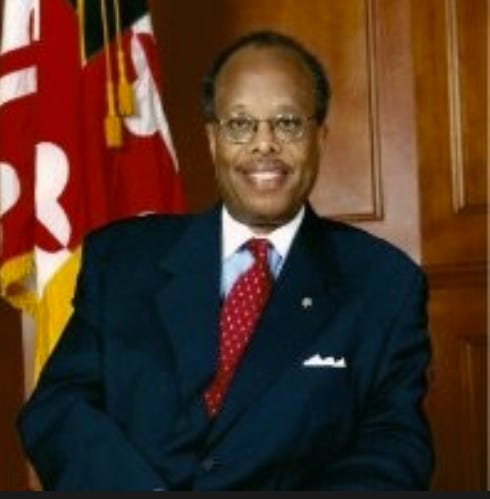
- The Black Caucus (10–12 senators)
Led by figures like Clarence Blount, Nathaniel McFadden, Joan Carter Conway, and Ralph Hughes — the largest cohesive bloc in the chamber.
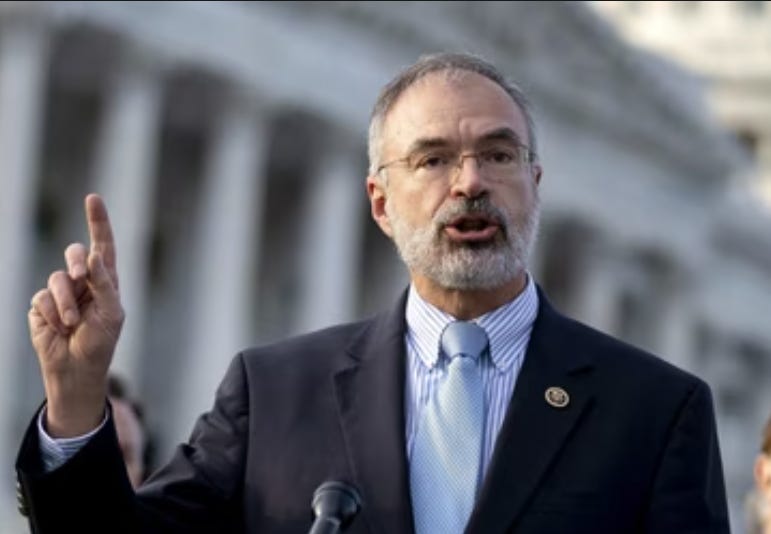
- The Republicans (14 senators)
Including stalwarts like Larry Haines, Andy Harris, Alex Mooney, and Martin Madden — a superminority with nothing to lose and everything to gain.
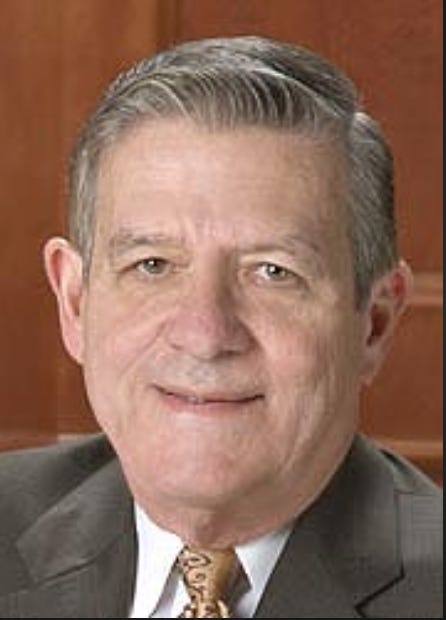
- Baltimore and Baltimore County Democrats
Senators like Barbara Hoffman, Paula Hollinger, and Norman Stone — a mix of policy technocrats and old‑school operators.
- Bromwell’s personal loyalists
A handful of senators who owed him favors or shared his grievances.
If Bromwell could combine:
- 10–12 Black caucus votes
- 14 Republicans
- 3–5 personal allies
He could hit 27–31 votes — enough to end Miller’s reign.
For the first time in years, the math was real.
III. Why Republicans Were Willing to Join
Under Miller, Republicans were ornamental.
They held:
- no chairs
- no vice chairs
- no subcommittee gavels
- no leverage
A Bromwell presidency offered them something they had never had: power.
Not majority power — but meaningful power:
- vice chairmanships
- subcommittee chairs
- equal representation on certain committees
- a real say in budget negotiations
For Republicans like Haines, Madden, and Mooney, this was the deal of a lifetime.
They were in.
IV. The Black Caucus: The Fulcrum of Power
The Black caucus was the swing bloc — and everyone knew it.
They had:
- numbers
- discipline
- district leverage
- seniority
But they also had a complicated relationship with Miller.
Miller’s Paradox
He had:
- strong personal relationships with many Black senators
- a long record of supporting their district priorities
- a habit of saying things that would end a political career today
He wore Confederate cavalry buttons as cufflinks.
He once publicly insulted Baltimore in language that got replayed for weeks.
He could be dismissive, paternalistic, and blunt to the point of cruelty.
And yet — he delivered.
He gave:
- committee gavels
- budget wins
- district projects
- staff resources
He treated them as essential to his coalition, even if he didn’t treat them as equals.
This was the contradiction that defined the era.
V. The Moment the Coup Collapsed
When word leaked that Republicans were willing to join Bromwell, Miller moved with the speed of a man who had survived a dozen attempted coups.
He called in the Black caucus.
He made commitments — real ones.
He promised:
- more committee power
- more influence over the agenda
- more district benefits
And then Clarence Blount — the Majority Leader, the moral center of the caucus — delivered the speech that ended the revolt.
He reaffirmed loyalty to Miller.
He signaled that the caucus would not defect.
And with that, the math evaporated.
The Republicans were stranded.
Bromwell was isolated.
The coup was dead.
VI. The Soft Landing: Annapolis’ Oldest Tradition
This is the part of the story the newspapers never printed.
In Annapolis, when someone becomes a problem — or when someone has earned a reward — you don’t destroy them.
You move them.
You give them:
- a state agency
- a commission
- a board
- a quasi‑public authority
- a six‑figure salary
And once they resign their seat, they are:
- no longer a threat
- no longer a rival
- no longer a vote‑counter
This is the soft landing — the unwritten rule of the building.
And it’s exactly what happened next.
VII. Bromwell’s Exit and the IWIF Question
Two years after the failed coup, Bromwell resigned from the Senate to become CEO of the Injured Workers’ Insurance Fund (IWIF).
At the time, IWIF was:
- a state agency
- with a state‑appointed board
- and a salary far higher than a senator’s
A sitting senator could not hold that job without an ethics ruling.
No such ruling exists.
Therefore, the offer had to be contingent on resignation.
Was this Miller’s doing?
There is no public evidence.
But the structure is unmistakable:
- Bromwell backs off the coup
- Miller keeps the presidency
- the Black caucus gains power
- Republicans get nothing
- Bromwell gets a soft landing
- the Senate returns to equilibrium
This is how Annapolis worked.
VIII. The Federal Hook: Miller and Hoyer
One final piece of the puzzle rarely gets mentioned.
Miller had a quiet but powerful relationship with Congressman Steny Hoyer.
Hoyer was rising in the House leadership.
He controlled:
- federal appointments
- federal advisory boards
- federal grant influence
This gave Miller something no other state legislative leader had:
a federal patronage pipeline.
It made him nearly impossible to overthrow.
IX. The Legacy of the Almost‑Coup
The Bromwell–Miller confrontation is more than a footnote.
It was the last moment when the old Senate machine could have been toppled by internal arithmetic.
It revealed:
- the power of the Black caucus
- the desperation of the Republicans
- the limits of Baltimore’s influence
- the ruthlessness of Miller’s survival instincts
- the durability of the soft‑landing system
And it showed, once again, that in Annapolis:
- power is personal
- loyalty is transactional
- and the real stories happen behind closed doors
This is the record of an era — one that deserves to be remembered.