

THE REPUBLICAN PATH TO VICTORY IN MARYLAND
…and Why They Keep Losing Instead
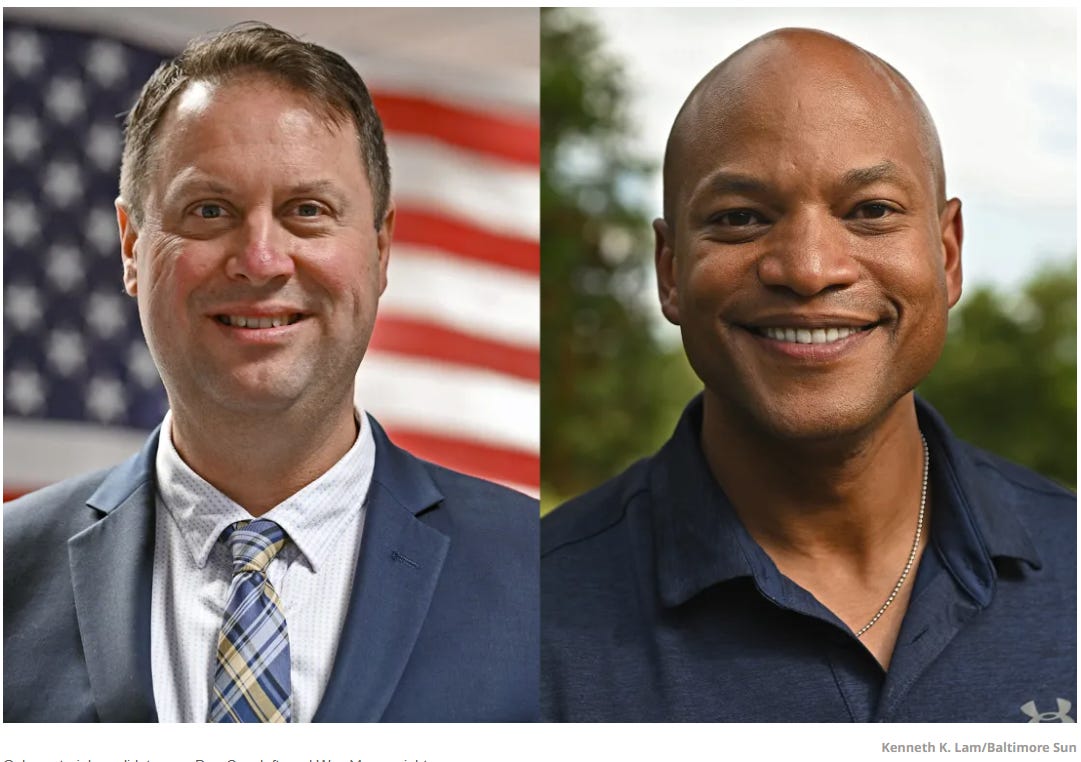
Maryland politics confuses a lot of people — especially when they see a Republican like Dan Cox win a primary by a landslide, only to get crushed in the general election. To someone who doesn’t follow state politics closely, it feels contradictory. If a candidate is so popular with Republicans, why can’t they win statewide?
The answer is simple, mathematical, cultural, and geographic — all at once.
Maryland isn’t one political ecosystem. It’s five different Marylands, each with its own version of what “Republican” means. And only one of those Marylands votes in Republican primaries.
Let’s break it down.
1. The Math Problem: Why the GOP Starts 30 Points Behind
Maryland’s voter registration tells the whole story:
- Democratic: ~54%
- Republican: ~24%
- Unaffiliated/Independent: ~20%
- Other parties: ~2%
Even if every single Republican in the state votes for a GOP nominee, that’s still only about one-quarter of the electorate. To win statewide, a Republican must:
- Win all Republicans
- Win a majority of independents
- Peel off a meaningful slice of conservative/moderate Democrats
That last group — conservative Democrats — is the key. Without them, no Republican can get close to 50%.
This is why Larry Hogan could win, and why MAGA-aligned candidates cannot.
2. The Cultural Map: Maryland’s Five Political Regions
Maryland isn’t a red state or a blue state. It’s a patchwork of political cultures, each with its own expectations of what a Republican should look like.
Below is the map that explains everything.
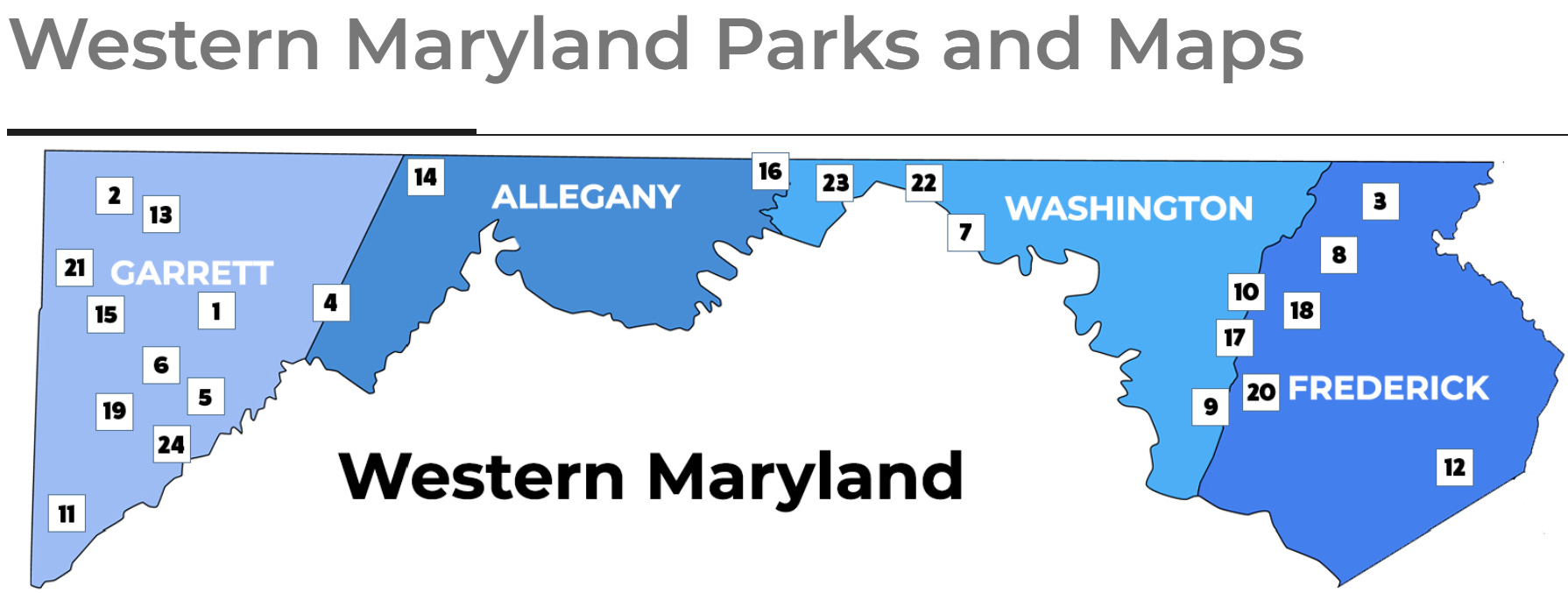
A. Western Maryland (West of Frederick): The Outriders
This is the heart of Maryland’s MAGA vote.
- Deeply conservative
- Anti-Annapolis, anti-establishment
- Economically stressed
- Culturally traditional
These voters dominate Republican primaries — but they represent too small a share of the statewide electorate to carry a general election.
Primary power, general-election ceiling.
B. The Eastern Shore: Old-Line Rural Republicans
Similar to Western Maryland, but with a different flavor:
- Watermen, farmers, small-town conservatives
- Mix of MAGA populism and old-school rural Republicanism
- Strong GOP margins, but shrinking population share
Again: great for primaries, insufficient for statewide victory.


C. Baltimore County: The Deciders
This is the most misunderstood county in Maryland politics.
Baltimore County is home to:
- Catholic Democrats
- Reagan Democrats
- Union households
- Older white working-class voters
- Suburban moderates
These voters are:
- Crime-sensitive
- Tax-sensitive
- Culturally traditional
- Not automatically MAGA
They will vote for:
- A Hogan-style Republican who talks taxes, schools, and competence
- Or a Democrat who feels local, steady, and non-preachy
But they will not vote for a nationalized, grievance-driven, Trump-aligned candidate.
If a Republican loses Baltimore County, they lose Maryland.
D. Anne Arundel County: Two Republican Parties in One
Anne Arundel is split right down the middle:
North Anne Arundel
- More MAGA-friendly
- Blue-collar, Baltimore-adjacent
- Responds to tough-on-crime, anti-establishment messaging
South Anne Arundel
- More Hogan-style
- Exurban professionals, retirees, water-oriented communities
- Want low taxes, quiet government, and stability
A statewide Republican must speak both dialects — without scaring off independents.
E. Howard County: The Former Country-Club Republicans
Howard County used to be a Republican stronghold — the home of:
- Fiscal conservatism
- Professional-class stability
- Social tolerance
- “Your bedroom is your business” conservatism
Trumpism broke that coalition.
The new GOP message — culture war, sexual-morality policing, transgender fear-mongering — is the opposite of what Howard County’s affluent, college-educated voters want.
They didn’t become liberals.
The party they belonged to left them.
3. Prince George’s County: The Wall Republicans Can’t Climb
Prince George’s County hasn’t elected a Republican county executive since Lawrence Hogan Sr. (1978–1982).
Since then:
- Demographics shifted
- Party identity solidified
- Democratic institutions became deeply rooted
PG is now a Democratic fortress, and Republicans don’t even seriously contest most countywide offices.
A Republican doesn’t need to win PG — but they must avoid losing it by catastrophic margins. MAGA candidates typically lose PG by 50–70 points, which is mathematically fatal.
4. The Trump-Era Fracture: Why Republicans Lost Their Old Coalition
For decades, Maryland Republicans were a coalition of:
- Fiscal conservatives
- Suburban professionals
- Social moderates
- Quiet traditionalists
- Rural conservatives
Trumpism replaced that with:
- Borrow-and-spend economics
- Permanent grievance
- Culture war
- Sexual-morality policing
- Attacks on institutions and norms
This alienated:
- Howard County professionals
- South Anne Arundel moderates
- Baltimore County Catholic Democrats
- College-educated suburban independents
These voters didn’t leave the GOP because they became progressive.
They left because the GOP stopped being the party they recognized.
5. The Hogan Exception: What a Winning Republican Looks Like
Larry Hogan won twice because he:
- Avoided national culture wars
- Focused on taxes, roads, schools, and competence
- Treated Democrats as neighbors, not enemies
- Made independents comfortable
- Made moderate Democrats feel safe crossing over
He built a coalition that looked like:
- All Republicans
- Most independents
- Just enough conservative Democrats in Baltimore County, Anne Arundel, and Howard
That’s the only viable Republican path in Maryland.
6. Why Democrats Benefit
Democrats benefit from:
Structural math
They start with a 30-point registration advantage.
Geography
They dominate PG, Montgomery, and Baltimore City — three population giants.
Republican fragmentation
The GOP is split between:
- MAGA populists
- Hogan moderates
- Former Republicans who now vote independent or Democratic
Cultural mismatch
MAGA messaging repels the exact voters a Republican needs to win statewide.
Candidate quality
Democrats often nominate steady, local, community-rooted candidates.
Republican primaries often reward the loudest, not the broadest.
7. The One-Sentence Explanation Anyone Can Understand
> “Maryland Republicans keep losing statewide because the candidates who win their primaries can’t win the voters who decide the general election.”
That’s the whole story.
Where does Harford County fall, politically?
That neatly sums up the political and geographic terrain. Everything else is political theater, some actors worth watching, others need a new day job.