

Maryland’s Constitutional Response to Federal Overreach
By Barry O’Connell
Editorial strategist, historical fiction author, and reluctant chronicler of the absurd
I. Introduction: When Legitimacy Wears a Costume
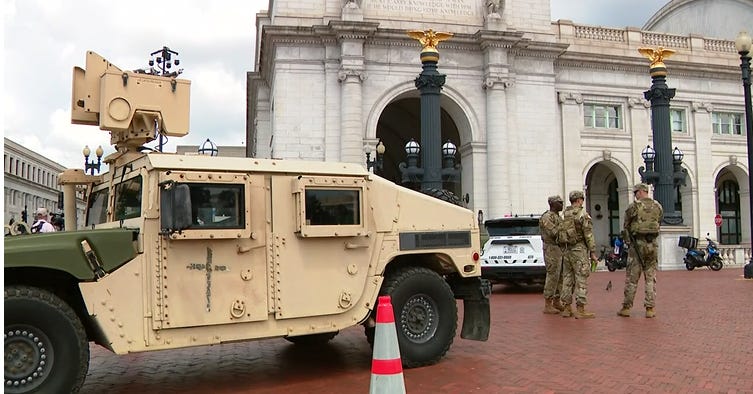
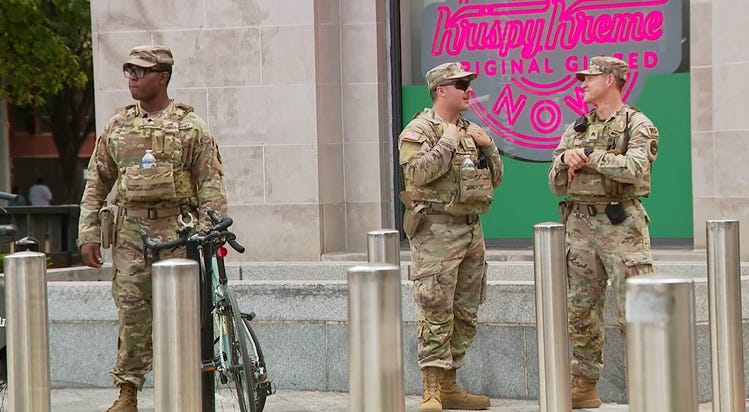
The recent federal court ruling against the Trump administration’s deployment of National Guard troops to Los Angeles[^1] confirms what many constitutional scholars have long suspected: the executive branch, when untethered from lawful constraint, becomes a theater of force. Maryland, under Governor Wes Moore, now faces the possibility of similar incursions—federal troops deployed to Baltimore under the guise of immigration enforcement or public order. This brief outlines the legal, strategic, and ethical tools available to the state in resisting such gangster governance.

II. Governor Moore’s Constitutional Toolkit
Governor Moore’s powers are not ornamental. They are rooted in the dual sovereignty of our federal system and reinforced by Maryland’s own statutory protections.
A. Refusal to Activate the Maryland National Guard
Moore retains full authority over Maryland’s Guard unless federalized under Title 10. He has already signaled refusal to deploy troops for domestic policing[^2].
B. Litigation as Preemptive Defense
Maryland can file suit to block federal troop deployment, citing:
- Violation of the Posse Comitatus Act (18 U.S.C. § 1385)
- Lack of lawful justification under the Insurrection Act
- Fourth and Fifth Amendment violations if detentions occur without due process
C. Shielding State Agencies from ICE Entanglement
Moore can direct state police and local agencies to:
- Refuse ICE detainers without judicial warrants
- Deny access to state databases
- Bar ICE from sensitive locations under Maryland law[^3]
III. What If Federal Troops Arrive Anyway?
If federalized National Guard units or ICE agents begin detaining Maryland residents:
A. Legal Recourse
- Habeas corpus petitions can challenge unlawful detentions
- State-level privacy laws can block data sharing
- Emergency injunctions can halt enforcement actions pending review
B. Political Messaging
Moore must frame the incursion not as law enforcement, but as performative authoritarianism—a spectacle designed to intimidate, not protect.
IV. The Temptation of Counterforce—and Its Limits
Could Moore deploy Maryland’s Guard to block federal troops? Legally, no. Constitutionally, it risks escalation. Arresting federal agents or troops would violate federal supremacy and invite retaliation.
A. The “No Mask” Law Hypothetical
While Texas once passed anti-mask laws targeting the Klan[^4], Maryland cannot criminalize federal agents for wearing protective gear. Such a law would:
- Be struck down as unconstitutional
- Risk chilling legitimate protest
- Invite federal preemption
---
V. Strategic Recommendations
Maryland’s best defense is layered, lawful, and loud.
1. File preemptive litigation before troops arrive
2. Strengthen state sanctuary policies and privacy protections
3. Coordinate with other governors to build a multi-state legal front
4. Mobilize legal aid networks to defend detainees
5. Use public messaging to expose the illegitimacy of federal actions
VI. Conclusion: The Republic Is Not a Stage Set
Governor Moore must treat this moment not as a policy dispute, but as a constitutional emergency. The tools of resistance are legal, not theatrical. Maryland’s response must be principled, strategic, and unflinching. The republic is not a stage set—and we are not props.
Annotated Footnotes
[^1]: Federal District Court for the Central District of California, ruling issued August 2025, finding Trump’s deployment of National Guard troops to Los Angeles violated the Posse Comitatus Act.
[^2]: Governor Wes Moore, public statement, July 2025: “Maryland’s National Guard will not be used to police our own people.”
[^3]: Maryland Values Act (2020), prohibits state agencies from cooperating with ICE without judicial authorization.
[^4]: Texas anti-mask laws (1920s–1950s), originally aimed at curbing Klan intimidation; later repealed and reinterpreted under First Amendment scrutiny.