


🎯 The Quiet Recalibration of Wes Moore’s Political Machine
By Barry O’Connell
In Maryland politics, the loudest moves are often made in silence. Governor Wes Moore’s reelection campaign has begun to take shape—not through splashy announcements or sweeping policy pivots, but through a subtle reshuffling of personnel that speaks volumes about ambition, message discipline, and national positioning.
🔄 The Departure of Ned Miller: A Loyalist Steps Aside
Ned Miller, Moore’s 2022 campaign manager and longtime strategic partner, has quietly exited the governor’s orbit to manage Keisha Lance Bottoms’ gubernatorial bid in Georgia. Miller’s departure isn’t a demotion—it’s a redeployment. His move suggests that Moore’s inner circle is not shrinking but expanding, with trusted operatives branching out to build influence in other Democratic strongholds.
Ned Miller you may remember was Governor Moores Campaign Manager who stepped awy from his senioradvisor role to reise the money for a super PAC dedicated to defeating Larry HoGan for Senate.
Miller’s absence leftA a vacuum in Annapolis, one now filled by a rising star with national credentials.
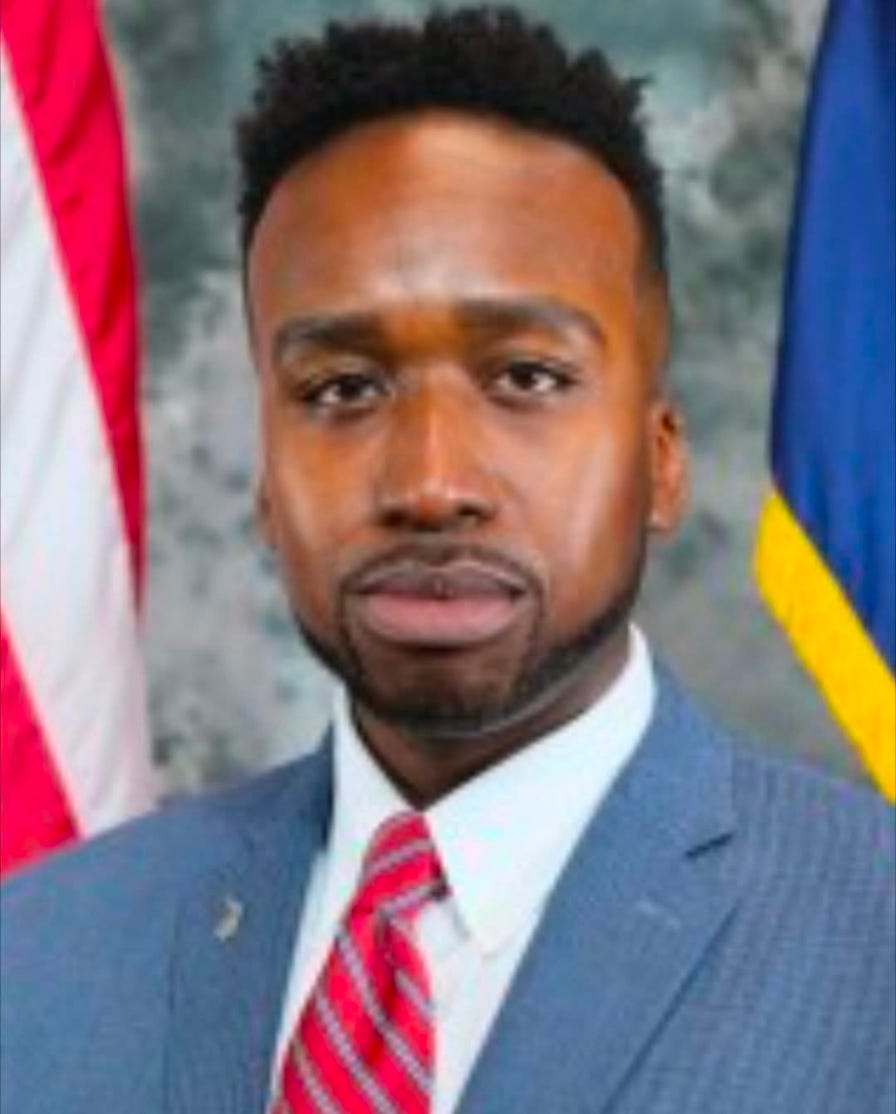
🧠 Enter Ron Owens: A Strategist for the National Stage
Ron Owens, a 29-year-old Michigan operative, has been tapped to lead Moore’s 2026 campaign. Owens cut his teeth advising the Democratic Senatorial Campaign Committee and managing Brandon Presley’s near-upset in Mississippi—a race that drew national attention for its messaging precision and grassroots mobilization.
Owens’ hire signals more than a generational shift. It’s a recalibration toward national-grade campaign infrastructure, the kind built not just for reelection but for elevation. With ties to Gov. Gretchen Whitmer’s team and a reputation for disciplined narrative control, Owens brings a Midwestern sensibility and a national lens—both assets if Moore is eyeing a 2028 presidential run.
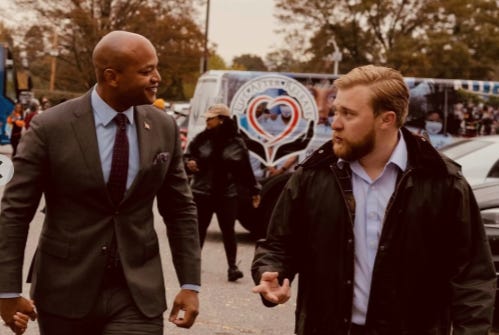
🎙️ Carter Elliott’s Migration: Message Discipline Tightens
Adding to the intrigue is the internal migration of Carter Elliott, Moore’s former press secretary, who now serves as media adviser to the campaign. This move collapses the distance between executive messaging and campaign strategy, ensuring that Moore’s public voice remains consistent, calibrated, and campaign-ready.
Elliott’s shift reflects a broader trend in Democratic politics: the fusion of governance and campaigning into a single, seamless narrative. In an age where every press conference is a campaign ad and every tweet a policy position, Moore’s team is betting on message discipline as a strategic asset.
🧭 What It All Means
This isn’t just a staff shuffle—it’s a strategic reorientation. Moore’s campaign is rehearsing for a national spotlight, not just a statehouse encore. The departure of Miller, the arrival of Owens, and the internal migration of Elliott suggest a team recalibrating for scale, speed, and scrutiny.
> Like a conductor swapping out first-chair violinists before the overture, Moore is tuning his ensemble not for local applause, but for a national stage.
Whether this ensemble hits the right notes remains to be seen. But one thing is clear: Maryland’s quiet governor is composing something far louder than most realize.