

THE PARSON AND THE PLANTER
A Maryland Wire Magazine Feature
By Barry O’Connell
There are stories that fit neatly into the moral boxes we build for them — heroes on one side, villains on the other. And then there are Maryland stories.
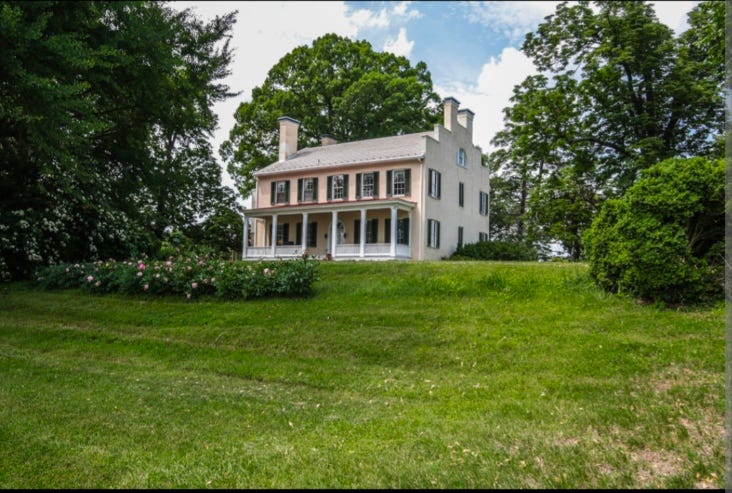
This one begins on the old Bowie plantations, in the rolling tobacco country that would one day become the town of Bowie, Maryland. It begins with a boy named Rezin Williams, born free on a plantation where almost no one else was. And it begins with the man who owned that plantation — Oden Bowie, heir to a dynasty of horses, politics, and contradictions.
Together, they form a portrait of the state Mike Miller used to call “the middle temperament.” Not all good. Not all evil. Something tangled in between.
I. The Boy at Fairview
Rezin Williams came into the world in 1822 at Fairview Plantation, a thousand‑acre Bowie estate where the lines between free and enslaved were as thin as the tobacco leaves drying in the barns. His father, also named Rezin, traced his freedom to Native ancestry. His mother’s story is lost to time, but the son grew up a free Black child surrounded by enslaved people — a precarious status in a state that could change a man’s life with a single legal technicality.
Somewhere on that plantation, in the shadows of the big house or the quarters, young Rezin learned to read. No one recorded who taught him. Maybe a sympathetic white child. Maybe another literate Black worker. Maybe he taught himself. But he learned — and that literacy would become his calling.
By his twenties, he was riding a mule across Prince George’s County, preaching the Gospel of Jesus Christ to the enslaved. He carried no weapon, only a Bible and a voice that could fill a barn. He was known simply as “Parson Williams.”
And that made him a target.
II. The Night of the Patty Rollers
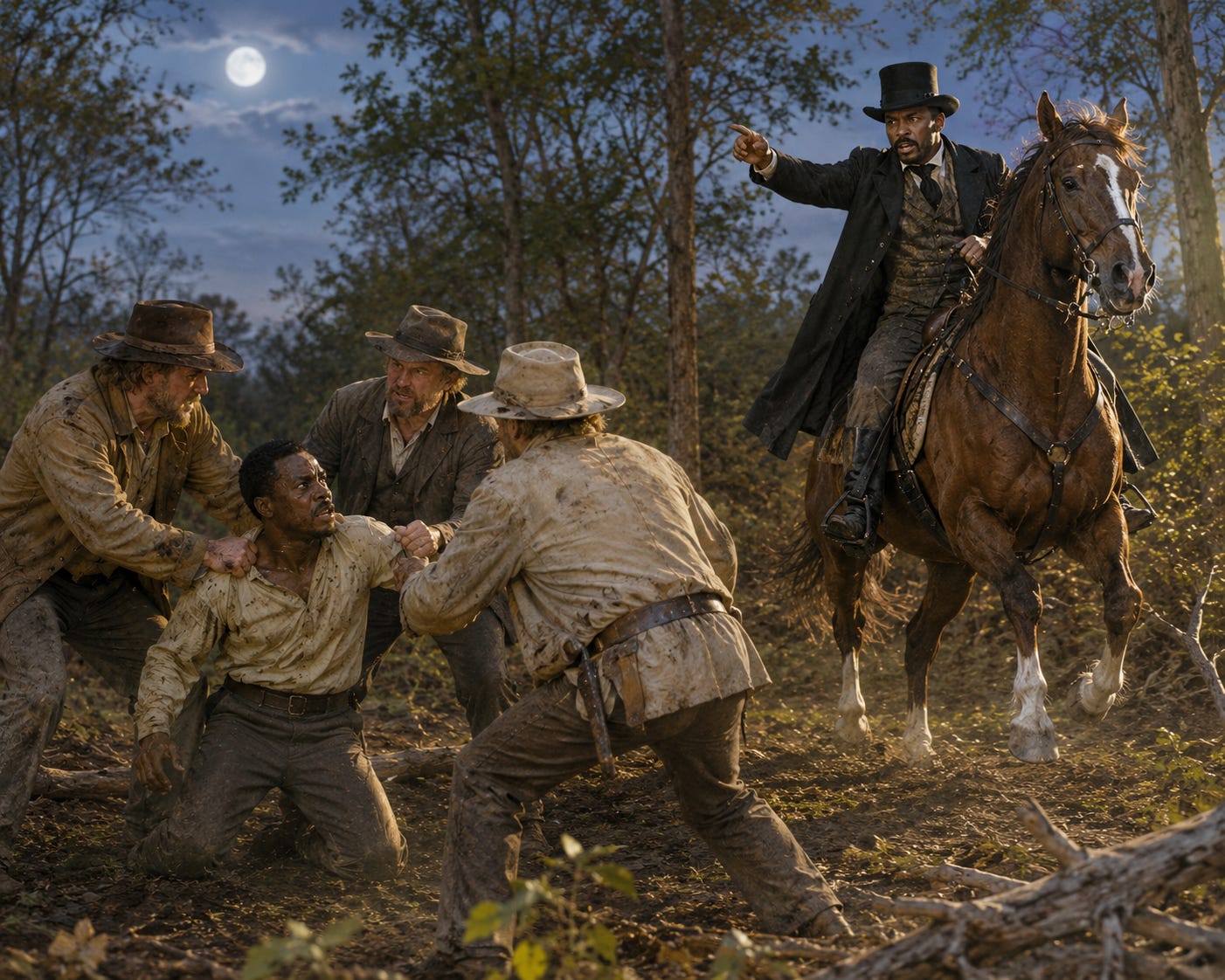
The patrollers — the “Patty rollers” in the dialect of the enslaved — were the unofficial police of the slave system. They roamed the roads at night, looking for runaways, gatherings, or any sign of Black autonomy. They were feared for good reason. Think of them as an 1850 version of ICE Goons.
One night, after leading hymns and reading Scripture at a plantation service, Parson Williams was stopped on the road. The Patty rollers accused him of stirring up the slaves. They threatened to tar and feather him — a punishment that could kill a man.
Word traveled fast on the plantations. And the story that has survived — passed down in the Black community long before the WPA interviewers came around — is that someone got word to Oden Bowie, the young master of Fairview.
Bowie, the story goes, mounted one of the famous Bowie horses — the same bloodlines that would later give birth to the Preakness — and rode out at a full gallop. He confronted the patrollers and forced them to release the preacher.
Is every detail literally true? Maybe not. But the story captures something essential about both men — and about Maryland itself.
A slaveholder who rescues a Black preacher.
A preacher who depends on the protection of the man who owns the plantation.
A state where the lines between oppression and mercy blur in the moonlight.
The middle temperament.
III. The War That Divided Maryland — and the Choice Bowie Made
When the Civil War came, Maryland stood on a knife’s edge. Some of its elite sided with the Confederacy — none more famously than George H. Steuart, the Baltimore-born general whose men called him “Maryland Steuart” to distinguish him from J.E.B. Stuart.
Oden Bowie could have gone that way. He was a wealthy planter, a man of horses and land, a Democrat in a slave state. No one would have been surprised if he had joined Steuart in the Confederate ranks.
But he didn’t.
Bowie was a Douglas Democrat, a Unionist who believed Maryland’s place was with the United States. He opposed secession. He supported keeping Maryland in the Union. And when the war began, he did something almost no one expected:
He freed nearly a hundred enslaved men on his plantations.
Some became soldiers.
Some became laborers.
Some, like Parson Williams, became teamsters — the mule‑wagon drivers who kept the Union Army supplied.
Rezin Williams, who had once preached to the enslaved in secret, now served the Union cause in the open.
And Bowie, who had once owned him, now stood on the opposite side of the war from Maryland Steuart.
Again: not all good. Not all bad.
Maryland.
IV. The Governor, the School, and the Race
After the war, Bowie rose to the governorship. He was still a man of contradictions — a former slaveholder who now presided over a state struggling to define freedom.
At his wife’s urging, he supported the creation of a Normal School for Colored Teachers — the institution that would become Bowie State University. It was a radical act for a man of his background, and yet it fit the strange moral geometry of his life.
He also helped create the Preakness Stakes, named after his own horse, Preakness. It was part ego, part civic pride, part Maryland aristocracy. The race would become one of the crown jewels of American sport.
A school for Black teachers.
A race for elite horses.
A governor who embodied both impulses.
The middle temperament.
V. The Old Man and the Memory
Rezin Williams lived long enough to see the world change. He became a bishop in the Union American Methodist Church. He composed hymns. He preached for decades. And in 1937, at the age of 116, he sat down with a WPA interviewer and told the story of his life.
He remembered the plantations.
He remembered the preaching.
He remembered the war.
And he remembered the Bowies.
He did not speak of hatred.
He did not speak of revenge.
He spoke of survival, faith, and the strange, tangled relationships that defined Maryland in the age of slavery.
VI. The Maryland Story
This is not a story of saints and sinners.
It is a story of people — flawed, complicated, contradictory.
A free Black preacher who risked his life to bring the Gospel to the enslaved.
A slaveholding planter who rescued him from the Patty rollers.
A Unionist Democrat who freed his enslaved men and founded a Black teachers’ college.
A state that could have gone with Maryland Steuart but didn’t.
A people who lived in the tension between cruelty and compassion.
This is Maryland.
This is the middle temperament.
This is the story we inherited — and the one we’re still trying to understand.
Just tell me what direction you want to take it next.
The most inhumane. horrific, abhorrent, bestial. vulgar animalistic treatment of human beings and somehow you attempted to make this enslavement humane. Not once was reparations was mentioned but we should be thankful of what Oden did forus little ole children!
This was quite an enlightening piece of Maryland history.