

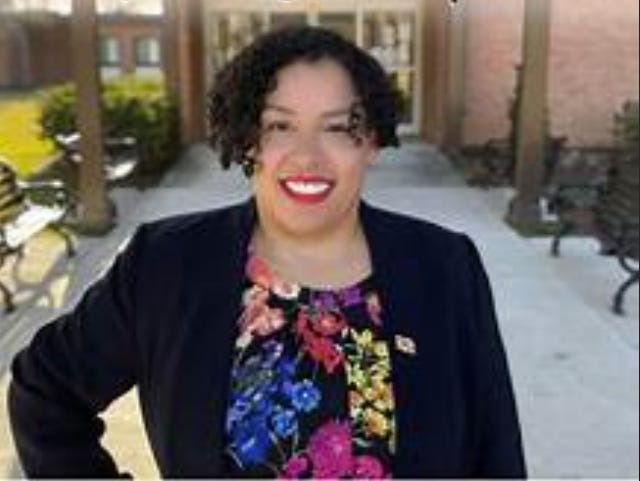
The Other Half of the Urbina Story: A Long Conflict, a Breaking Point, and a Public Reckoning
The censure of New Carrollton Councilmember Brianna Urbina has been presented to the public as a straightforward disciplinary action: an elected official behaved inappropriately during a December 1 council meeting, and the council responded with a formal reprimand. The censure letter documents the conduct in detail, and those facts stand.
But the official narrative leaves out the emotional, political, and procedural context that shaped the moment. And now, with Urbina’s own public statement, the picture becomes even more complex — and more human.
A Professional Who Knows Better — and Knows It
Urbina is not a political novice. She is:
- A Maryland‑admitted attorney
- A sitting councilmember
- A Deputy Attorney General for the State of Maryland
People in those roles are trained to maintain composure, follow procedure, and understand optics. That’s why her outburst struck so many as shocking.
But Urbina herself acknowledges this. In her statement, she writes:
> “I have done more than my share of judging others… I prided myself on my ability to form rational arguments… But I am human, and I have learned the hard way that judging others leads to a sharper microscope being placed on you.”
This is not deflection. It is self‑indictment — and it sets the stage for what she says next.
Her Version of What Happened After December 1
Urbina says she did not treat the incident lightly. According to her:
- She apologized immediately
- She apologized in writing
- She apologized in person
- She apologized in public forums
- Several colleagues told her the apology was accepted
She believed the matter was behind her.
Then, she says, the censure came:
> “I was censured on Tuesday night, without notice or any due process and in my absence.”
If accurate, that procedural claim is significant. It reframes the censure not as a deliberative action but as a political ambush — one that bypassed the norms of fairness that attorneys, especially Deputy AGs, are trained to expect.
A Long Political War, Not a One‑Night Disagreement
To understand why this matters, you have to understand the history.
Urbina ran a canadidate against the mayor and won. Then four years later she lost. The current mayor — the same opponent from that race — is back in office. Their rivalry has shaped two election cycles and created two entrenched factions on the council.
This is not a body divided over a single issue. It is a body divided over identity, legitimacy, and the future of the city.
In that environment:
- Every vote is a proxy battle
- Every procedural move is interpreted as factional
- Every policy reversal is personal
- Every disagreement carries the weight of years
So when a group on the council moved to overturn work Urbina had invested herself in, it wasn’t just a policy dispute. It was another chapter in a long political struggle.
That is the emotional trigger behind the outburst — the part missing from the censure letter.
Her Statement Adds a New Layer: Resolve, Not Retreat
Urbina’s message is not simply an apology. It is a declaration of continued purpose:
> “I feel embarrassed and ashamed… but this experience only strengthens my resolve to dig deeper, expand my reach, bring more folks in, and fight for those who are still relying on me to be their voice.”
She also draws a line between censure and censorship:
> “I may be censured, but I will never be censored.”
And she frames the backlash as evidence that she is challenging entrenched interests:
> “My wise uncle once told me that when the crazys come for you, you must be doing something right.”
Whether readers agree with her or not, this is a window into her mindset — a mindset shaped by years of political conflict, not a single night of poor judgment.
The Mayor’s Role: Not Direct, But Unavoidable
There is no evidence the mayor orchestrated the events of December 1 or the censure that followed. But the political climate she and Urbina have shaped over two election cycles is impossible to ignore.
Even when the mayor is not involved in a specific incident, the history is. The factions that formed around their rivalry continue to clash, and those clashes accumulate pressure.
December 1 was not about the mayor personally. It was about the environment created by years of division.
Two Truths That Can Coexist
A complete account of what happened requires holding two truths at once:
- Urbina’s behavior on December 1 was inappropriate and worthy of scrutiny.
- The behavior did not occur in a vacuum — it was the culmination of years of political tension, factionalism, and personal history.
Her statement adds a third truth:
- She believes the censure was procedurally unfair and politically motivated.
These truths do not cancel each other out. They coexist, and together they form a fuller picture of what is happening in New Carrollton.


A City Still Searching for Its Center
New Carrollton is a small city with a big political divide. The December 1 incident was not the beginning of a story. It was the moment when years of accumulated pressure finally broke through the surface.
The censure letter tells the official story. Urbina’s statement tells the personal one. The political history tells the structural one.
Only by putting all three together can the public understand what is really happening — and what it means for the city’s future.