


THE NIGHT STENY HOYER THOUGHT IT WAS OVER
A Maryland political near‑death experience, remembered through the names we pass every day
There’s a moment in every long political career when the façade of inevitability cracks. For Steny Hoyer — the man who would go on to become one of the most durable figures in American politics — that moment came on a cold night in 1992, riding to what was supposed to be a victory party.
A firsthand witness remembers Hoyer emotional, shaken, convinced that the long arc of his public life was about to snap. His wife, Judith P. Hoyer, sat beside him, speaking quietly about what their lives might look like after politics. Judy — the warm, funny, fiercely intelligent woman whose name now adorns the Judith P. Hoyer Early Childhood Center in Prince George’s County — was not yet the bronze plaque or the school sign. She was simply Judy, a partner bracing for the possibility that everything was about to change.
Most people driving past that school today don’t know her story. They don’t know she was a real person, not a formal name carved into stone. They don’t know she sat in a car that night, steadying her husband as he faced the only truly dangerous election of his career.
But that’s the thing about Maryland:
our history hides in plain sight.
You just have to know where to look.
THE SHADOW OF GLADYS NOON SPELLMAN
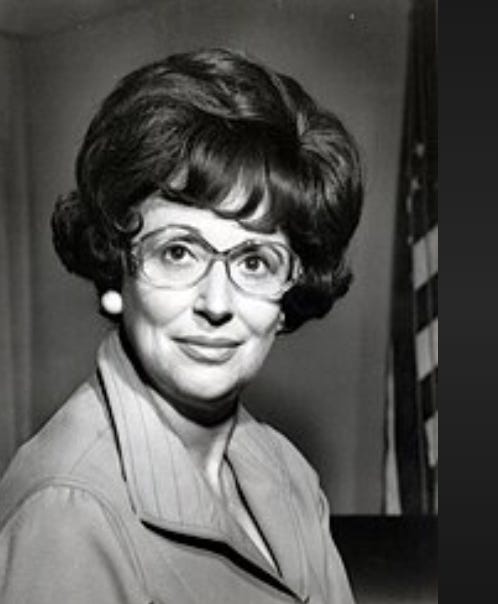
Hoyer’s entire congressional career began with another moment of public trauma. In 1980, Congresswoman Gladys Noon Spellman — a towering figure in Prince George’s County politics — collapsed into a coma shortly before the election. She won anyway. But the House declared the seat vacant, and Hoyer won the special election that followed.
Today, commuters speed down the Gladys Noon Spellman Parkway on Route 295 without knowing the story behind the name. They don’t know that the man who nearly lost his seat in 1992 first entered Congress because Spellman could no longer serve. They don’t know that Hoyer’s career began in crisis and nearly ended in crisis.
Maryland politics has always been like that — a chain of events, each link forged in a moment of human vulnerability.
WHY 1992 WAS DIFFERENT
To understand why Hoyer was vulnerable, you have to understand the mood of the country.
1992 was the year of the House banking scandal, when voters decided Congress itself was the problem. Incumbents everywhere were suddenly radioactive. And Hoyer, as a member of House leadership, was an especially visible target.
Then came redistricting. His newly drawn district pulled in:
- conservative stretches of Southern Maryland
- Republican‑leaning precincts in Anne Arundel
- pockets of Prince George’s County that were less friendly to a national Democratic figure
It was the worst possible year to be a long‑serving incumbent in a newly hostile district.
And into that moment stepped a challenger with a name that still carried weight.
THE HOGAN FACTOR
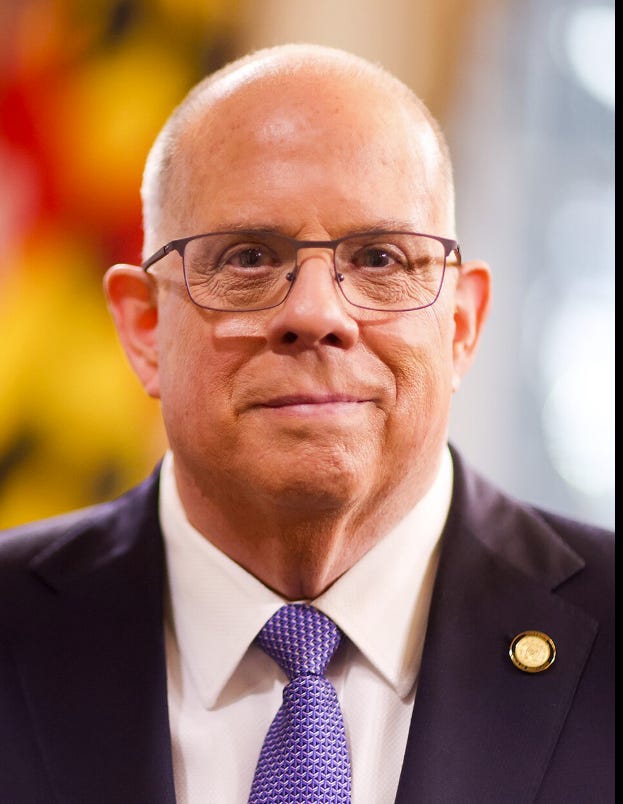
Larry Hogan Jr. was not yet the future governor. He was a young Republican with a famous father — Lawrence Hogan Sr., former congressman and county executive, a man whose name still resonated in the 5th District.
Hogan Jr. ran as the outsider, the non‑politician, the clean slate. In a year when voters wanted to punish Washington, that was enough to make him dangerous.
But the race was not just shaped by national anger. It was shaped by something more volatile.
THE SCANDAL THAT SPLASHED ACROSS THE FRONT PAGES
Midway through the campaign, newspapers across the region — including The Washington Post and The Baltimore Sun — reported that Hogan’s housemate and campaign manager had been arrested on serious charges involving a teenager. The allegations were sensational enough to dominate headlines. The case later collapsed when key testimony was withdrawn, and charges were dropped.
But in 1992, before same‑sex relationships were widely accepted, before the public had language for separating allegations from identity, the mere existence of such a story was politically explosive.
Even without repeating the details, the impact is clear:
- It disrupted Hogan’s message
- It forced the campaign into defensive posture
It caused many people to assume that unmarried Larry Hogan was Homosexual
- It likely cost him votes in conservative and religious communities
- It introduced a layer of scandal into a race already defined by distrust
In a contest decided by single digits, even a small shift mattered.

THE RACIAL UNDERCURRENT
Maryland’s political memory is long, and in 1992, it was even longer.
Hoyer and Senate President Mike Miller had spent years building alliances with Black voters, especially as families moved outside the Beltway into Southern Maryland. Their coalition was not perfect, but it was real.
By contrast, Hogan Sr. — decades earlier — had taken positions aligned with resisting school integration. Those positions were part of the public record, and they lingered in the minds of older voters.
In a district where Black voters were becoming increasingly influential, that history mattered.
AND THEN THERE WAS SCHAEFER
As if the race needed more complexity, Governor
William Donald Schaefer — a Democrat — publicly supported George H.W. Bush over Bill Clinton. It was a political earthquake, and it scrambled loyalties across the state.
For Hoyer, it meant one more unpredictable variable in a year already full of them.
THE NIGHT IT ALMOST ENDED
So picture that car ride again.
Steny Hoyer, exhausted, staring down the possibility that the voters were about to end his career.
Judy beside him, talking softly about what life might look like if the numbers went the wrong way.
A district reshaped against him.
A national scandal dragging down every incumbent.
A challenger with a famous name.
A campaign rocked by headlines.
A state divided by race, party, and personality.
A governor breaking ranks.
It wasn’t melodrama.
It wasn’t insecurity.
It was math.
And for a few hours, the math looked bad.
THE NEAR‑MISS THAT SHAPED A CAREER
Hoyer survived — barely.
He would never again face a race that close.
Hogan would go on to become governor.
Judy Hoyer would pass away in 1997, leaving a legacy that lives on in the early‑childhood centers that bear her name.
Gladys Noon Spellman’s name would remain on the parkway, a reminder of how Hoyer’s career began.
And the 1992 race would fade into memory, known only to insiders and those who lived it.
But it deserves to be remembered.
Because it wasn’t just the story of one man having a bad night.
It was a snapshot of Maryland at a crossroads — a state wrestling with race, reform, scandal, loyalty, and the shifting tides of national politics.
It was a moment when the signs we pass every day — Spellman, Hoyer, Hoyer’s wife Judy — were not yet signs.
They were people.
Living, breathing, vulnerable people.
And for one night in 1992, all of them were part of a story that almost ended very differently.
Is there hard data on the degree to which black voters split between Hoyer and Hogan? I’ve been told by PG politicians that, at least in 2014, Hogan had higher than expected support from older black voters because of his father.