

The Million-Dollar Maryland Hospital Lobby
Annapolis’s Invisible Government (Part One)
The next big Annapolis story isn’t the governor. It’s the hospital lobby.
Not as a scandal. Not as a single bill. But as a system.
For decades, hospitals and healthcare interests have operated inside Annapolis with a level of structural protection most industries can only envy. They did not need to win every fight. They only needed to make sure nothing truly threatening ever reached the floor.
That era is beginning to crack.
What has changed inside the House of Delegates under Joseline Peña-Melnyk is not simply who holds gavels. It is what kind of arguments still work, who they work on, and how expensive they have become to deploy.
No sector feels that shift more acutely than healthcare.
The hidden size of the health lobby
Lobbying in Annapolis is a big business, but healthcare is one of the few sectors large enough to sustain million-dollar practices.
In the most recent full reporting year:
More than 700 lobbyists registered with the State Ethics Commission
Total lobbying compensation approached $70 million, growing roughly 7 percent year over year
Fewer than 70 lobbyists cleared $250,000, yet they captured the overwhelming majority of all reported earnings
Roughly a dozen lobbyists reported $1 million or more in compensation
That top tier is not built on small retail issues or boutique causes. It is built on regulated systems with complex rules and existential stakes.
Hospitals sit at the center of that universe.
When hospitals lobby, they are not fighting over marginal reimbursements. They are shaping the framework that governs:
How much revenue they are allowed to collect
Which services must remain open
How consolidation is evaluated
What obligations accompany nonprofit status
How financial risk is shifted between institutions and the public
That is why healthcare money shows up again and again in the earnings reports of Annapolis’s highest-paid lobbyists.

Maryland’s unique vulnerability: rate-setting
Maryland is not like other states.
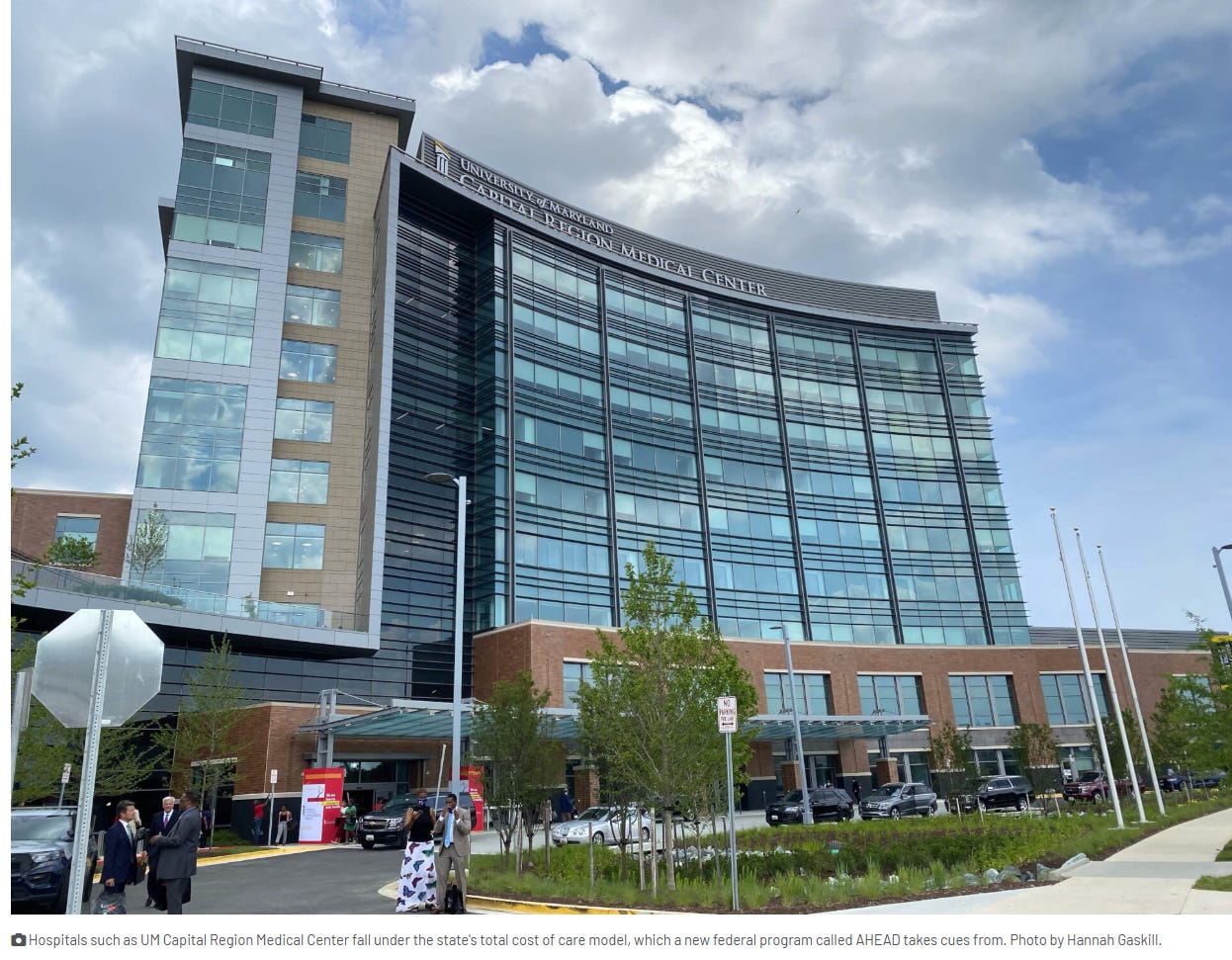
Through the Health Services Cost Review Commission (HSCRC), Maryland directly regulates hospital rates. Global budgets, waiver models, and now the AHEAD framework do not just influence hospital behavior. They define it.
Every serious healthcare bill in Annapolis potentially intersects with HSCRC authority, directly or indirectly. That makes hospital lobbying unusually technical, unusually opaque, and unusually powerful.
For years, hospitals benefited from a simple dynamic:
Complexity discouraged broad legislative engagement
Chairs and leadership deferred to “the experts”
“Protecting the system” became synonymous with protecting hospital interests
That dynamic is weakening.
Younger committee leadership is more willing to interrogate assumptions, demand transparency, and ask who benefits when hospitals claim a proposal is “necessary for stability.”
The real center of gravity: the Maryland Hospital Association
It is impossible to understand the hospital lobby without naming its primary engine.
The Maryland Hospital Association (MHA) is not a lobbying firm. It is more powerful than that.
MHA is the collective voice of Maryland’s hospital systems. It coordinates strategy, aligns messaging, mobilizes executives, and frames policy debates before most legislators ever see a bill draft.
Individual lobbyists and firms matter. But MHA sets the baseline. It defines what is “reasonable,” what is “dangerous,” and what is portrayed as an existential threat to patient care.
For decades, that message discipline worked extraordinarily well.
Under the current House, it still matters, but it no longer ends the conversation.
How the million-dollar model actually works
High-earning healthcare lobbyists are not paid primarily to persuade undecided delegates. They are paid to manage risk.
Their value proposition has traditionally been:
Early warning when a dangerous idea is gaining traction
Quiet intervention before a bill hardens
Strategic amendments that preserve core financial assumptions
Relationship-based trust with committee leadership
That model depends on predictability. It depends on chairs who are institutionally cautious, leadership that prioritizes system stability, and a culture where technical complexity suppresses reform energy.
Each of those assumptions is under pressure.
As committee leadership grows younger and more ideologically aligned around equity, access, and accountability, relationship capital depreciates. Narrative skill, coalition-building, and public framing grow more important.
That transition does not destroy the million-dollar lobbyist. It changes what clients are paying for and raises the cost of success.
Why hospitals are now exposed
Hospitals sit at the intersection of three growing pressures:
1. Financial opacity
Nonprofit systems with corporate behavior, executive compensation that rivals private industry, and aggressive billing practices are no longer invisible to legislators.
2. Geographic inequality
Rural closures, urban service deserts, and consolidation-driven access gaps have become politically salient, not abstract.
3. Workforce strain
Scope-of-practice fights, staffing shortages, and burnout have created natural allies for reform-minded legislators.
Each of these pressures weakens the old “trust us, it’s complicated” argument.
What this series will uncover
This is the first installment of a multi-part Maryland Wire examination of the healthcare lobbying ecosystem. In the weeks ahead, we will walk through:
How hospital money flows through Annapolis
The policy fronts where the fights are coming
Which lobbying models are aging out, and which are adapting
How institutional healthcare power collides with patient- and worker-centered politics
This is not about demonizing hospitals. It is about understanding power.
Because in Maryland, healthcare is not just a service. It is a governing structure. And for the first time in a generation, that structure is being questioned by people with gavels.