

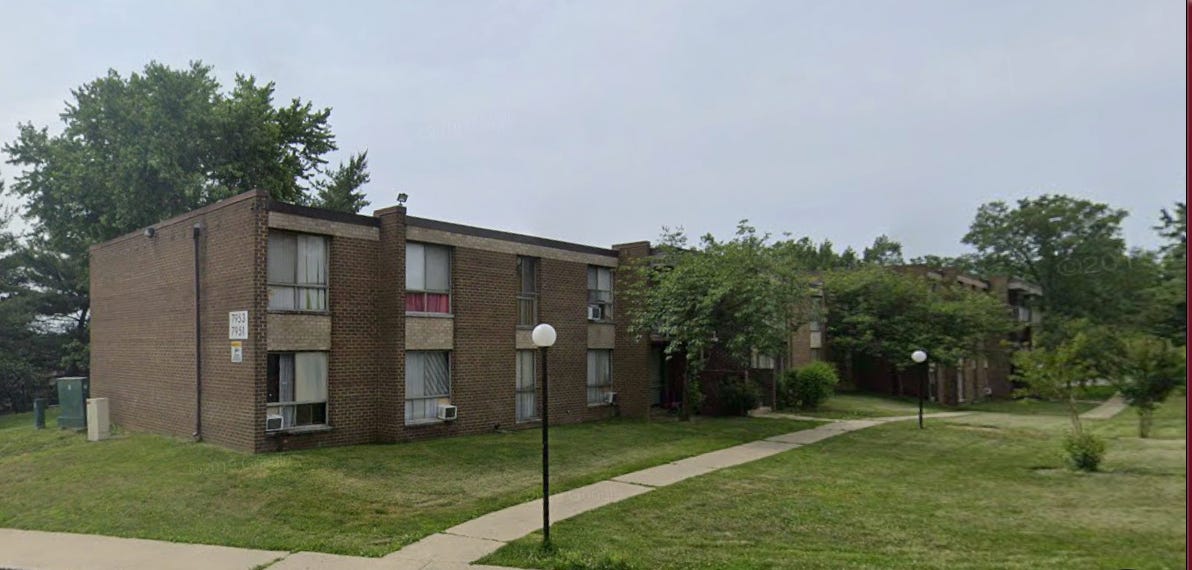
The Marylander vs. Prince George’s County
How a Community Was Destroyed and Who Let It Happen
The story unfolding at the Marylander Condominiums in Hyattsville is not a housing‑code dispute. It is a slow‑motion collapse of a community — and a government that had every opportunity to intervene but didn’t. The residents, many of them immigrants, working families, and elderly homeowners, are now fighting for their homes in federal court. Their antagonist is not a landlord or a developer. It is their own county government.
And at the center of that government is County Executive Aisha Braveboy, the county’s chief law enforcement officer, whose agencies had the authority, the warnings, and the responsibility to act long before the Marylander reached the brink.
This is a story about power, neglect, and the consequences of a government that failed the people it was supposed to protect.
A Community Under Siege
For years, residents of the Marylander lived next to a growing encampment in the woods behind their homes — an encampment that the lawsuit says the County itself helped sustain.
According to the complaint, the County’s Street Outreach Program made “regular visits to known encampments to drop off food, warm blankets and other necessities,” a policy shift that “marked the beginning of the County’s deliberate policy shift from engagement‑for‑placement to affirmative and sustained resource delivery to encampment sites.”
Residents watched the encampment evolve into a 30–50 person open‑air drug market. The complaint describes it bluntly:
> “By 2023, the Mountains Encampment had become a crack den, bathroom, prostitution site, and a full‑blown drug market involving gangs such as the Langley Park Crew and MS‑13.”
Crime spilled into the condo complex. Residents reported break‑ins, vandalism, harassment, and fires. One officer told management:
> “We’ve gotten guns out of these woods… brand new AK‑47s.”
Another officer admitted the County needed to intervene because police couldn’t:
> “It’s really nothing that we can do… this is something you can probably take up with the actual County.”
Residents did take it up with the County. They called. They emailed. They contacted elected officials. They begged for help.
The County did not come.
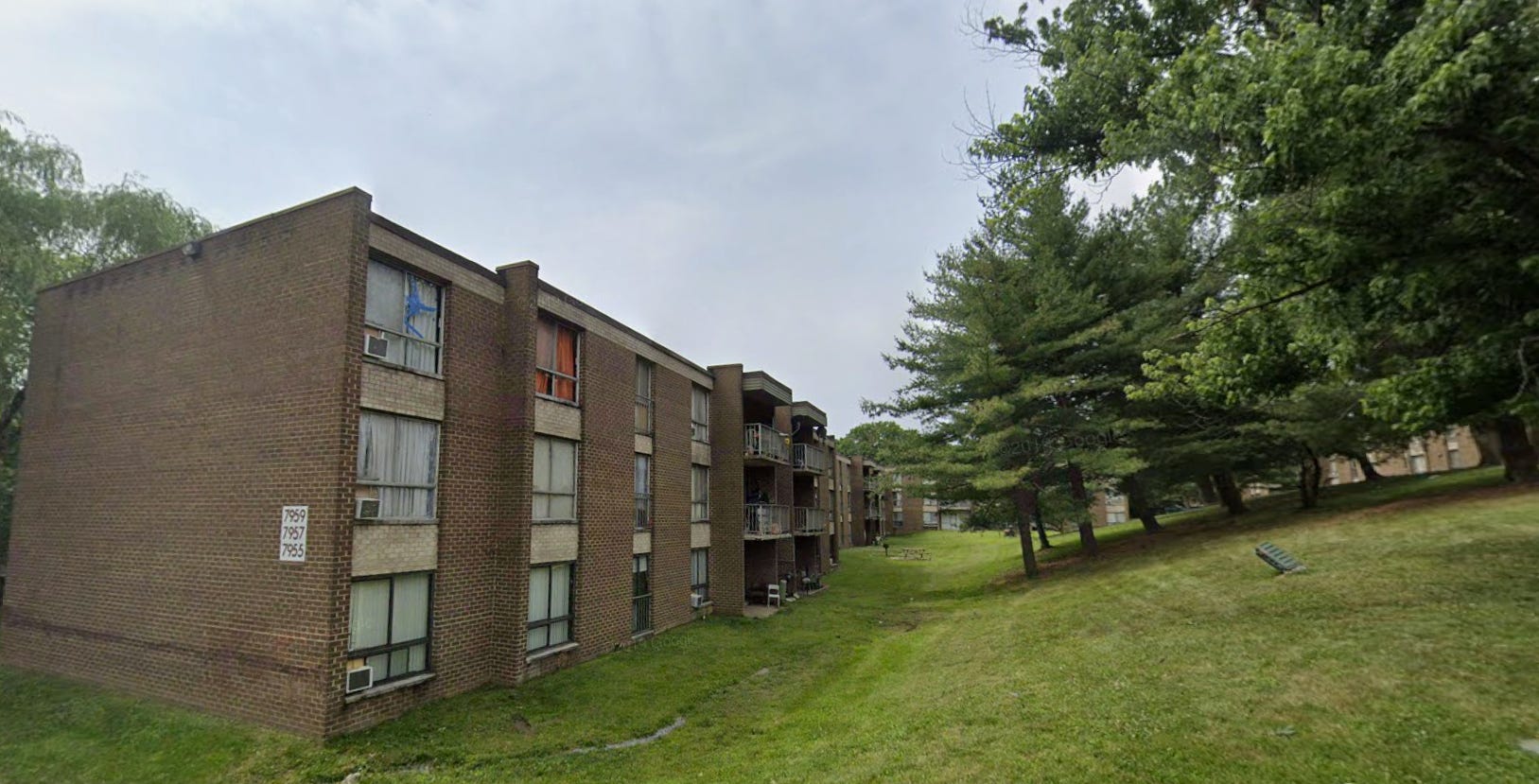
The Collapse of the Marylander
The encampment didn’t just bring crime. It brought physical destruction.
The complaint alleges more than $800,000 in encampment‑related damage, including broken doors, shattered windows, vandalized common areas, and fires. The boiler system failed. Heat went out in more than 100 units. Pipes burst. Mold spread. Insurance was cancelled. A $2.5 million repair loan collapsed.
The property became uninsurable and financially crippled.
And then the County stepped in — not to help, but to cite the condo for the very damage the encampment caused.
The complaint states:
> “Instead of offering assistance, County staff threatened the Condominium with ‘formal actions’… despite notice that the encampment served as a hub for criminal nuisance, high‑powered weaponry, and systemic burglary.”
The County issued housing‑code violations. It declared buildings unfit for habitation. And then it went to state court to obtain an order allowing mass removal of residents.
The Due‑Process Disaster
The most explosive allegation in the federal filings is not about crime or encampments. It is about due process — or the lack of it.
The County obtained a state‑court order authorizing the removal of 108 households.
But according to the lawsuit:
> “The County obtained an Order compelling the forced vacation of at least 108 individual dwelling units without serving, notifying, or affording any opportunity to be heard to a single unit owner or occupant.”
Residents were never served. They never received notice. They never had a hearing.
Yet the County Executive allegedly announced at a public meeting that removals would begin March 6, 2026.
The federal TRO motion warns:
> “Forced removal from one’s home cannot be remedied by money damages.”
The proposed order asks the federal judge to halt all removals immediately.
The Good Guys: A Community That Tried Everything
The residents of the Marylander are not absentee landlords or negligent owners. They are:
- families with children
- elderly residents on fixed incomes
- immigrants with limited English
- people afraid to call police because of immigration status
- homeowners who bought modest condos because it was the only path to stability
They installed fences. They called police. They contacted the County. They documented damage. They hired new management. They tried to repair what they could.
They were overwhelmed by a danger they did not create — and a government that would not help.
The Bad Guy: A System That Failed, and a Leader Who Let It Happen
The villain in this story is not a single person. It is the Prince George’s County government, whose agencies:
- sustained the encampment
- ignored warnings
- allowed crime to flourish
- cited the condo for the resulting damage
- sought mass eviction without notice
But because the County Executive is the chief law enforcement officer and the head of the executive branch, Aisha Braveboy is the face of that system.
The complaint alleges:
> “The County’s affirmative conduct… sustained a state‑created danger… that destroyed a residential community.”
That is a devastating charge for any administration — especially one that prides itself on progressive governance and community protection.
The Political Question: Negligence or Something More?
The filings do not accuse the County Executive of corruption. But they do raise a troubling context:
- The Marylander sits near the future Purple Line station.
- The area is targeted for redevelopment.
- The County Executive has already discussed the property with developers.
- The County’s actions have “expanded economic opportunities… for developers.”
Whether through neglect or design, the County’s decisions have made the Marylander ripe for redevelopment — but only after the current residents are removed.
That is the political shadow hanging over this case.
What Happens Next
A federal judge must now decide whether to halt the evictions and force the County to provide proper notice and hearings. The stakes are enormous:
- 108 households
- a community on the brink
- a county government under scrutiny
- a County Executive facing questions about judgment, priorities, and responsibility
The Marylander case is not just a lawsuit. It is a referendum on how Prince George’s County treats its most vulnerable residents — and whether the people entrusted with power used it to protect a community or preside over its destruction.
That property will be profitable for developers ONLY once legal resident of The Marylander has been removed from their home. Then we will see the County RUSH to clean it up, and hand it to a crony developer.
We can’t allow that to happen. It could be any of us next.
I feel so badly for those who have bought and paid for their condo YEARS AGO and felt they would live there until they passed.
They intentionally allowed an encampment and were aware it would drive people from their homes. Who wants to live next to that crap?
This Braveboy administration is Jack Johnson p2.