

🧭 The Last Republicans in Baltimore City — Who They Were
These short profiles give you the human texture behind the political shift.
Mayor — Theodore R. McKeldin (elected 1963)
A moderate-to-liberal Republican, McKeldin was a civil‑rights advocate, a builder, and a visionary for the Inner Harbor. He hosted CORE in 1966 and publicly supported integration. His urban renewal projects displaced many Black families, but his civil‑rights stance made him one of the last Republicans who could still win a multiracial coalition in the city.
City Council — Samuel A. Culotta Sr. (elected 1983)
A neighborhood-oriented Republican from Southeast Baltimore, Culotta represented the last remnants of the white ethnic GOP vote in the city—largely Italian, Polish, and Greek enclaves that had not yet moved to the county. When those voters suburbanized in the 1980s, the GOP’s last base inside the city evaporated.
House of Delegates — Kenneth Webster (elected 1982)
Webster represented District 43, which at the time still had pockets of white Republican voters. By the mid‑1980s, the district had fully realigned to the Democratic coalition anchored in Black churches, labor, and the D’Alesandro/Barbara Mikulski political networks.
State Senate — Robert Pascal (elected 1966)
Pascal’s election is directly tied to the 1966 George Mahoney “Your Home Is Your Castle” segregationist campaign. Mahoney won the Democratic nomination with a small plurality in a crowded field, alienating many white moderates. Those voters crossed over to the GOP, electing Spiro Agnew governor and helping Pascal win a Baltimore City–based Senate seat. It was a protest vote, not a durable coalition.
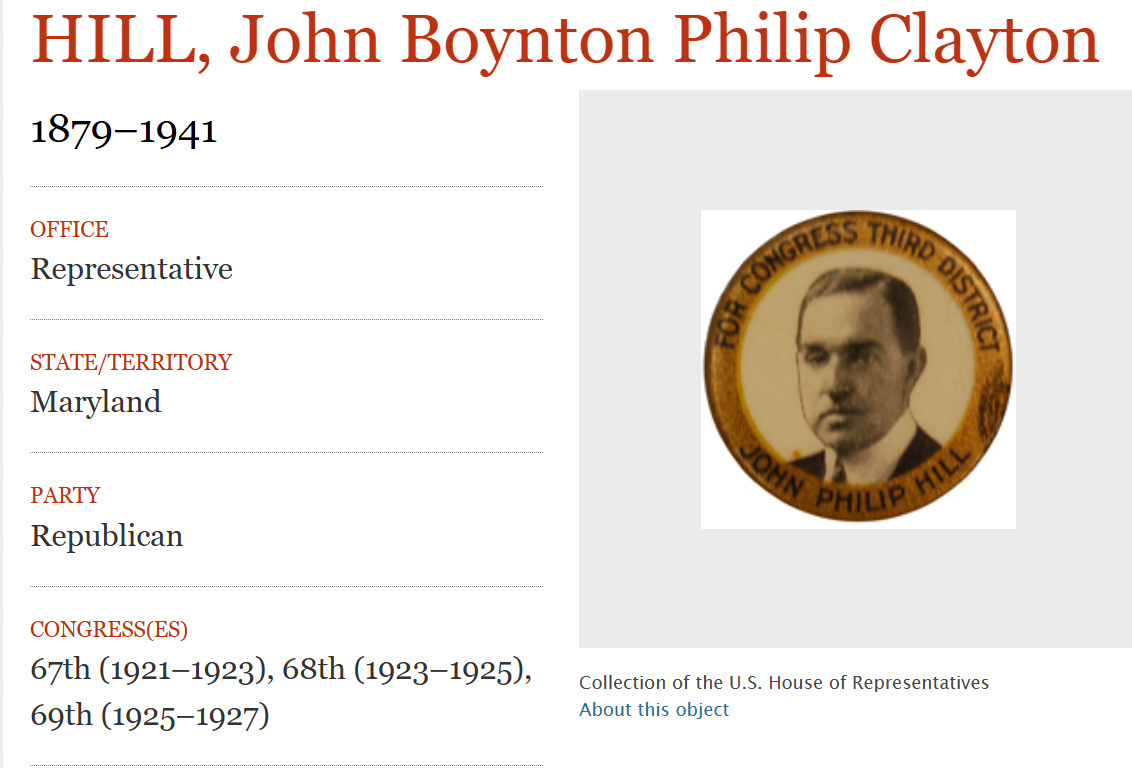
U.S. Congress — J.B.P.C. Hill (elected 1920)
Hill was a pre–New Deal Republican from an era when Baltimore still had a significant business-class GOP vote. After 1932, the city’s congressional districts became safely Democratic.
🧩 How the GOP Collapsed in Baltimore City
1. The End of Liberal Republicanism
Baltimore’s Republican strength had always come from liberal, pro–civil rights, pro–urban investment figures like McKeldin.
But after the 1960s, the national GOP moved toward a suburban, anti–Great Society, anti–urban message. That left Baltimore Republicans with no ideological home. McKeldin’s brand became an “extinct species.”
2. The D’Alesandro Machine and Black Voter Mobilization
Thomas D’Alesandro Jr. (Nancy Pelosi’s father) aggressively courted Black voters in the 1940s and 1950s.
He built a patronage network that delivered services, jobs, and attention to Black neighborhoods at a time when Republicans—except McKeldin—were inconsistent on civil rights.
By the time McKeldin left office in 1967, the Black vote had become solidly Democratic, and the Democratic machine had the organizational muscle to turn out voters in every ward.
3. White Ethnic Flight to the County
The GOP’s last base in the city was among white ethnic neighborhoods—Highlandtown, Canton, Locust Point, Hamilton, and parts of Northwood.
Between 1960 and 1990, those voters moved to:
- Dundalk
- Essex/Middle River
- Parkville
- Rosedale
- Perry Hall
Once they left the city, they kept voting Republican—but in Baltimore County, not Baltimore City.
This is why the GOP remained competitive in the county long after it died in the city.
4. The 1966 Mahoney Shock
George Mahoney’s segregationist primary win fractured the Democratic coalition.
Moderate Democrats defected to Agnew and down-ballot Republicans like Pascal.
But this was a one-cycle anomaly.
By 1970, the Democratic Party had reassembled around a more moderate, pro–civil rights message, and the GOP’s temporary urban gains vanished.
5. The National Civil Rights Realignment
After the Civil Rights Act and Voting Rights Act, Black voters nationwide moved decisively to the Democratic Party.
Baltimore—already a heavily Black city by 1970—followed that pattern.
Republicans could no longer win citywide without a multiracial coalition, and the national party’s messaging made that impossible.
🧨 Why the GOP Never Recovered
- The urban Republican—pro–civil rights, pro–infrastructure, pro–public housing—disappeared nationally.
- The Democratic machine in Baltimore became unbeatable in turnout and organization.
- The white ethnic GOP base moved to the suburbs.
- The Black vote became overwhelmingly Democratic.
- The city’s issues (poverty, housing, transit) aligned with Democratic policy priorities, not the GOP’s emerging national platform.
By the late 1980s, the GOP was no longer a meaningful political force inside Baltimore City.