

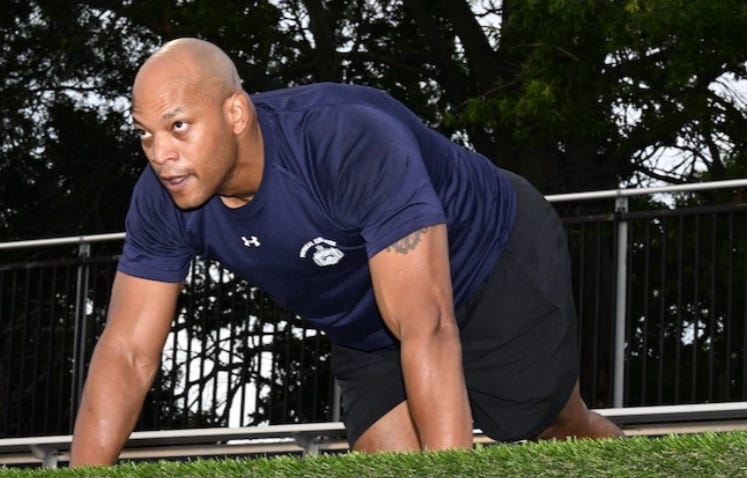
THE PERCEPTION GAP: How Wes Moore Is Rewriting a Democratic Weakness That Once Sank John Kerry
There’s a long‑running structural problem in Democratic politics:
voters often reward the projection of toughness more than the reality of it.
Few elections illustrate this more sharply than 2004
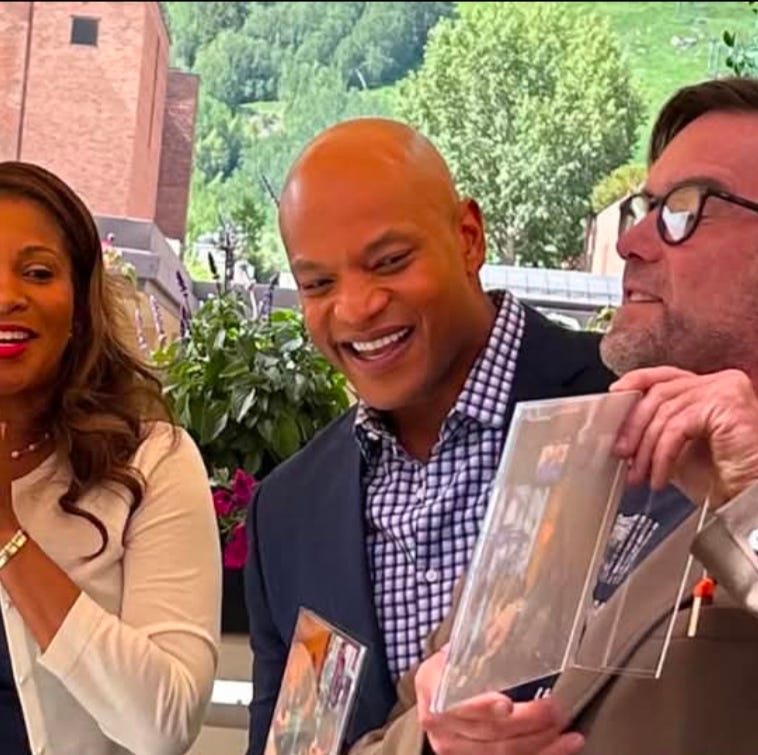
I. The 2004 Paradox: When Perception Beat Reality
John Kerry served in Vietnam in one of the most dangerous assignments the U.S. military had — riverine patrols. He earned multiple decorations, including the Purple Heart. His service was real, documented, and physically grueling.
George W. Bush, by contrast, served stateside in the Texas Air National Guard through Family Privilege. The contrast in risk, sacrifice, and physical hardship was stark. John Kerry was a real warrior. George w. Bush was a stateside “weekend warrior” with privilege.
And yet — in the public imagination — Bush projected the stronger persona.
Not because of biography.
Bush’s performance:
- the swagger
- the plain‑spoken confidence
- the cowboy boots
- the brush‑clearing ranch optics
- the “decider” posture
Kerry, despite being the one who had actually endured combat, was framed as overly senatorial, overly polite, overly careful — and therefore, in the political shorthand of the time, weak.
Bush used Family Privilege to avoid Viet Nam but was seen as “TOUGH”
This is the Democratic problem in a nutshell:
voters often respond more to the performance of strength than to the proof of it.
II. Enter Wes Moore: The IDGAF Governor Who Doesn’t Have the Kerry Problem
Wes Moore is building a political persona that directly addresses — and neutralizes — the Democratic weakness Kerry couldn’t escape.
He’s doing it on two fronts:
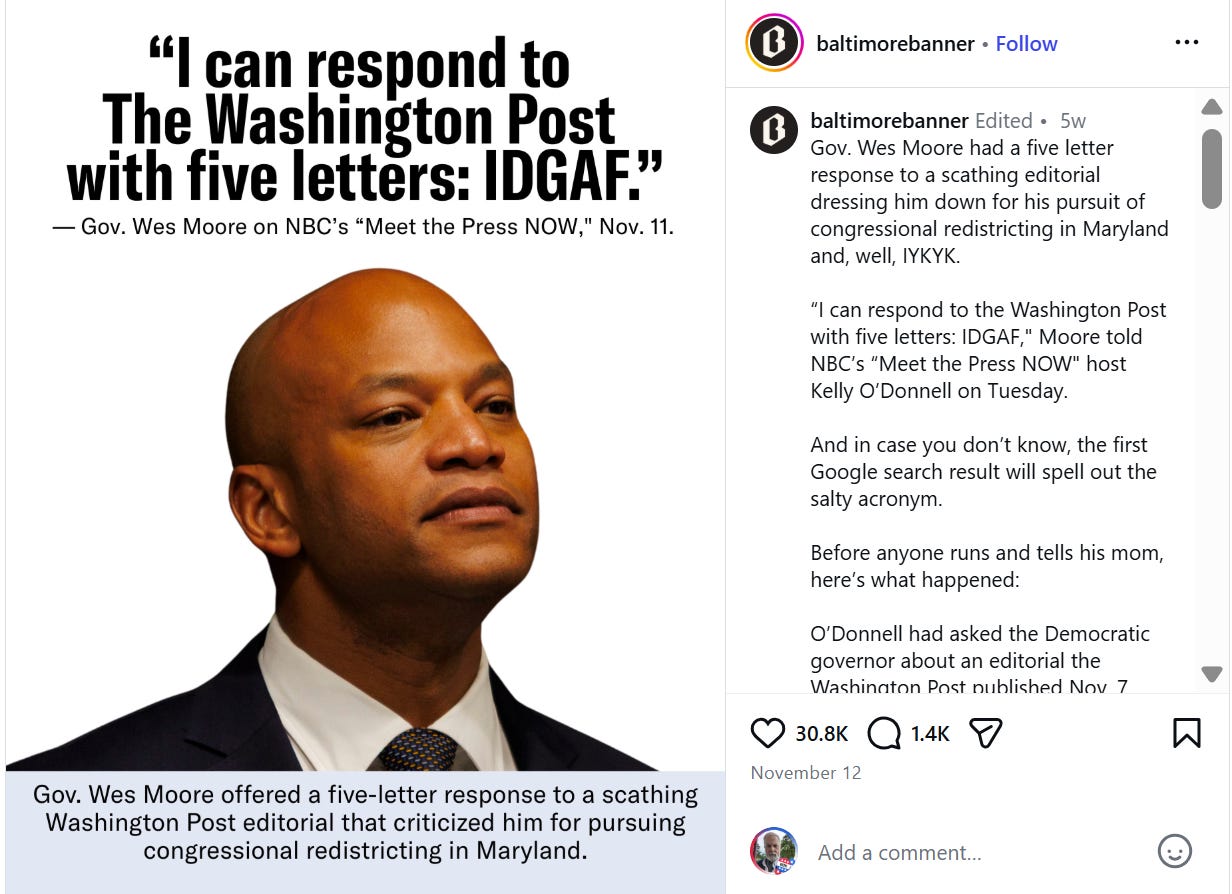
1. Social Toughness: The IDGAF Moment
When Moore answered a question with “IDGAF,” Republicans tried to turn it into a taunt.
But Democratic voters read it as:
- assertive
- confident
- unwilling to be pushed around
- emotionally dominant
It was the opposite of the “too polite to fight back” stereotype that hurt Kerry.
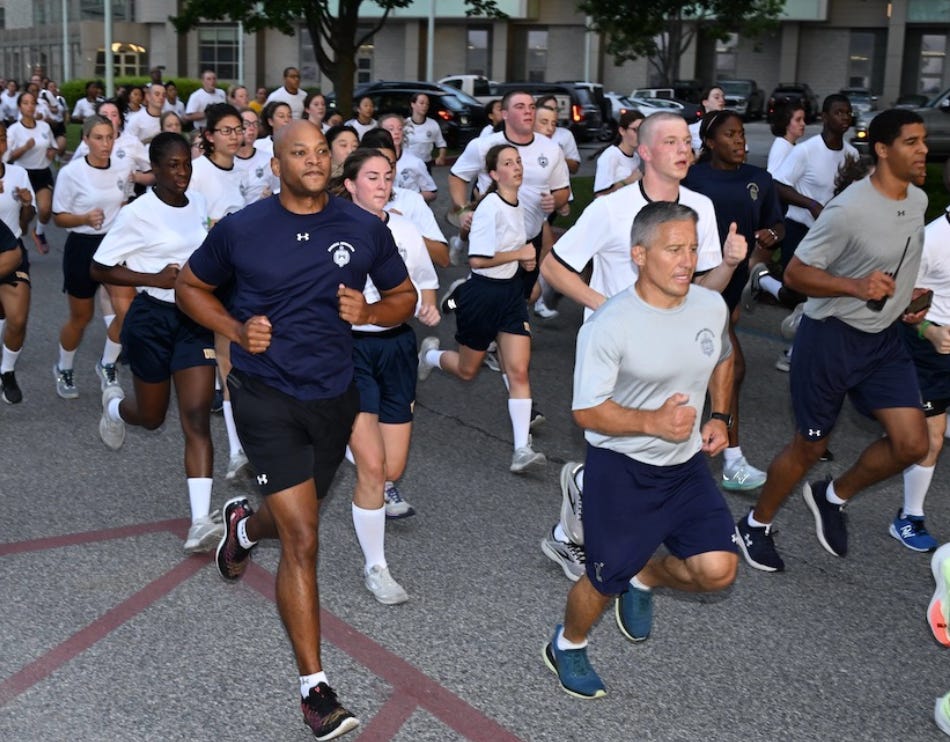
2. Physical Toughness: The 47 Push‑Ups and the Military Workouts
Moore doesn’t just talk about fitness or leadership — he demonstrates it:
- 47 push‑ups on his 47th birthday, on camera
- training with the Naval Academy football team
- running and doing PT with Army units and the Maryland National Guard
This isn’t symbolic ranch work or staged photo‑ops.
It’s a governor who can actually keep pace with soldiers and Division I athletes.
Moore’s physicality is not a costume.
It’s a credential.
III. The Fusion: Socially Aggressive + Physically Capable
This is where Moore becomes politically distinct.
Most politicians project toughness in only one dimension:
- verbal aggression
- or physical fitness
- or military biography
Moore is combining:
- verbal dominance (IDGAF)
- physical competence (47 push‑ups, military PT)
- military credibility (combat‑zone deployment, leadership roles)
It’s a triangulation Democrats rarely achieve.
He’s not performing toughness.
He’s embodying it.
IV. Why This Matters for 2026 and 2028
Moore’s persona solves a structural Democratic problem:
> He projects strength in a way that feels authentic, modern, and culturally resonant.
He doesn’t have Kerry’s politeness problem.
He doesn’t have the Democratic “softness” stereotype.
He doesn’t rely on symbolic masculinity.
He doesn’t need to pretend.
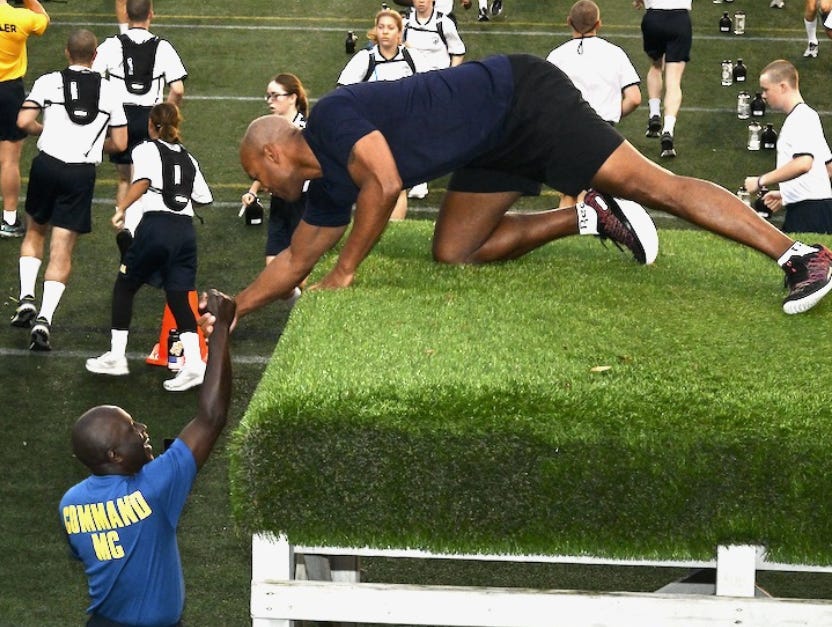
Wes can:
- out‑argue Republicans
- out‑run most of his staff his staff And all of his cabinet except for maybe one.
- out‑push‑up most elected officials nationwide
- and out‑connect with voters who crave confidence
That combination is rare.
And politically potent.
Whenhe wins re‑election in 2026 — and he’s well‑positioned to do so — he enters 2028 as one of the few Democrats who can credibly project both moral seriousness and physical presence.