

The Harford County UnCivil War:
There are political disagreements.
There are partisan fights.
And then there is Harford County.
What is unfolding in Harford County is not a routine clash of personalities. According to Professor Len Foxwell of Johns Hopkins University — one of the most seasoned political analysts in Maryland — this is not a shared conflict. It is a pattern.
In Foxwell’s view, the dynamic is not “everyone versus everyone.”
It is one man versus nearly everyone.
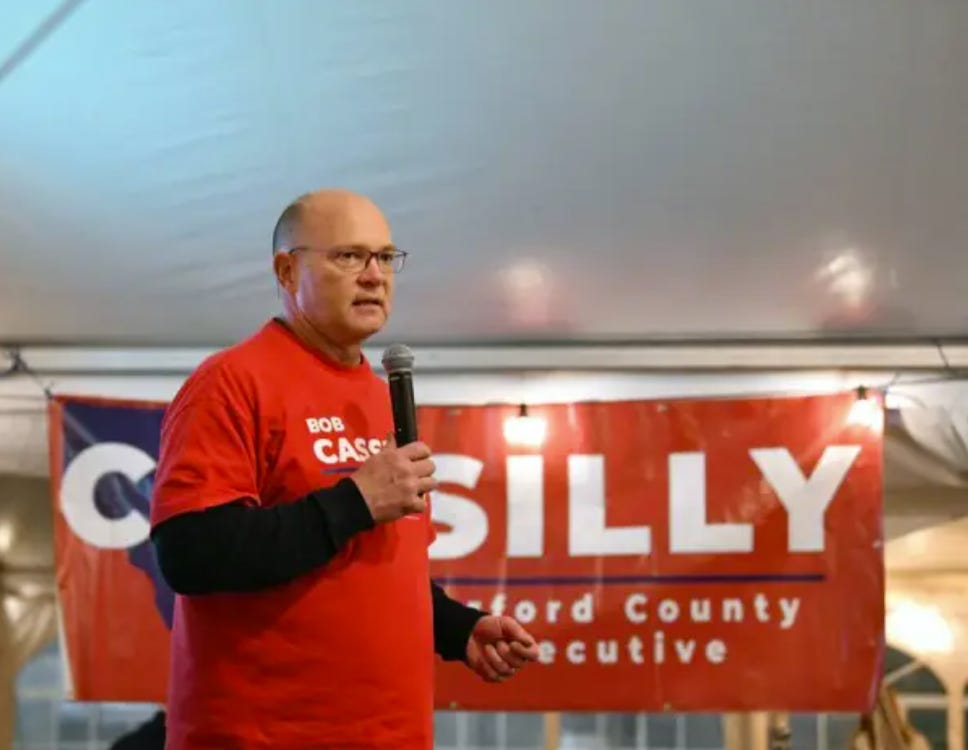
The Officials Involved
The principal figures in the dispute include:
Robert Cassilly – Harford County Executive
Jeffrey Gahler – Harford County Sheriff
Alison Healey – Harford County State’s Attorney
Patrick Vincenti – President of the County Council
All Republicans.
Which is what makes this so unusual.

Foxwell’s Assessment
Professor Len Foxwell’s message was direct:
He argues that from the beginning of his administration, Cassilly has made it a point to antagonize Sheriff Gahler.
Not as a reaction.
Not as a response.
But as a governing posture.
According to Foxwell, the same pattern extends beyond the Sheriff’s Office — to State’s Attorney Alison Healey, the leadership and staff of Visit Harford, and what he describes as a majority of the County Council.
In Foxwell’s interpretation, this is not a clash of equals.
It is a governing style.
A Question of Leadership Style
Where some outside observers might see factional infighting, Foxwell sees a centralizing executive who alienates institutional partners rather than builds coalitions.
That distinction matters.
Harford County operates with independently elected constitutional officers. The sheriff, the state’s attorney, and the council are not subordinate departments. They are separate power centers.
Sustained hostility between them does not look like normal political disagreement. It looks like systemic breakdown.
Foxwell believes the repeated disputes over settlements, public information disclosures, and internal investigations are not isolated controversies but symptoms of a broader leadership issue.
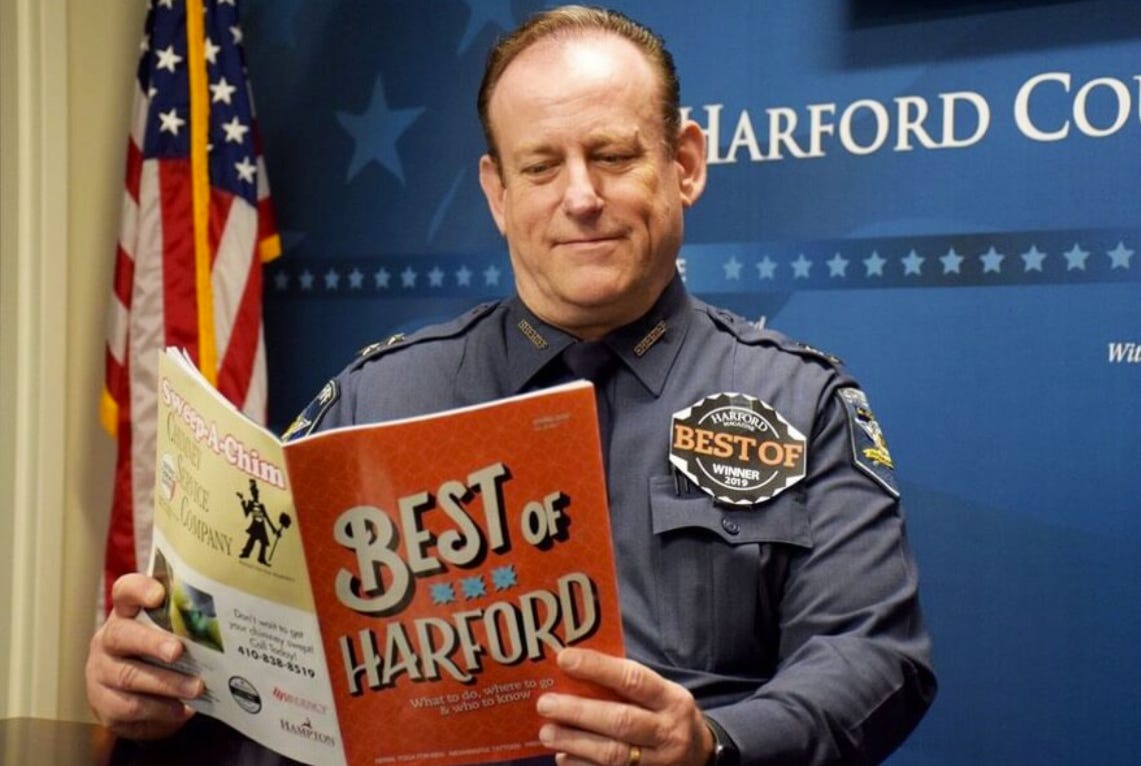
On Sheriff Gahler
Foxwell is clear on one point.
He has policy disagreements with Sheriff Gahler.
But he views Gahler as honorable and effective in office.
That framing is important. It separates ideological disagreement from character assessment.
On Cassilly
Foxwell’s criticism of Cassilly is blunt. He believes the County Executive has demonstrated a pattern of conduct that undermines trust and damages working relationships within county government.
That is Foxwell’s view.
And in Harford County, that view is widespread.
Why This Feels Different
Most local political disputes revolve around budgets, zoning, or appointments.
Harford’s dispute feels more personal and more entrenched.
When the sheriff, the state’s attorney, the council president, and significant parts of county leadership appear aligned against the executive, it raises a larger political question:
Is this mutual dysfunction?
Or is it a referendum on leadership?
That question, more than any single lawsuit or video statement, is what will define the next election.