

The Atlantic’s Disgraceful Hit Piece on Wes Moore: Sourcing, Cynicism, and the Smear Industry
By Barry O’Connell | The Maryland Wire
Let’s call a spade a spade.
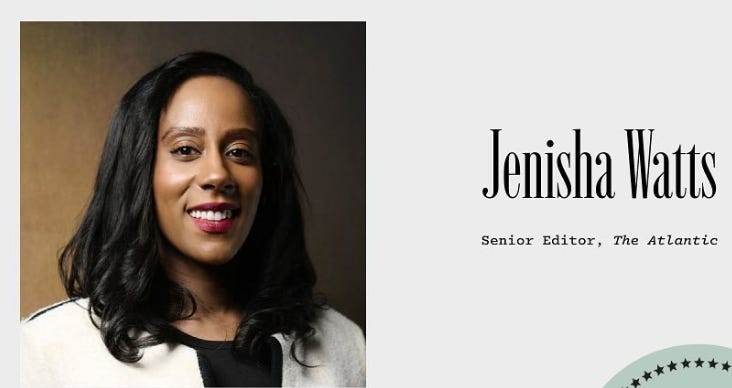
When national legacy media outlets decide to profile a rising political figure, readers deserve a balanced examination of policy, governance, and actual legislative outcomes. What The Atlantic gave us this week—a sprawling, cynical profile of Governor Wes Moore authored by Jenisha Watts—is none of those things.
It isn’t journalism. It is a textbook political hit piece wrapped in pseudo-intellectual prose, designed from top to bottom to injure a candidate’s standing rather than explain his governing record.
For a magazine that routinely preaches to its readers about media literacy and the dangers of bad-faith political narrative, The Atlantic should be thoroughly ashamed. The piece is disgraceful, intellectually lazy, and fundamentally dishonest in its execution.
If you look closely at the architecture of the story, the game being played is painfully obvious.
1. Outsource the Digging to the Far-Right, Then Parroting the Claims as “Fact”
Here is a simple, indisputable fact about the mechanics of this story: The core negative premises driving Watts’ argument do not come from independent investigative reporting by The Atlantic. They are recycled opposition research from conservative media outlets.
Throughout the profile, the author relies heavily on reporting generated by The Washington Free Beacon—an explicitly partisan, right-wing advocacy rag—and the post-David Smith Baltimore Sun, which has leaned sharply rightward under its new ownership.
Instead of treating opposition-research dumps with standard journalistic skepticism, Watts simply launders them into the pages of a major magazine. When a mainstream outlet takes unverified claims from partisan hit squads and presents them as a heavy burden of “persistent negative reporting,” it isn’t reporting news; it is actively weaponizing partisan smears.
2. Fact vs. Fiction: Weaponizing Pedantic “Gotchas”
A real profile evaluates a leader on budget stewardship, legislative success, administrative competence, and policy execution. Instead, Watts spends hundreds of words weaponizing pedantic, hyper-minor administrative details from fifteen to twenty years ago.
Let’s look at what is actually being cited as evidence of “untrustworthiness”:
The Bronze Star: The article drags out a 2006 fellowship application error, burying the ultimate truth: Moore’s commanding officers recommended him for the medal in combat, wartime bureaucracy delayed it, and the United States Army formally awarded him the Bronze Star Medal. The Army doesn’t award Bronze Stars to hand out political favors. To spin an administrative delay into a moral failing is pure bad faith.
The Oxford Thesis Title: The piece actually spends time questioning whether a thesis was titled “Radical Islam in Latin America...“ versus “The Rise and Ramifications of Radical Islam...“ In what universe does a minor title variance on a twenty-year-old academic paper speak to a Governor’s ability to run the State of Maryland?
An Affiliate Football Award: Dredging up whether an honor came from a College Football Hall of Fame affiliate versus the main organization in the mid-2000s isn’t reporting. It is opposition research scraping at its most desperate.
Where I come from, when you have to go back two decades to find a minor title discrepancy on a college paper to prove a man is “untrustworthy,” it means you couldn’t find anything real in the present day.
3. The Code-Switching Trap: Damned If You Do, Damned If You Don’t
In my opinion, the most insidious part of Watts’ piece is how she weaponizes political skill and adaptability against the Governor.
Every successful elected official in American history—regardless of party—knows how to speak to different audiences. You don’t deliver the exact same speech to a church congregation in Selma that you do to a room of fiscal conservatives or baseball fans at Camden Yards. That is called basic human empathy and political communication.
Yet, Watts turns this basic political skill into a psychological character defect. When Moore connects with a crowd, she frames him as “protean,” “stiff,” or lacking “swag.”
What makes this approach particularly shameful is that Watts explicitly acknowledges the reality of “code-switching” for Black professionals in elite spaces—referencing Paul Laurence Dunbar’s We Wear the Mask. Yet, while granting herself grace for navigating elite journalistic institutions, she turns around and uses that exact same adaptability to label Moore a calculated actor who has “pegged” his audience. It is a heads-I-win, tails-you-lose trap designed to make sure the subject can never appear genuine.
4. Erasure of Real Governing Results
When Governor Moore points to concrete, progressive achievements—like mass pardons for non-violent cannabis convictions, historic capital funding for Maryland’s HBCUs, or the miraculous effort to clear the channel and reopen the Port of Baltimore in under 90 days following the Key Bridge disaster—the article barely pauses to catch its breath before rushing back to write about his “shining bald head” or his approval ratings.
In my view, this is where The Atlantic reveals its true agenda. Real governance is hard. Rebuilding infrastructure, balancing state budgets, and managing agency operations are complex tasks that require real work. But The Atlantic wasn’t interested in evaluating how Maryland is being run; they were interested in running a personality-driven hit job aimed at torpedoing a potential national campaign before it even gets off the ground.
The Bottom Line
We should expect partisan rags to print partisan hits. But when a publication like The Atlantic lends its brand to bad-faith opposition research, presents petty grievances as major scandals, and ignores actual administrative results in favor of amateur psychological analysis, it is a betrayal of their readers.
Wes Moore isn’t above criticism. No governor is. His stance on the state budget, his legislative friction with Senate leadership, and his policy vetoes are all fair game for legitimate debate in Annapolis.
But this profile wasn’t a policy debate. It was an exercise in media cynicism. The Atlantic and Jenisha Watts didn’t want to explain Wes Moore to America—they wanted to perform a political drive-by. Our readers, and the voters of Maryland, deserve far better than this shameful display of hit-piece journalism.
Wes Moore could've stopped the questions about his military service by answering them. Why didn't he? If you are a public leader, you need to be transparent - which is something he says he is. He seems to be guilty of a lifetime of special treatment due to good looks, skin color and connections. Sometimes that catches up with you. I was hoping for more from Moore!