


Who Really Went to South Korea — And Why Won’t They Tell Us?
Here is what we do know:
Five members of the Prince George’s County Council traveled to South Korea in September 2025 as part of what was publicly described as an “economic development trade mission.” Those five were:
Edward Burroughs (District 8, Chair)
Krystal Oriadha (District 7, Vice Chair)
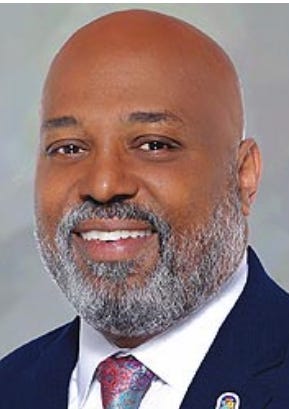
Calvin Hawkins (At-Large)
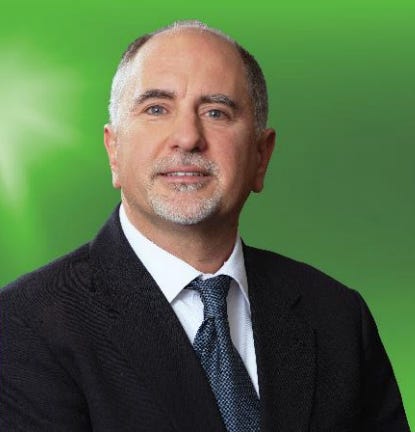
Eric Olson (District 3)

Shayla Adams-Stafford (District 5)

Here is what we do not know — and what should concern every resident of Prince George’s County:
The EDC states this mission had 26 total participants.
Only 3 EDC staff and 5 councilmembers are publicly known.
That leaves 18 to 21 people completely unaccounted for in any public record.
We do not know who paid to go, how much they paid, or why they were included.
We do not know whether any of those unknown travelers are developers, contractors, lobbyists, political donors, or businesses with pending county interests.
And we do not know whether any private or foreign entities helped cover councilmembers’ travel costs.
Ask yourself who is missing from the guest list. Someone told me when the 3 letter agency lets you sign a proffer they won’t OK foreign travel.
Meanwhile, the Economic Development Corporation’s official MPIA response says the mission was:
Not funded by corporate sponsors
Not funded by EDC operating money
Not funding any councilmembers
Paid for entirely by “participant fees”
And yet nobody will say who the participants were, what they paid for, or why they were chosen to accompany elected officials overseas.
When you put this all together, you start to see a picture that raises more questions than answers. Residents are being asked to accept that a 26-person overseas mission involved no corporate sponsors, no EDC money, no disclosed private funders, and no clear list of who actually went.
It doesn’t add up.
And when a government trip doesn’t add up, the public has every right — and every reason — to be suspicious.
Below is the full breakdown of what the County has said, what the EDC has admitted, and all of the contradictions and gaps that point toward a much deeper problem. To
What Really Happened On The South Korea Trip?
The EDC’s own documents raise more questions than they answer
Prince George’s County leaders have talked about the September 2025 trip to South Korea as a glowing “trade mission” that would bring jobs and investment back home.
But when you read the Maryland Public Information Act (MPIA) response from the Prince George’s County Economic Development Corporation (EDC), and compare it to how this trip has been described in public, you start to see something else:
Contradictions.
Carefully worded half-truths.
And big, obvious holes in the story that any honest government should be embarrassed by.
This is not just about a few plane tickets. It is about whether the Council and the EDC are telling the public the truth about who funded this trip, who benefited from it, and what really happened overseas.
1. How the trip has been sold to the public
From what has been said publicly, the South Korea trip has been framed as:
An official economic development mission for Prince George’s County.
Something sponsored or supported by the EDC, as part of its international business strategy.
A delegation where Councilmembers and county leadership were traveling as part of that mission, in the public interest.
The overall impression given to residents is that this was a legitimate, structured, publicly accountable mission: the EDC organizing, the Council participating, everyone rowing in the same direction for jobs and investment.
But when we look at the EDC’s own written response under the MPIA, that picture falls apart.
2. What the EDC says in writing
In its October 31, 2025 letter responding to a citizen’s MPIA request about EDC sponsorship or financial support for the County Council’s trip, the EDC says several things very clearly.
No corporate sponsors
The request asked for contracts or agreements with corporate sponsors connected to the trip.
The EDC’s answer: There were no corporate sponsors.
In plain English, that means:
No businesses signed on as “sponsors.”
No corporate underwriters.
No private corporate money, at least through EDC.
So if anyone has been suggesting that “corporate partners” funded or underwrote this trip, the EDC’s official position directly contradicts that.
No EDC operational money used
The MPIA request asked for records of EDC spending on travel, lodging, meals, per diems, staff time, and related costs.
The EDC’s answer boils down to this:
The trade mission was paid for entirely by “participant fees,”
Those fees covered “the total cost of staffing the mission.”
No EDC operational funds were used.
That raises two immediate issues:
If no operational funds were used, and it is all “participant fees,” then:
Who are these “participants”?
How much did each pay?
Did anyone get a special deal or reduced fee?
If all costs for EDC staff were covered by outside payments, what exactly was the EDC “selling” in this arrangement?
Access to Korean contacts?
Travel in the same delegation as county power players?
The prestige of traveling with a county-branded mission?
We are asked to accept “participant fees” as a magic bucket that makes all ethical questions disappear. But it actually creates more questions.
EDC says: “We did not pay for Councilmembers”
This is the big one.
The MPIA request specifically asks which County Councilmembers, EDC staff, or others traveled using EDC funding or sponsorship.
The EDC’s answer:
Only EDC staff traveled using EDC funds.
No County Councilmembers traveled with EDC funding or sponsorship.
No corporate sponsorships were provided.
The EDC lists three staff who traveled with EDC funding:
Ebony Stocks – President & CEO
Martin Ezemma – Director of International Business
Jose Burnes – Business Development Manager for Manufacturing and Warehousing
But the EDC’s own letter also says this was a 26-person trade and investment mission to Seoul and Cheonan City.
So we know:
26 people went.
Only 3 of them are identified in this document.
EDC says it did not fund Councilmembers.
Which leads directly to the central question:
If the EDC did not fund the Councilmembers,
then who did?

3. Public narrative vs. official record
Let’s lay it out in simple form.
Topic
What the public is led to believe
What the EDC says under MPIA
Who sponsored the mission?
Implied: EDC-sponsored, possible “corporate partners,” official county effort
EDC: No corporate sponsors at all.
Who paid for the trip?
Vague references to “trade mission,” “economic development,” sounding like public funds or official support
EDC: Entirely paid by “participant fees,” no EDC operational money.
Who funded the Councilmembers’ travel?
Public may reasonably assume the EDC or county funds as part of the mission
EDC: No Councilmembers traveled with EDC funding or sponsorship.
Who went?
We are told of a “delegation,” giving the sense of a united team
EDC: Only 3 staff are named out of 26 people. The rest are not disclosed here.
The core problem is not just fuzzy wording. The written record directly undercuts the way this trip has been framed in public.
At best, this is sloppy and misleading.
At worst, it looks like officials are not being honest about who paid for what and why.
4. The mystery of the “participant fees”
“Participant fees” is a very polite phrase. It sounds clean and neutral. But think about what it could mean in practice.
If a businessperson in Prince George’s County wants access to:
County decision-makers,
International contacts curated by the EDC,
A seat on a 26-person overseas mission,
and they pay to be on that trip, then you have something that looks a lot like:
“Pay to travel with your government.”
We do not know yet:
Which businesses or individuals paid these fees.
Whether any of them hold county contracts, are seeking county approvals, or are frequent political donors.
Whether some paid more than others, or whether any fees were waived.
All of those questions matter. Without those answers, “participant fees” is not a reassurance. It is a red flag.

5. So who paid for the Councilmembers, exactly?
The EDC’s letter closes a door on one explanation. It says, clearly, that EDC money did not fund Councilmembers’ travel.
That leaves a short list of possibilities:
The Council used its own budget or individual office budgets.
A third-party nonprofit or outside group paid some costs.
Private donors or businesses helped pick up the tab.
A foreign host quietly covered lodging, meals, or local travel.
Individual members used campaign funds or personal funds.
Or did a Non-Profit run by a Council Chair’s lover pay for a vacation using money received from the County?
Each of these possibilities has its own legal and ethical implications.
If public money was used, the Council should be fully transparent:
How much was spent?
For what specific purposes?
Which line item did it come from?
If private or foreign sources helped pay, that is even more serious:
What did those entities expect in return?
Have any of them shown up asking for zoning changes, contracts, subsidies, or special treatment since the trip?
Right now, we are left with a simple and troubling situation:
Everyone wants credit for a “trade mission.”
No one wants to be clear about who paid to get on the plane.
6. The EDC’s brag sheet vs. the missing proof
To its credit, the EDC does not just describe the logistics of the trip. It talks about outcomes:
Product distribution agreements “under negotiation” for food and skincare.
Lab and manufacturing partnerships.
Education and professional training partnerships.
Costume sample production agreements with a 40-day delivery timeline.
Four “active business deals” currently under consideration.

It sounds impressive. But there is a pattern we have seen many times before:
Big claims about international missions.
Very little hard documentation made public.
No names of the Korean counterparties.
No MOUs, contracts, or written commitments attached to the MPIA response.
If this mission was as successful as advertised, it should be easy to show:
Agreement texts (with confidential terms redacted if necessary).
Company names and industries.
Expected job creation or investment numbers.
Instead, the public is being asked to accept a self-congratulatory paragraph in a letter as proof that this trip was a win for the county.
You would think, after flying a dozen-plus hours across the world with 26 people, county leadership would be eager to show solid evidence of what we got in return.
7. The Ethics Office is already in the loop
Look at who is copied on the MPIA response:
Todd Turner, Executive Director, PGC Office of Ethics and Responsibility
PGC Office of Law
That tells you something important:
The EDC knew this request raised ethical issues.
They were careful to put Ethics and the lawyers on notice.
The response was not casual or off-the-cuff. It was vetted.
When a simple question about who paid for a trip requires the Ethics Office and the Office of Law to be involved, that is already a story.
8. What are they hiding?
Putting it all together, here is what it looks like right now:
Officials have been very happy to talk publicly about “economic development,” “trade missions,” and “global partnerships,” but they have not been eager to spell out who paid for what.
The EDC’s own letter denies corporate sponsorship and denies funding Councilmembers, even though the trip has been presented publicly as an EDC-led mission with county officials.
“Participant fees” are doing a lot of quiet work in this narrative. We still do not know who paid those fees, how much, or what they are getting in return.
Of the 26 people on the trip, only 3 EDC staff are named. The rest are invisible in the public record so far.
So we have to ask the blunt question your readers are already thinking:
If everything about this trip was clean, above board, and in the public interest,
why are there so many contradictions and so little transparency?
At the very least, the contradictions create the appearance that:
The story was smoothed over for public consumption.
The financial side has been quietly buried in vague language.
Someone may be counting on the public not reading the fine print.
9. The questions Prince George’s County residents deserve answered
Here are the specific questions your readers should be asking their Councilmembers and the EDC:
Who paid for each Councilmember’s airfare, hotel, meals, and ground transportation to and from South Korea?
Were any private businesses, lobbyists, or political donors invited to join the trip? If so, who, and what did they pay?
Were any costs for Council travel covered by third parties, foreign hosts, or nonprofits? If yes, were those reported as gifts or travel on ethics forms?
Who are the 26 people who went on the mission? Release the full participant list.
Where are the actual agreements that the EDC claims resulted from the trip? At minimum, release redacted copies or formal summaries.
Why did the EDC feel it necessary to involve the Office of Ethics and the Office of Law in this MPIA response if everything is straightforward?
These are not gotcha questions. They are the minimum standard for accountable government.

10. Closing: This is about trust, not just tickets
Travel itself is not the scandal. Economic development is not the scandal. The scandal, if there is one, is in the gap between what officials say and what the documents show.
When a county government:
wraps overseas travel in glowing language about “trade missions,”
refuses to be clear about who paid,
and only tells the full truth when forced by a public records request, ordinary residents are right to wonder:
What else are they not telling us?
What deals are being made in our name, with our reputations, using access to our government?
Your readers do not need to be experts in Korean trade or international business to understand this. They understand something very simple:
If you are proud of what you did and confident it will withstand scrutiny,
you do not hide the details.
You publish them.
Right now, the South Korea trip is not a story of smart economic development.
It is a story about contradictions, missing information, and a government that seems to be hoping people will not read the fine print.
And thanks to the MPIA, we just did.
It sounds like more Maryland government theater. A few private business owners made private deals with Korean manufacturers. The EDC can take credit downstream if any jobs are created. But likely, this was not a trip representing Maryland or PG County on the front end. It was just a cover for appearances. I need to go through in more detail on the sponsorship and money trail your MPIA surfaced but it appears that there was knowledge that there was recognition ethics questions would be raised.