


🗳️ The Cost of Fairness: Why Maryland’s Central Committee System Works
⚖️ Introduction: A Push for “Fairness” That Isn’t
In Maryland, proposals to mandate special elections for legislative vacancies are gaining traction under the banner of “fairness.” But beneath the surface, these well-meaning reforms threaten to destabilize county budgets, overburden election infrastructure, and punish the very communities they claim to empower.
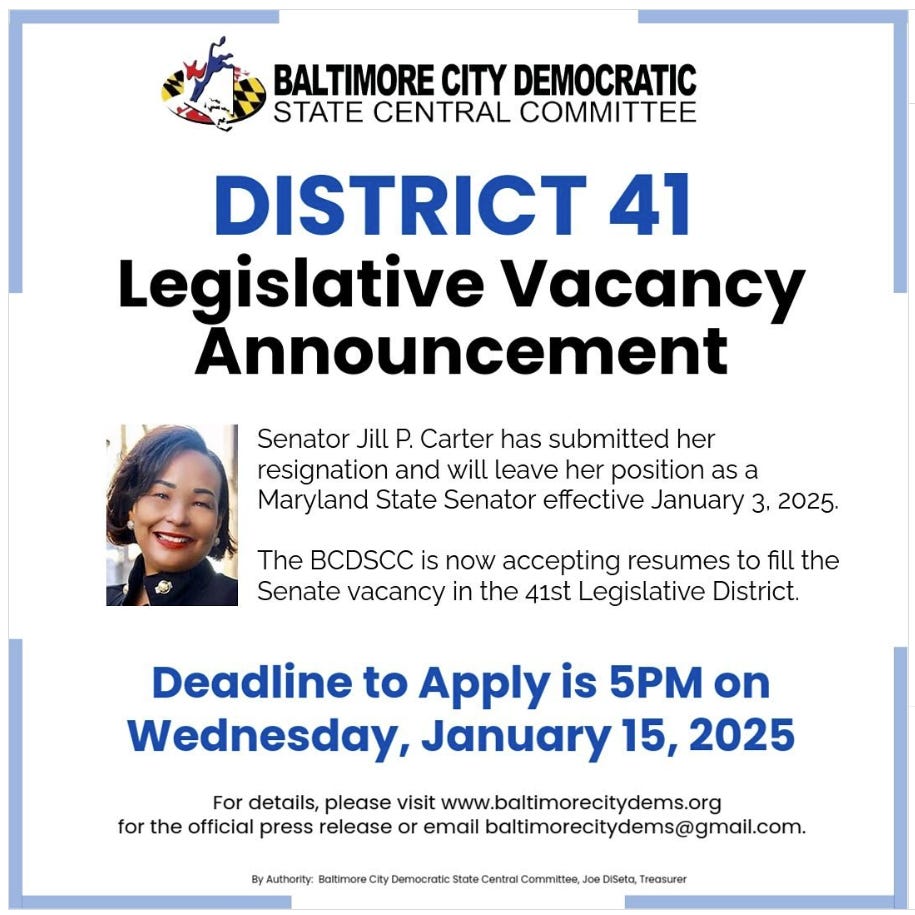
🏛️ How the Current System Works
When a vacancy occurs in the Maryland General Assembly—typically due to a resignation, promotion, or gubernatorial appointment—the replacement process is straightforward:
- The party’s County Central Committee (Democratic or Republican) meets to select a nominee.
- That nominee is recommended to the Governor, who usually confirms the appointment.
- The process is fast, inexpensive, and locally driven.
This system is codified in Maryland law and has served the state efficiently for decades.
🔁 The Domino Effect of Special Elections
Let’s walk through a common scenario:
1. A state senator resigns to join the Governor’s administration.
2. Under the proposed reform, a special election is triggered to fill the Senate seat.
3. The likely replacement? A delegate from the same district, creating a second vacancy.
4. If that delegate also holds a local office (e.g., county council), a third special election may follow.
This cascade of elections—each requiring staffing, ballots, polling places, and security—can cost counties hundreds of thousands of dollars per cycle.
💸 Who Pays the Price?
Counties like Montgomery, Prince George’s, and Baltimore would bear the brunt of these costs. And unlike state-mandated spending on schools or police, special election funding must come from discretionary budgets:
- Parks and recreation
- Senior services
- Youth programs
- Community health initiatives
There is no constitutional mandate to protect these programs, making them the first to be cut when election costs rise.

🧠 Activists Are Not a Dirty Word
Critics argue that central committees are “activist-driven” and unaccountable. But this framing ignores a fundamental truth: America was built by activists. The people who serve on central committees are elected by voters, volunteer their time, and work to strengthen democracy—not subvert it.
To suggest that civic engagement is somehow illegitimate is to undermine the very foundation of representative government.
🗂️ What Gets a Special Election—and What Doesn’t
Here’s how Maryland currently handles vacancies:
| Office Type | Replacement Method | Notes |
| State Senator | Central Committee + Governor | No special election unless vacancy occurs close to general election |
| State Delegate | Central Committee + Governor | Same process as senators |
| County Council Member | Varies by county charter | Some require special elections, others allow appointments |
| Congressional Seats | Special Election (if needed) | Mandated by federal law for House vacancies |
| Governor/Lt. Governor | Line of succession | No special election |
Sources: Maryland Manual Online, Election Law § 8-710
🧭 Conclusion: Efficiency Is Not Elitism
The central committee system is not elitist—it’s efficient, democratic, and locally accountable. It prevents costly election cascades, respects the will of party voters, and preserves county budgets for essential services.
Mandating special elections for every vacancy may sound fair, but in practice, it’s punitive, excessive, and regressive. It shifts resources away from vulnerable communities and toward administrative overhead.
Let’s not punish civic engagement. Let’s protect it.

🔗 Footnotes
1. Maryland Constitution – Executive Appointments and Legislative Vacancies
2. Maryland Election Law § 8-710 – Special Elections and Vacancy Procedures
3. Ballot Access News – Cost Analysis of Special Elections Nationwide
4. Maryland Department of Budget and Management – County Budget Overview and Mandated Spending
5. Maryland Democratic Party – Role and Selection of Central Committees
6. Maryland Republican Party – County Central Committee Structure and Appointment Process
Sure! You can quote me.
An alternative method is being used currently in Montgomery County. There's a vacancy on the County Council, and anyone can apply to serve as a Councilmember until the next election. There's one stipluation: anyone applying to serve has to agree to not run for office in the next election. In MoCo the Council will select the temporary replacement, but it would also work for the Central Committees to select the temporary replacement legislator. This would avoid both the advantage of appointed-incumbency, and the costs of special elections. And the temporary-replacement-legislators would get valuable experience and exposure, which would potentially benefit them in future election cycles. Something to consider.