

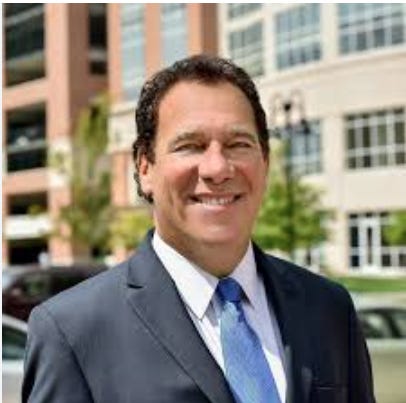
🗳️ The Candidate Who Might Have Been: Kevin Kamenetz and the 2018 Democratic Primary
By Barry O’Connell
In the spring of 2018, Maryland’s Democratic gubernatorial primary was shaping up to be a crowded, chaotic affair. Nine candidates had filed, each hoping to break through in a state where the governorship was held by a popular Republican, Larry Hogan, and the Democratic base was hungry for a win. But beneath the noise of the field, a quiet consolidation was underway. And then, in a single, tragic moment, it was undone.
Kevin Kamenetz—Baltimore County Executive, seasoned public servant, and arguably the only viable mainstream Democrat in the race—died suddenly of a heart attack on May 10, 2018. I had met with him the weekend before, and while I didn’t consider him a perfect candidate, I had agreed to support him. He was well-spoken, well-financed, and grounded in the realities of governing. He knew the names of counties on the Eastern Shore. He understood the mechanics of Maryland politics. And he had more than $2 million in campaign cash—money that mattered.
💰 The Money Gap
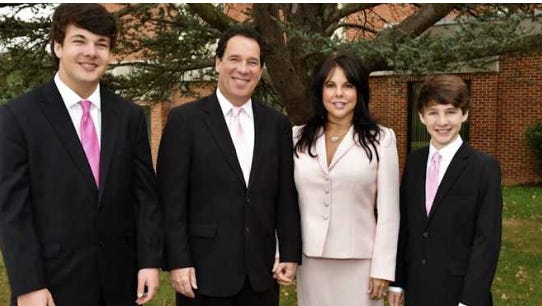
Kamenetz’s financial position wasn’t just strong—it was strategic. In a fragmented field, cash buys visibility, staff, and staying power. His closest rival in the moderate lane, Rushern Baker III, had long struggled with fundraising. While exact figures varied month to month, Baker’s war chest was significantly smaller, and his campaign lacked the statewide infrastructure that Kamenetz was quietly building.
Then there was Ben Jealous, the former NAACP president and progressive firebrand. Jealous was a wild card—not because he lacked support, but because his support came from outside Maryland. He tapped into the Bernie Sanders network, drawing national money and endorsements that energized the left but raised eyebrows among local operatives. His campaign promises—free college, Medicare-for-All, sweeping criminal justice reform—were ambitious, but often felt untethered from the fiscal and political constraints of Annapolis.
I used to describe Jealous and his supporters as a small band of people marching in circles, waving their fists in the air, shouting “Free! Free! Free!” It was passionate, yes—but also performative. And when it came to the granular work of governing, Jealous struggled. He mispronounced county names. He lacked fluency in Maryland’s regional dynamics. Ben even dropped an F-Bomb on a woman reporter from the Washington Post. He was, in many ways, a national candidate dropped into a state race.
📊 The Polling Picture
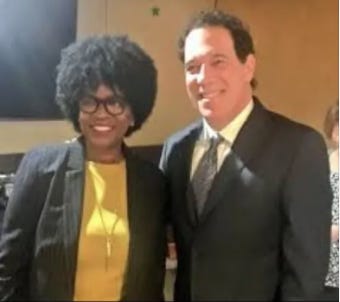
Early 2018 polling showed Rushern Baker leading with around 20–24%, followed by Kamenetz and Jealous in the low teens. But nearly half of voters were still undecided. That’s where Kamenetz’s campaign cash and moderate appeal could have made the difference. With time, visibility, and a disciplined message, he had a plausible path to consolidate the center and overtake Baker.
After Kamenetz’s death, the race narrowed. Jealous surged, winning the nomination with 40% of the vote. Baker, despite his early lead, couldn’t hold on. The rest of the field—Madaleno, Ross, Vignarajah, Shea—never broke out.
🔍 What Might Have Been
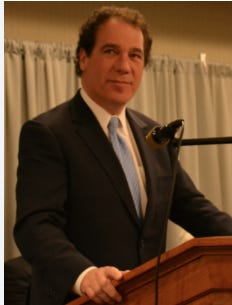
Would Kamenetz have won the primary? It’s not certain, but it’s projectable. I believed he would. He had the money, the message, and the momentum. And in a general election against Hogan, he might have mounted a more credible challenge than Jealous, whose progressive platform alienated key swing voters and Party regulars. At least one prominent voice was convinved Baker had a proobblem with White voters.
But politics isn’t just about viability—it’s about timing, tragedy, and the unpredictable churn of public sentiment. Kevin Kamenetz was a candidate built for the moment. That moment never came.