

🕵️♂️ The Butler Bargain: How a Quiet Exit Reshaped Maryland’s Power Map
By Barry O’Connell | Maryland Wire | October 2025
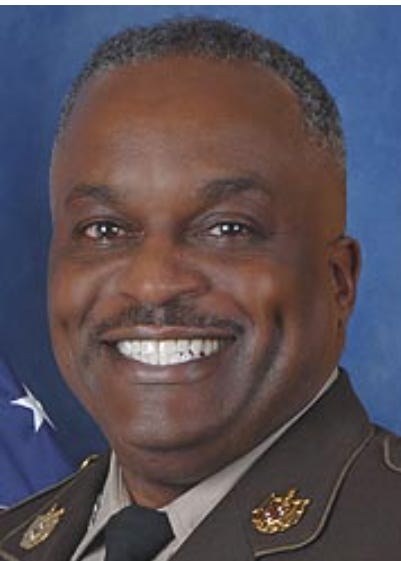
In Maryland politics, silence often speaks louder than press releases. Colonel Roland L. Butler Jr.’s sudden retirement as Superintendent of the Maryland State Police may read as a dignified departure, but sources close to the situation suggest it was anything but voluntary. Behind the scenes, Governor Wes Moore appears to have orchestrated a strategic concession—one designed to shore up support within the Legislative Black Caucus and neutralize internal threats ahead of a high-stakes reelection campaign.
🎯 A Calculated Retreat
Butler, the first Black officer to lead the Maryland State Police, was appointed by Moore in 2023. His tenure, however, was marred by persistent criticism from within the Black Caucus, most notably from Senator Joanne C. Benson, the longest-serving Black legislator in the state. Benson and her allies have long accused Butler of failing to protect and promote minority officers, with some going so far as to label him a “traitor to his people.”
Now, with the Caucus preparing to override Moore’s veto of a reparations study bill, the governor needed a gesture that would resonate. According to multiple sources familiar with internal discussions, Moore or a senior staffer gave Butler a choice: retire with dignity or face removal. The timing was no accident.
🧩 Benson’s Pick?
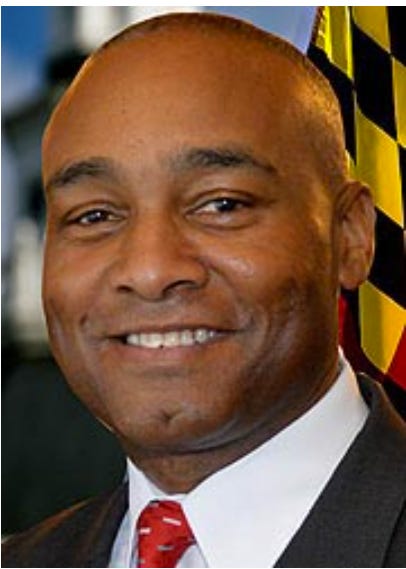
Rumor has it that Senator Benson herself selected Butler’s replacement: State Senator Michael A. Jackson (D-27), a former sheriff and longtime ally. By allowing Benson to handpick the next top cop, Moore not only removed a political liability but also placed the Black Caucus in his debt. It’s a move that strengthens his hand going into the special session—and into the 2026 campaign.
> “This was a bone thrown with precision,” one insider told Maryland Wire. “It’s not just about Butler. It’s about locking down Prince George’s County.”
🐍 The Prince George’s Problem
Prince George’s County is the crown jewel of Maryland’s Democratic coalition. It votes as a bloc, often delivering 70%+ margins for Democratic statewide candidates. But Moore’s grip on the county has been tested by a faction of local power brokers—figures like State’s Attorney Aisha Braveboy, former County Executive Jack Johnson, Board of Education member Edward Burroughs, and Senator Anthony Muse.
Sources close to the situation allege that this group has been quietly courted by Republican operatives aligned with former Governor Larry Hogan. The pitch? Help Hogan win, and his administration will look the other way on local “shenanigans.” The implication is clear: Moore’s enemies in PGC aren’t just political—they’re transactional.
By removing Butler and empowering Benson, Moore may have cut off that oxygen supply. The Black Caucus, long skeptical of Butler, now has a win. And Moore has a firewall against internal sabotage.
📊 The Electoral Math
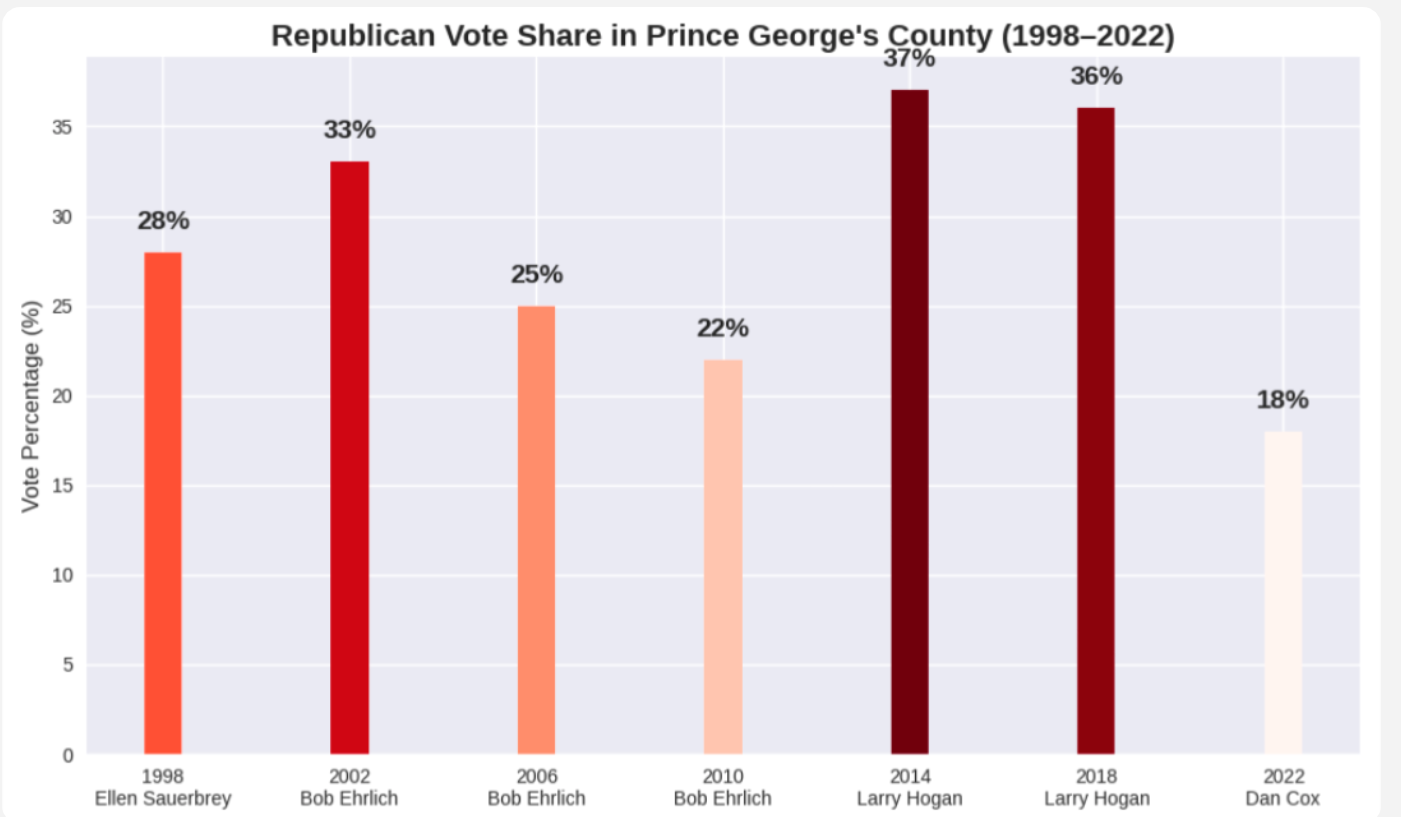
Prince George’s County isn’t just important—it’s decisive. Consider:
- In 2014, Hogan won statewide but only pulled ~21% in PGC.
- In 2018, he improved to ~30%, still losing the county handily.
- In 2024, running for Senate against PGC Executive Angela Alsobrooks, Hogan dropped back to ~25%, crushed by her local support.
If Moore can hold PGC at 70%+, he can offset losses in Maryland’s 17 smallest counties and win the state with modest margins elsewhere along the I-95 corridor. That’s why this Butler maneuver matters. It’s not just about law enforcement—it’s about electoral survival.
🧾 Footnotes
1. Butler’s retirement announcement: https://www.spotlightonmaryland.com/news/colonel-butler-retires
2. Reparations veto coverage: https://www.marylandmatters.org/2025/09/15/black-caucus-vows-to-override-reparations-veto
3. Hogan’s PGC vote share (2014–2024): https://elections.maryland.gov/elections
4. Senator Jackson’s appointment: https://www.washingtonpost.com/dc-md-va/2025/10/10/michael-jackson-state-police