

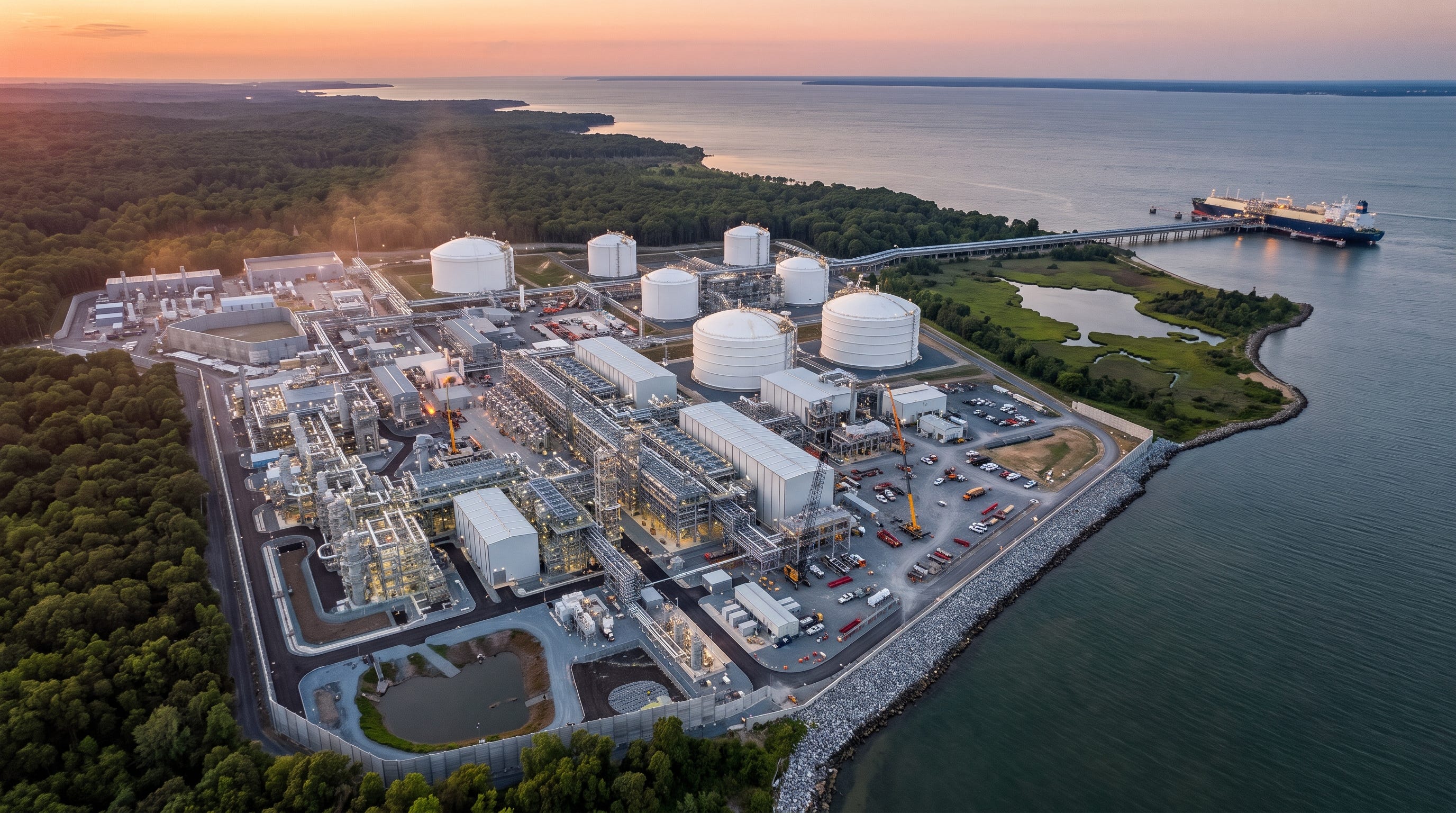
The $4B Blueprint: Lessons from Cove Point for Maryland’s Next Mega-Project Era
How Joel Rozner and RWL wrote the playbook for clearing massive infrastructure in Annapolis—and why modern developers are struggling to replicate it.
By Barry O'Connell
Whenever statehouse analysts debate capital investment in Maryland, public mega-projects like the Purple Line usually dominate the conversation. But in terms of sheer private capital, nothing in state history touches the $3.8 billion-plus liquefaction and export conversion at Cove Point in Calvert County.
When Dominion Energy first announced its plan to transform the historic import terminal into a global LNG export hub, the project faced what looked like an insurmountable wall of opposition. Deep-blue climate politics, intense local environmental scrutiny, complex Public Service Commission (PSC) oversight, and federal FERC overlay meant the odds were stacked heavily against rapid clearance.
Yet, led by Joel Rozner and the government relations team at Rifkin Weiner Livingston LLC (RWL), the project didn't just survive—it obtained the necessary state-level approvals, navigated environmental hurdles, and built on schedule.
The ultimate proof of that regulatory execution came years later: Warren Buffett’s Berkshire Hathaway Energy (BHE GT&S) acquired operational control and eventually bought out the remaining 50% stake for $3.3 billion. Dominion took the initial regulatory exposure; Berkshire bought the de-risked, cash-flowing asset.
As Maryland enters a new era of complex infrastructure challenges—from offshore wind interconnects to high-voltage grid expansions and massive data center builds—every GR firm in Annapolis is attempting to solve the same equation.
Why did the Cove Point campaign succeed where so many modern green and digital infrastructure projects hit political gridlock?
🔒 PAID SUBSCRIBER EXCLUSIVE 🔒
Subscribe to The Maryland Wire Paid Tier to unlock the full deep-dive, including:
The 4-part Annapolis Blueprint used to clear $4B in private infrastructure.
How RWL mitigated county-level tax and zoning friction in Lusby.
The "Buffett Arbitrage": Why national energy funds pay top-dollar for RWL-cleared state assets.
Key policy lessons for firms positioning for the 2027 General Assembly session.
========================= [ PAYWALL BREAK ] =========================
