


THE LONG WAR IN A SHORT WEEK
There are times in American life when history doesn’t just repeat itself — it accelerates. It collapses decades of grief, anger, and moral reckoning into a single, unbearable moment. That’s what Minneapolis feels like to me. It feels like the Vietnam era all over again, except instead of ten years of slow‑building horror, we’re getting the whole thing blasted into our faces in a matter of days.
My political life didn’t begin in the Summer of Love or the Chicago convention. I was too young for that. My politics started around 1970, in Scranton, Pennsylvania — not exactly the epicenter of the antiwar movement, but close enough to feel the tremors. We had our Moratorium Day marches. We had thousands of people in the streets. We had our own kind of electricity, our own sense that the country was coming apart at the seams.
And then the war came home to my family.
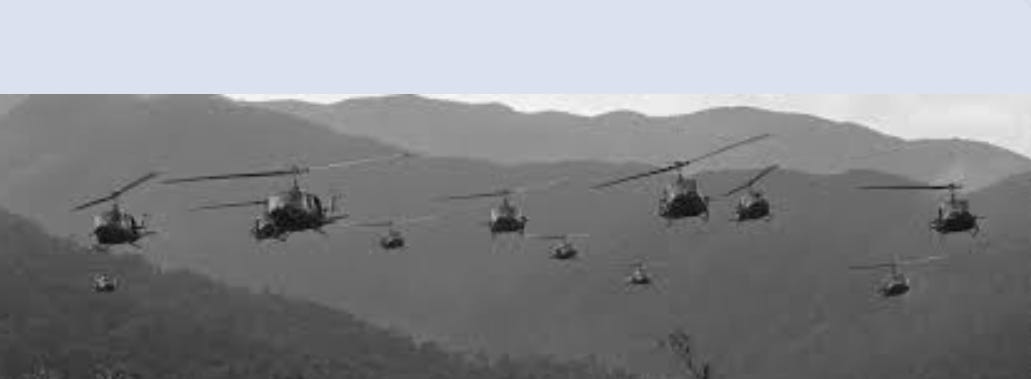
My cousin Jerry died in a helicopter crash during the Tet Offensive. One day he was a kid we loved; the next he was a folded flag and a set of questions nobody could answer. We were patriotic Americans. We believed in service. But grief has a way of rearranging your patriotism. It forces you to ask why. Why Vietnam? Why this war? Why did Jerry die thousands of miles from home for something we weren’t sure was good or right or necessary?
Even then, even in the worst moments, there was distance. We saw the war on the nightly news, but we didn’t see Jerry die. We didn’t see the crash. We didn’t see the last seconds of his life. Even the most iconic images of Vietnam — the Saigon police chief holding a revolver to a prisoner’s head, the Buddhist monk engulfed in flames — left something to the imagination. The horror was real, but it wasn’t intimate. It wasn’t personal in the way Minneapolis is personal.
Today, there is no distance. There is no buffer. There is no nightly news to filter the violence. There is only the raw, unedited, unrelenting immediacy of a 24‑hour feed.
Millions of Americans watched Renee Good die. They watched her last minutes from multiple angles. They watched her plead, panic, and then fall. They watched a young woman — a woman who could have been a daughter, a sister, a neighbor — take a bullet to the face.
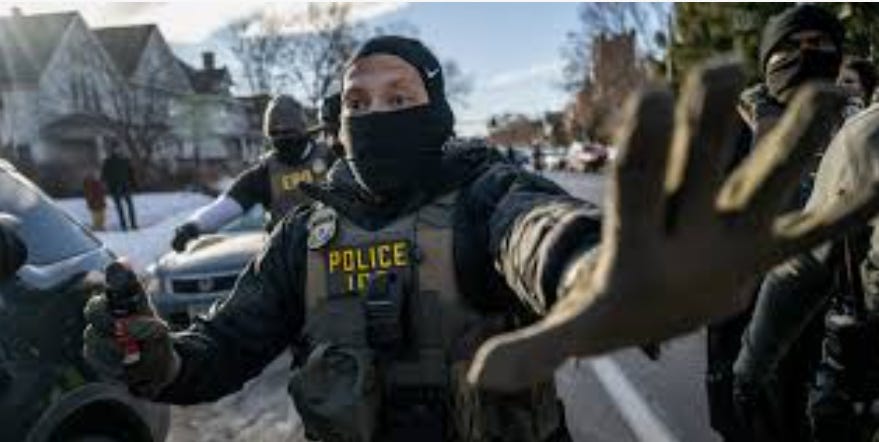
And then they watched Pretti — white, armed, Second Amendment–proud, the kind of guy MAGA voters normally claim as one of their own — take nine bullets to the head. They watched him die in a way that no one had to imagine. They saw the execution, not the implication.
This is the Vietnam experience at 100x speed. What took a decade to accumulate in the 1960s — the images, the doubts, the moral revulsion — is now being pumped into the national bloodstream in a matter of days.
And here’s the part that’s shifting the political ground under our feet: Minneapolis broke through the MAGA firewall.
On the radio, I said something that seemed to resonate. For many MAGA Republicans, the categories are automatic. Say “Hispanic,” they hear “illegal.” Say “Black,” they hear “criminal.” Say “immigrant,” they hear “invader.” They’ve spent years sorting the country into “us” and “them,” and they’ve been told — relentlessly — that the “them” are to be feared, controlled, or punished.
But Minneapolis didn’t fit the script.
Renee Good wasn’t a “them.” She was a “could have been.”
Could have been their daughter.
Could have been their niece.
Could have been the girl who grew up next door.
Pretti wasn’t a “them.” He was a “one of us.”
White.
Gun‑owning.
Second Amendment–affirming.
The kind of guy they imagine standing next to them at the range.
For the first time, ICE wasn’t doing something to “other people.”
It was doing something to people who looked like them.
That’s why the message boards — yes, they still exist, though they’re mostly Facebook groups and Reddit threads now — lit up with panic. That’s why the Black Enterprise piece about the Second Amendment crowd suddenly questioning ICE hit so hard. That’s why the country feels like it’s vibrating at the same frequency it did in the late Vietnam era.
And the speed of trauma has changed.
In the Vietnam era, the country had time to process. Time to argue. Time to grieve. Time to turn against the war slowly, painfully, over years. Now, the trauma arrives instantly. You don’t hear about a death. You watch it. You don’t imagine the violence. You see it. You don’t wait for Walter Cronkite to tell you what happened. You watch it unfold in real time, from angles even the Pentagon never had.
It’s not just that Minneapolis is horrifying.
It’s that Minneapolis is accelerated.
It’s the Tet Offensive, the Buddhist monk, the Saigon execution photo, and the My Lai revelations — all compressed into a single, unbearable month.
A friend of mine — older, wiser, and far more seasoned — sent me a Bruce Springsteen song the other day. She lived the Vietnam era from the inside, working for Barbara Jordan and later Ron Dellums. She was in the rooms where history was being written. She heard the echoes too. She felt the ghosts waking up.
And when that song hit my ears, it wasn’t nostalgia. It wasn’t Boone’s Farm and Strawberry Hill and sangria and college girls smoking pot while Dylan and Baez spun on the turntable. It was the other memory — the darker one. The memory of a country losing its moral compass. The memory of a war that took people we loved and gave us nothing but grief in return.
Minneapolis is bringing that back. Not slowly. Not over years. But all at once.
And that’s why this moment feels so heavy. So familiar. So dangerous.
Because the past isn’t past.
It’s present.
And it’s happening faster than any of us can process.