

In Baltimore County’s ever-evolving power structure, few episodes have drawn as much quiet ire—and quiet skepticism—as the investigation led by disgraced Inspector General Kelly Madigan into Council Chairman Julian E. Jones Jr. While framed as a procedural probe into alley paving, the layers beneath suggest a troubling cocktail of selective scrutiny, racial exclusion, and bureaucratic brinkmanship.
The Inspector General’s report (Case No. 22-012) painted the $69,000 reconstruction of Watkins Way as a misuse of public resources. But here’s the missing context: Jones was advocating for infrastructure improvements that served community interests—not steering funds toward political donors or private enrichment. Yet the narrative Madigan promoted seemed intent on implicating him personally.
Jones agreed to an interview with the Office of the Inspector General. What happened next says more about Madigan’s rigidity than any legitimate inquiry. In his letter recounting the meeting, Jones wrote:
> “I exercised my right under Maryland law not to be recorded for the interview; and... you and Mr. Quisenberry decided unilaterally not to move forward and proceed with the interview.”
But here’s the critical detail: Jones wasn’t refusing to be recorded, he was willing to proceed under one condition. As he clarified:
> “I offered to be recorded as long as I was able to record as well.”
Maryland’s two-party consent law protects individuals from being recorded without their knowledge. Jones’s request wasn’t combative, it was a safeguard, one especially reasonable given the contentious nature of the investigation and the history of selective interpretation by the IG’s office.
Madigan, however, refused to proceed unless Jones dropped his condition. The irony? Her team already planned to record the session. They simply didn’t want Jones having his own independent copy.
This isn’t a debate over microphones—it’s a test of trust, transparency, and the ethics of oversight. Jones’s insistence on a mutual recording wasn’t about obstruction; it was about ensuring the record couldn’t be manipulated.
And he wasn’t alone in raising concerns. A retired senior county official provided a suite of records suggesting Madigan routinely dismissed Black professionals within the county, most damningly, refusing to engage with a high-ranking Black woman who possessed key insights into alley paving procedures.
What emerges isn’t just an administrative disagreement—it’s a pattern: exclusion, rigidity, and what some have described as “investigative grandstanding.”
Jones’s words cut through the noise:
> “You felt I had information… that would be germane to the investigation; that I was perfectly willing to cooperate… and that we sat down, exchanged pleasantries, and were ready to proceed.”
That’s not evasion. That’s measured participation met with institutional stubbornness.
If there’s a lesson in this, it’s that the integrity of oversight depends not just on who’s being investigated, but on who’s doing the investigating. And if Madigan’s methods reveal anything, it’s that some Inspector Generals act more like prosecutors, with political motives cloaked in the language of reform.
The Survey
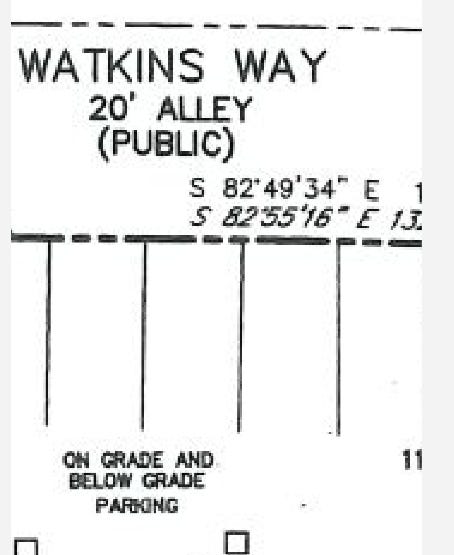
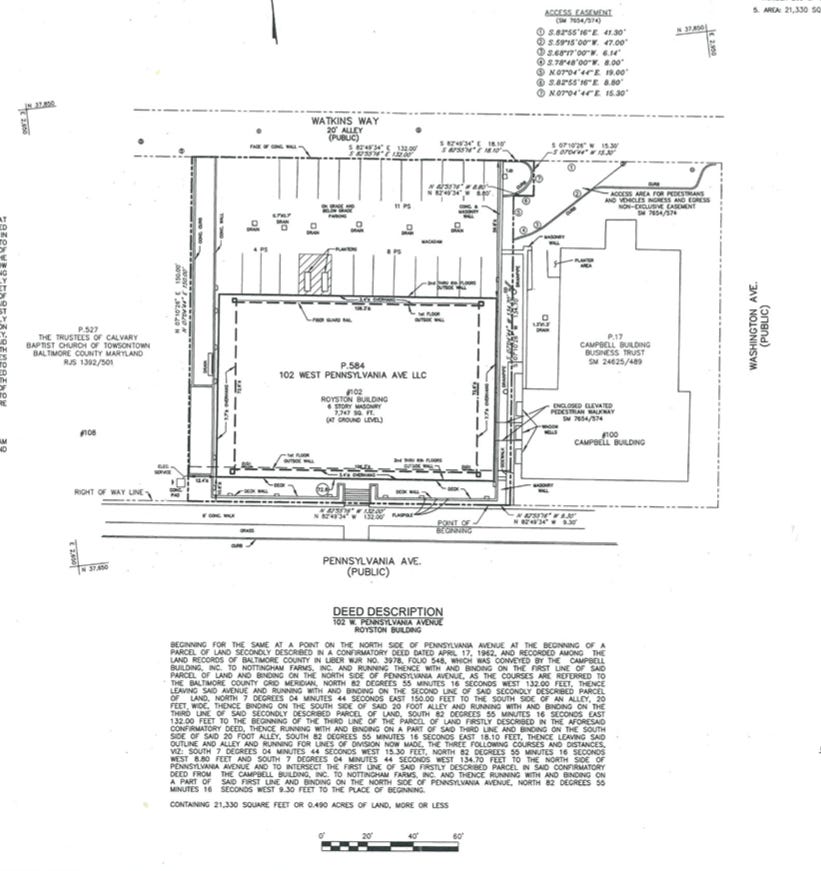
It is an irrefutable fact that the Inspector General had the certified ALTA/ACSM land title survey in her possession as part of the same bundle of documents central to the investigation. This survey unmistakably identifies Watkins Way as a “20' ALLEY (PUBLIC),” designating it as a County-maintained public right-of-way.
Given the document’s explicit labeling, professional certification, and foundational relevance to property jurisdiction, her failure to reference or incorporate its findings into her analysis represents a severe lapse in due diligence.
Whether by willful omission or motivated oversight, the decision to ignore a legally binding document that directly contradicts the narrative presented in her report cannot be dismissed as an error. It was a deliberate act of exclusion, one that materially undermines the integrity of the investigation and raises troubling questions about its objectivity.
.