


By Barry O’Connell
Annotated Editorial Series | August 2025
Maryland’s public savings programs—once viewed as bureaucratic utilities—are quietly evolving into instruments of civic strategy. Under the leadership of Deputy Treasurer Courtney Finklea Green and State Treasurer Dereck E. Davis, the Maryland 529 and ABLE programs have become models of governance-driven innovation, blending fiduciary rigor with inclusive financial design.

🧠 From Intent to Impact: Courtney Finklea Green’s Financial Vision
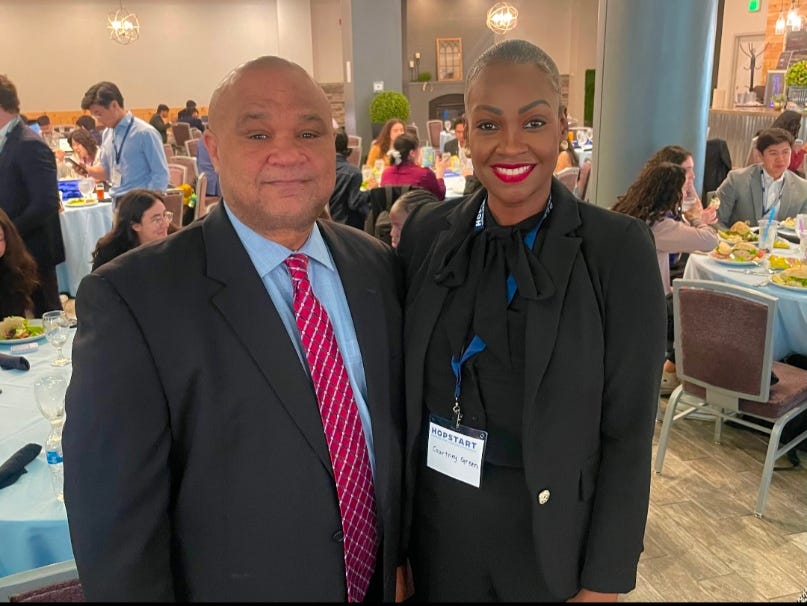
Courtney Finklea Green’s tenure as Deputy Treasurer has been marked by a shift from reactive administration to proactive stewardship. She inherited a system burdened by legacy account issues and public mistrust, particularly around the Prepaid College Trust. Her response? A full-scale modernization of Maryland 529’s operational framework, with a focus on transparency, performance, and accessibility.
- Portfolio Oversight: Maryland 529 now manages nearly $12 billion in College Investment Plan assets, plus $100 million in ABLE accounts. Green has worked closely with T. Rowe Price to refine age-based portfolio allocations, ensuring beneficiaries receive growth-oriented returns without excessive risk exposure.
- ABLE Program Expansion: Partnering with Vestwell, Green has expanded the ABLE program’s reach, enabling individuals with disabilities to save without jeopardizing federal benefits—a nuanced regulatory challenge she’s navigated with precision.
- Equity in Asset Management: In her Senate testimony for SB 958, Green advocated for minority-owned firms to manage public funds, signaling a shift toward inclusive investment governance.
🏛️ Dereck Davis: Architect of Fiscal Prudence
State Treasurer Dereck E. Davis has provided the institutional scaffolding for this transformation. His office oversees Maryland’s broader investment policy, including the state’s $20+ billion treasury portfolio. Davis’s approach is grounded in three principles: safety, liquidity, and market-rate returns.
- Capital Markets Leadership: Davis led Maryland’s $1.6 billion general obligation bond sale, reinforcing the state’s AAA credit rating and investor confidence.
- Investment Policy Reform: His office’s Investment Policy Statement outlines clear guidelines for diversification, ethical oversight, and risk management.
- Inclusive Finance Mandate: Davis has encouraged participation from local and minority-owned financial firms, expanding access to state investment opportunities while maintaining high standards.
📊 Program Snapshot
| Program | Assets Managed | Investment Partner | Strategic Focus |
|----------------------------------|--------------------|--------------------|------------------------------------------|
| College Investment Plan (MCIP) | ~$12 billion | T. Rowe Price | Age-based growth, low fees |
| ABLE Program | ~$100 million | Vestwell | Disability-focused savings |
| Prepaid College Trust (MPCT) | Legacy accounts | Internal | Tuition stabilization (closed to new) |

🧾 Editorial Footnote
This isn’t just about managing money—it’s about designing public trust. Green and Davis are modeling a form of financial leadership that’s transparent, inclusive, and performance-driven. They’re not chasing headlines; they’re building infrastructure.
Their work deserves recognition not just in political circles, but in the pages of Institutional Investor, Pensions & Investments, and Civic Finance Quarterly. Because when public finance is done right, it doesn’t just balance budgets—it balances opportunity.