


🧭 Strategic Memo: Maryland’s 2026 Governor’s Race in the Shadow of Trump
📌 Overview
As Maryland heads toward the 2026 gubernatorial election, the political terrain is shifting—but not collapsing. Governor Wes Moore remains above water, but his Democratic base is softening. Meanwhile, Republicans face a dilemma: embrace Trump and risk alienating moderates, or pivot toward pragmatism and risk losing the base. This memo outlines the key dynamics shaping the race and offers strategic clarity for board members navigating the noise.
📉 Moore’s Approval: Holding, But Not Surging
Governor Wes Moore’s approval rating sits at 50%, down from earlier highs. The latest Maryland Now poll shows:
- 21% rate his performance as “excellent”
- 29% say “good”
- 42% rate him “not so good” or “poor”
Among Democrats, only 68% rate Moore “excellent” or “good”—well below the 80% baseline needed for incumbent strength.
Why the Softening?
- Economic anxiety: Marylanders are grappling with inflation, federal layoffs, and budget shortfalls.
- Budget politics: Moore’s tax hikes to close a $3.3B deficit have stirred discontent.
- Federal spillover: Voters are reacting to Trump’s national policies—Medicaid cuts, federal worker firings—not just Moore’s record.
Moore’s challenge isn’t just performance—it’s perception. Voters are scared, but more scared of Trump than Moore, according to the same poll.
🧨 Trump’s Numbers: A Drag, Not a Detonator
President Trump’s approval in Maryland is just 33%, with a majority disapproving. His presence looms large:
- Federal layoffs and Medicaid threats have hit Maryland hard, especially in federal workforce hubs like Montgomery and Prince George’s County.
- Moore has positioned himself as a counterweight, contrasting his “action” with Trump’s “games of Washington”.
Trump remains a liability in Maryland. Candidates who run to his right—especially in deep-blue regions—risk irrelevance.
🏛️ Republican Field: Sorting Signal from Noise
Viable Contenders:
- Steve Hershey: Senate Minority Leader, launched exploratory committee. Known for legislative discipline and regional credibility.
- Ed Hale Sr.: Baltimore businessman with crossover appeal. Switched parties after assessing Moore’s lock on the Democratic primary.
The Rest:
- John Myrick, Carl Bruner Jr., Christopher Bouchat, Kurt Wedekind—all declared, but lack statewide infrastructure or serious donor traction.
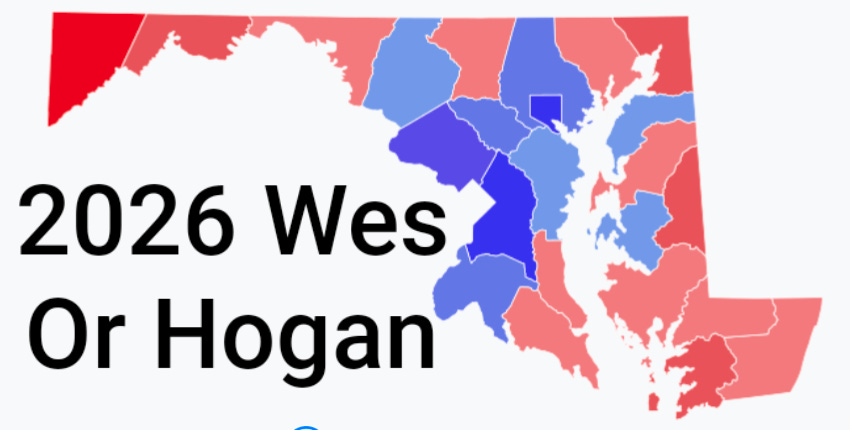
Many are running to the right of Trump, banking on rural enthusiasm. But Maryland’s electorate is 2-to-1 Democratic, and suburban moderates remain decisive. More than half the voters in Maryland live in the urban core often called the 95 Corrridor.
🧠 Strategic Implications for the Board
- Moore is vulnerable—but not collapsing. His numbers are soft, not toxic.
- Trump is a millstone, especially in federal-reliant counties.
- Hershey and Hale deserve oxygen. They offer the GOP its best chance at a credible statewide message.
- Far-right challengers are noise, not signal. Their strategy may win Carroll County, but not the state.
Why I Think Moore Wins
My best estimate of the 26 governor's race comes down to this. Hershey, Hale, and Hogan all have a chance to beat Wes Moore. That assumes that Wes Moore runs against them. But he's not going to run against them. He's going to run against Trump.
Angela Alsobrooks won a commanding victory over Hogan in the senate race, but she did it by linking Trump and Hogan and the voters voted against Trump. That's the path to victory for Governor Moore. The problem for the Republicans is how do you avoid the Trump linkage and still win the Republican primary?
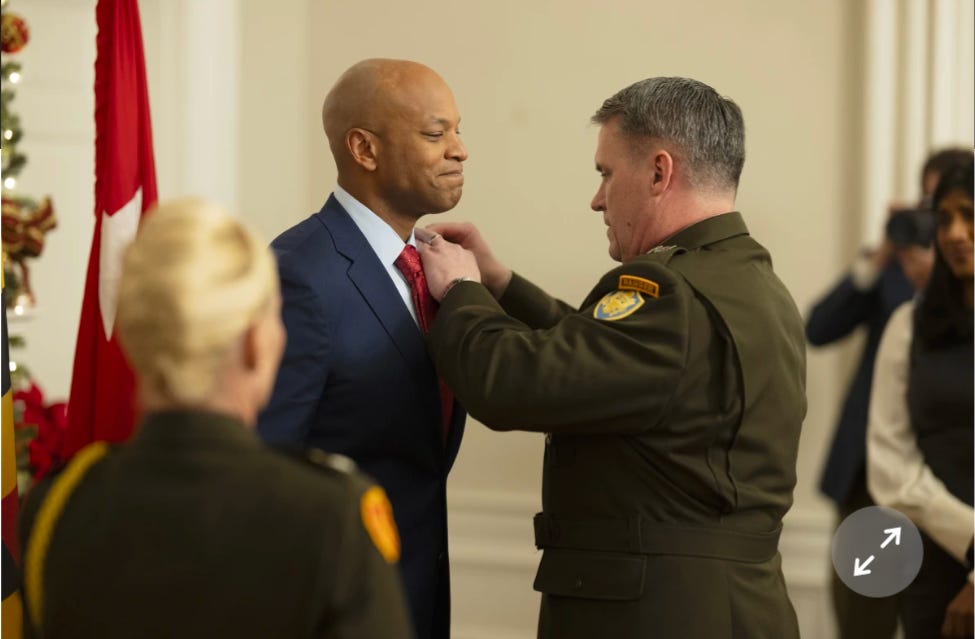
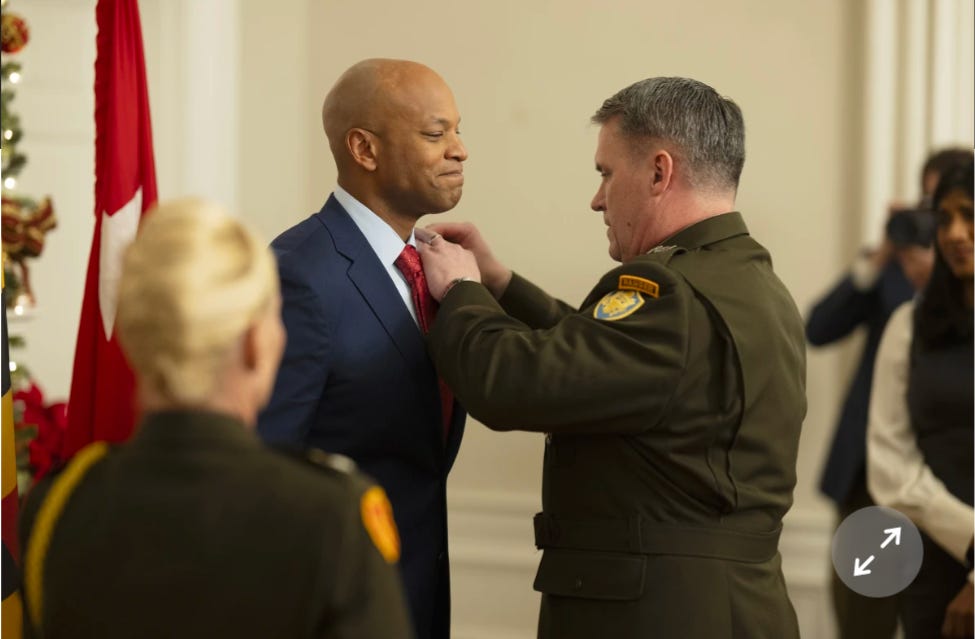
The temptation to attack Wes Moore over the confusion surrounding his Bronze Star is real, and some Republicans are already leaning into it. But the fact remains: Moore received the Bronze Star for his documented service in Afghanistan. He wore the uniform, deployed to combat, and earned recognition. Meanwhile, the Republican Party is tethered to a president who dodged military service and publicly mocked those who didn’t. Any attempt to discredit Moore’s military record risks backfiring—especially if the attacker lacks service credentials of their own. In a state that respects duty and sacrifice, the optics are brutal. Unless you’ve worn the uniform and faced combat, going after Moore on this front doesn’t just look petty—it looks hypocritical.
📎 Footnotes
1. Wes Moore announces reelection bid, contrasts Trump
2. Moore formally launches bid for second term
3. Moore maintains approval but sees softening
4. Moore’s approval drops to 50%