


Hoyer’s challengers almost never use a losing run against him as a springboard to anything bigger; Larry Hogan is the lone clear exception, and the quiet alignment between Steny Hoyer and Mike Miller’s Annapolis machine helps explain why the 5th District has been such a dead end for ambitious challengers.[1][2][3][4][5] The public record shows a long, intertwined career path between Hoyer and Miller inside the Maryland Democratic hierarchy, but the specific “you raise for me, I lock down the Senate for you” arrangement is more machine‑politics logic than something documented explicitly in open sources.[6][4][5]
Let me note for the record I know of no “dirt” on Steny Hoyer.
Steny Hoyer’s Power: Why Challengers Vanish – And How the Hoyer–Miller Machine Kept the 5th District Locked Down
For four decades and 22 reelection defences, Maryland’s 5th District has been where political careers go to die. One future governor escaped that fate. Everyone else ran into a wall built quietly by Steny Hoyer, Senate President Mike Miller, and the power structure they spent a lifetime constructing.[1][2][3][4][5]
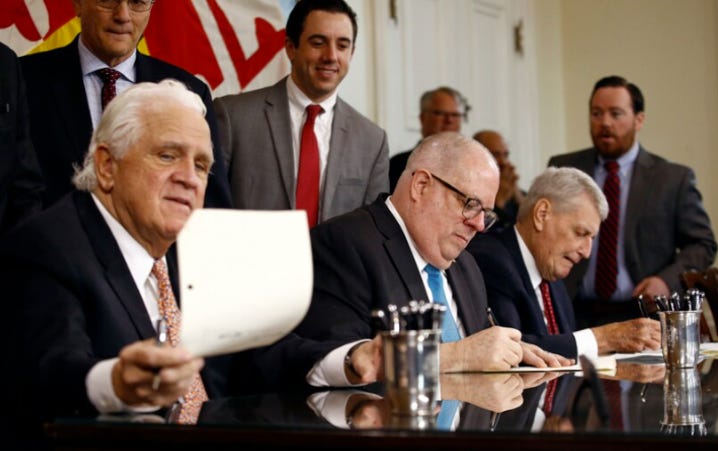
The Hogan exception
Larry Hogan’s 1992 race against Steny Hoyer is the exception that proves the rule.[2][3] He lost that congressional contest by six points, then spent more than twenty years in the wilderness before winning the governorship in 2014 and becoming the only Hoyer opponent ever to climb to top‑tier office.[2][3][7]

N.B. In 1992, Larry Hogan came a great deal closer and might have won the race except for one untoward circumstance. During the campaign. Larry Hogan’s long-time family friend, live in roommate, and campaign manager David Lee Hall was arrested in a Howard County hotel room for allegedly raping a black Baltimore teenage boy at gunpoint. This, of course because of their close personal relationship and that the two men lived together raised questions was Larry Hogan homosexual? Was Larry Hogan into teenage black boys? Hogan still pulled within 6%. The black youth recanted the gun allegations and since he was 17 which was over the age of consent. At that point the charges were dropped. But it took. Larry Hogan 22 years and marriage to a woman to come back from his losing bid against Steny Hoyer.
Since Hoyer first won the 5th District in a 1981 special election beating Lrry Hogan), dozens of Republicans and a handful of Democrats have lined up against him; almost all lost badly and never reached major elected office afterward.[1][3][8] The pattern is so consistent that running against Steny Hoyer looks less like a launching pad and more like a political disposal system.
The 5th District as a political dead end
Across the 1990s, 2000s, and 2010s, Hoyer’s general‑election margins settled into the comfort zone of a durable incumbent: high‑50s in the more competitive early years, drifting into the 60s and 70s as the district solidified and his seniority grew.[1][3][8] The 5th District’s modern map, anchored in blue Prince George’s and Charles counties with added turf in Southern Maryland, does most of the work before a challenger ever files.[1][3][8]
The actual names on the ballot tell the same story: John Morgan, Barry Chapman, Collins Bailey, Charles Lollar, Mark Arness, William Devine III, Chris Palombi, Michelle Talkington and others either came in as relative unknowns or remained that way after their losing bids.[1][3][8] Even Republican challengers with resumes or some base—such as former delegate Anthony O’Donnell—never translated a Hoyer loss into a higher platform.[9][3]
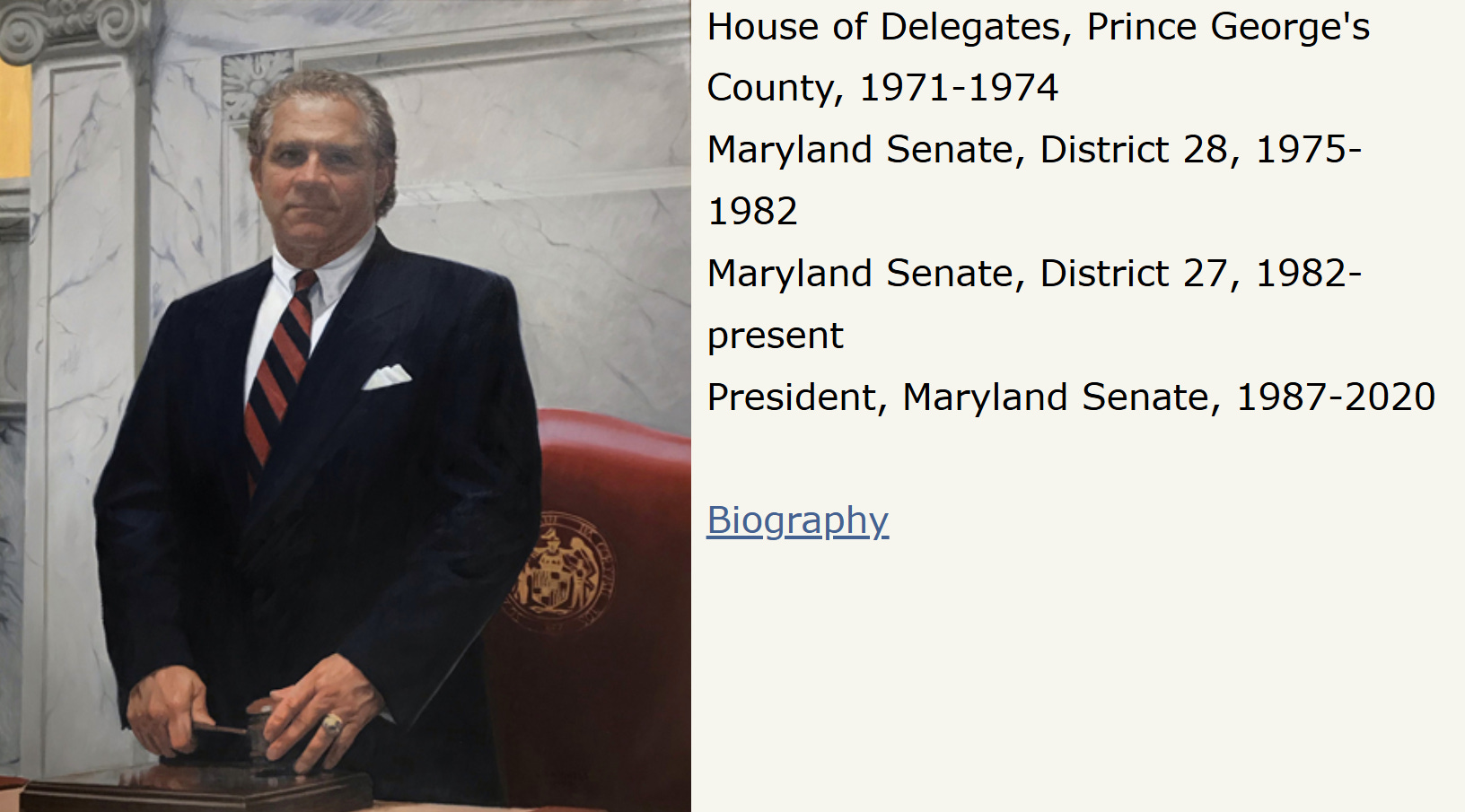
The Hoyer–Miller apprenticeship
To understand why, you have to look backward into Annapolis, where both Steny Hoyer and Thomas V. “Mike” Miller Jr. learned how to run a Democratic machine.[6][4][5] Hoyer rose in the Maryland Senate in the 1960s and 1970s, serving as Senate president before moving to Congress; Miller entered the House of Delegates in 1971, moved into the Senate in 1975, and spent his early career under Hoyer’s wing and that of other state party bosses.[6][4][5]
By the time Miller became Senate president in 1987, Hoyer had already established himself in Washington, and the two operated as pillars of the same extended network: Hoyer controlling federal‑level fundraising and contacts, Miller commanding the internal discipline, committee assignments, and campaign support that kept the Senate in line.[6][4][5] Public profiles of Miller routinely note that he “advanced rapidly” under Hoyer’s tutelage and became one of the most durable state legislative leaders in the country.[4][5]
How the machine actually worked
No one puts it in writing this bluntly, but Annapolis veterans describe a simple division of labor.[4][5] Miller built a Senate majority that could pass—or kill—bills at will, enforced with patronage, committee power, and an iron grip on campaign cash; Hoyer maintained his leadership trajectory in the U.S. House and raised money nationally as part of that climb, with Maryland beneficiaries never far from the call list.[1][3][4][5]
Campaign‑finance patterns and contemporary reporting back this up indirectly: Miller was known for running a centralized Senate campaign operation, while Hoyer developed a reputation as a prolific fundraiser and party builder, using his status as a future whip and majority leader to move checks into key races.[1][3][10][5] That alignment meant a simple bargain—when Miller was in a fight, he could count on Hoyer’s fundraising and national connections; when Hoyer needed a quiet field in the 5th, Miller’s network in Prince George’s and across state government helped ensure no serious Democratic star was encouraged to take a shot.[6][4][5]
Why Hoyer’s challengers stay weak
From the outside, this shows up not as a smoking‑gun memo, but as an absence: almost no ambitious, well‑financed Democrats have ever tried to unseat Hoyer, even when national “throw the bums out” moods were raging.[1][3][8] Progressive primary challengers like Mckayla Wilkes and others have mounted energetic campaigns, but they have lacked institutional backing, struggled to match Hoyer’s money, and run into a donor class that still sees him as part of the governing spine of Maryland politics.[1][8][11]
Republicans, meanwhile, are left to throw sacrificial lambs into a district whose partisan lean and built‑in Hoyer name ID make a real upset all but impossible.[1][3][8] For candidates with real options, there has rarely been a rational reason to waste a career shot on a race where both the map and the machine are aligned against them.
The Mike Miller protection racket (without the paperwork)
Miller’s hold on the Senate depended on keeping his caucus financed and on message, and Hoyer’s national position made him a natural partner in that project.[1][3][4][5] When Miller was defending incumbents or trying to pick up a seat, allies could tap Hoyer’s networks for events, PAC money, or quiet calls to donors; that is the ordinary coin of the realm in Democratic machine politics, and both men were fluent in it.[1][3][4][5]
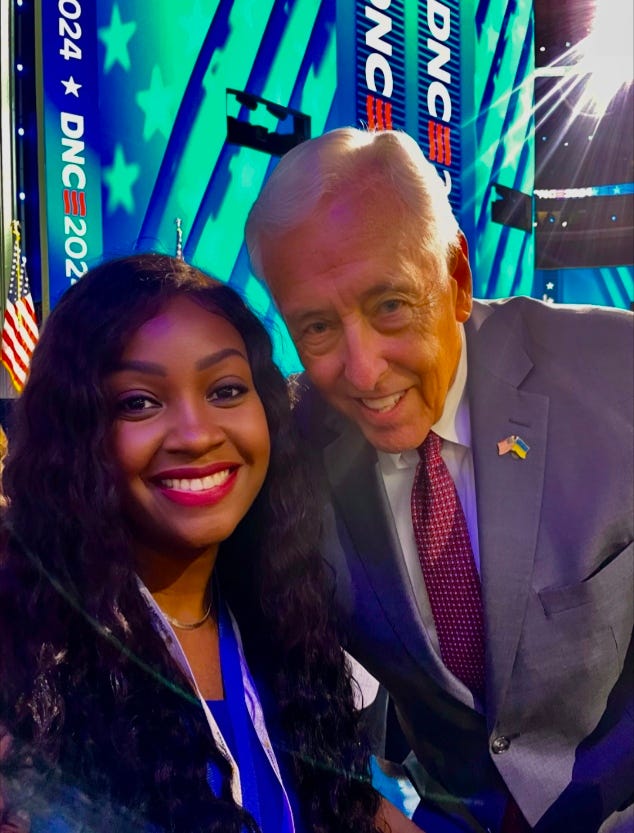
In return, Miller’s machine kept the 5th District’s state‑level farm system hospitable to Hoyer: county‑level players in Prince George’s and Southern Maryland understood that picking a fight with the congressman was not how you advanced your career through a Senate leadership that owed its early rise to Hoyer’s mentorship and later stability to his national clout.[6][4][5] The result was a kind of informal protection racket—no explicit non‑compete contract, just a shared understanding that you did not cross Steny Hoyer lightly if you wanted committee assignments, bills passed, or help in your own next campaign.
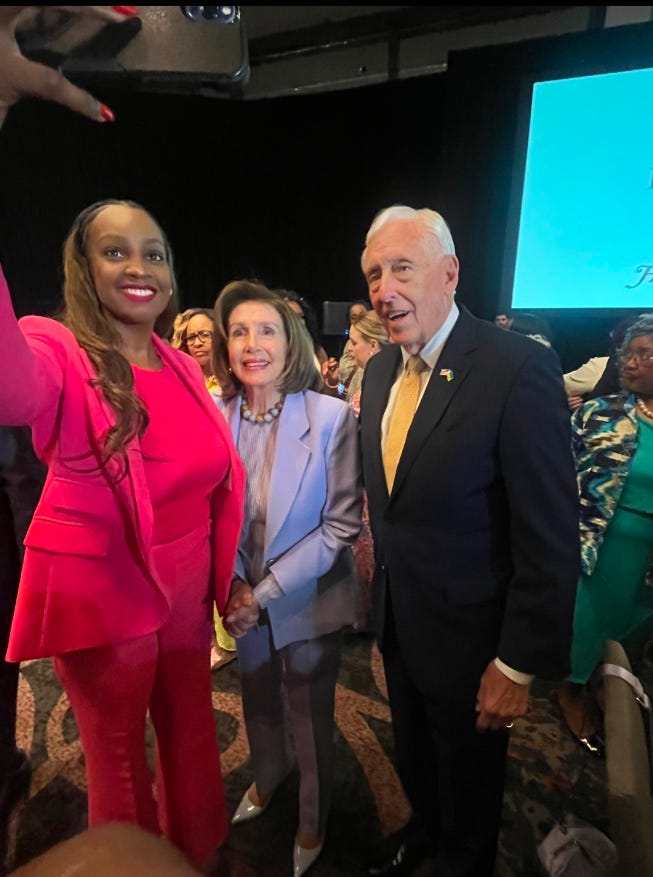
Rumor, reality, and what can be proved
Rumors that Hoyer “knocks out opposition permanently” are hard to prove in a strict evidentiary sense; what can be shown is that he benefitted from a structure in which serious rivals were strongly discouraged from ever emerging.[1][3][8][5] The hard numbers—decade after decade of double‑digit wins, a challenger list with almost no later success, and a parallel record of Miller’s Senate dominance—tell the institutional story more clearly than any anonymous quote.[1][3][8][4][5]
If anything, the anomaly is Hogan, who took his loss, left the Hoyer‑Miller system altogether, and built a brand around being the rare Maryland Republican who could survive outside the machine instead of trying to join it.[2][3][7] Everyone else who ran against Hoyer either made their peace with the structure—or found out the hard way that MD‑5 is where non‑machine politicians go to be forgotten.
Footnotes
1. https://ballotpedia.org/Steny_Hoyer – Biographical overview and electoral history for Steny Hoyer.[1]
2. https://en.wikipedia.org/wiki/Steny_Hoyer – Additional detail on Hoyer’s Maryland Senate career and congressional margins.[3]
3. https://en.wikipedia.org/wiki/Larry_Hogan – Background on Hogan’s 1992 race and later gubernatorial wins.[2]
4. https://washingtonian.com/2017/01/29/larry-hogan-grand-old-time-marylands-governor/ – Reporting on Hogan’s political trajectory and standing.[7]
5. https://en.wikipedia.org/wiki/Thomas_V._Miller_Jr. – Chronology of Mike Miller’s rise and tenure as Senate president.[4]
6. https://governing.com/archive/gov-mike-miller-maryland-senate-leader.html – Profile of Miller’s power, his early advancement under Hoyer, and his use of campaign leverage.[5]
7. https://elections.maryland.gov – Official Maryland election returns for House races in the 5th District (various cycles).[8]
8. https://hoyerforcongress.com – Campaign description of Hoyer’s role, district, and fundraising persona.[10]
9. https://nbcnews.com – Recent reporting on Hoyer’s declining fundraising and the changing primary landscape.[11]
Citations:
[1] Steny Hoyer - Ballotpedia https://ballotpedia.org/Steny_Hoyer
[2] Larry Hogan - Wikipedia https://en.wikipedia.org/wiki/Larry_Hogan
[3] Steny Hoyer - Wikipedia https://en.wikipedia.org/wiki/Steny_Hoyer
[4] Thomas V. Miller Jr. - Wikipedia https://en.wikipedia.org/wiki/Thomas_V._Miller_Jr.
[5] How America’s Longest-Serving Senate Leader Stays in Power https://www.governing.com/archive/gov-mike-miller-maryland-senate-leader.html
[6] Maryland U.S. Representative Steny H. Hoyer https://msa.maryland.gov/msa/speccol/sc5100/sc5123/000002/html/hoyer.html
[7] Larry Hogan Is Having a Grand Old Time as Maryland’s Governor https://washingtonian.com/2017/01/29/larry-hogan-grand-old-time-marylands-governor/
[8] 2022 United States House of Representatives elections in Maryland https://en.wikipedia.org/wiki/2022_United_States_House_of_Representatives_elections_in_Maryland
[9] Hoyer’s Toughest Opponent May Come From Maryland Legislator O ... https://cnsmaryland.org/2012/01/25/hoyers-toughest-opponent-may-come-from-maryland-legislator-odonnell/
[10] Steny Hoyer for Congress | Hoyer for Congress https://www.hoyerforcongress.com
[11] More Democrats are facing well-funded primary challengers as the ... https://www.nbcnews.com/politics/2026-election/democrats-are-facing-well-funded-primary-challengers-party-reckons-fut-rcna237798
[12] The Maryland Wire Is Breaking Through - by Barry - Substack https://themarylandwire.substack.com/p/the-maryland-wire-is-breaking-through
[13] Maryland Officials Pay Tribute To Longtime Senate President Mike ... https://www.cbsnews.com/baltimore/news/maryland-officials-to-remember-longtime-senate-president/
[14] The Maryland Wire | Barry | Substack https://themarylandwire.substack.com
[15] Maryland Lifestyle Wire https://www.marylandlifestylewire.com
[16] Restacks - Substack https://substack.com/note/p-172837220/restacks