


Sororities, Slates, and Snacks: The Machine’s 2026 Litmus Test
As the 2026 election cycle hits a fever pitch, the pressure inside the Prince George’s County Democratic establishment has reached an ugly, transactional zenith. According to multiple county insiders and state lawmakers, a strict, unwritten mandate has descended from the upper echelons of the County Administration Building: if local senators and delegates want the institutional backing, resources, and blessing of the County Executive’s political apparatus, they must swallow her handpicked slate of candidates whole.
Qualifications, background, and relevant professional expertise are no longer the currency of advancement in Upper Marlboro. Instead, the 2026 ticket is being shaped by personal loyalty, backroom networking, and—most explicitly—Divine Nine sorority politics.
The Battle for Register of Wills
Nowhere is this machine-building more glaring than in the down-ballot countywide race for Register of Wills—a highly sensitive judicial-adjacent office responsible for overseeing the complex, legally binding administration of estates and fragile family inheritances.
Pushing hard for the seat is Jocelyn Route. By all objective measures, Route’s resume is a blank slate when it comes to probate law, estate accounting, or the specialized administrative duties required to manage a Register of Wills office. She has never worked in a probate environment, lacks legal or structural training for the role, and has shown little prior background that qualifies her to helm a crucial countywide bureaucracy.
What she does possess, however, is an active membership in Sigma Gamma Rho (SGRho)—the exact sorority to which the County Executive belongs.
In a staggering display of machine hubris, lawmakers are being heavily pressured to accept Route onto their official slates simply to satisfy executive favoritism. Meanwhile, her opponent, Dr. Stephanie V. Overton Stanard, finds herself freezing on the outside of the executive network. Insiders point out a bitter undercurrent to the race: Dr. Overton Stanard is a member of Delta Sigma Theta. Within the intricate social hierarchy of historically Black sororities, Alpha Kappa Alpha (AKA) and the Deltas have long occupied the top rungs of influence and prestige, while SGRho—the youngest of the Divine Nine sororities, founded at a predominantly white institution—is frequently viewed by critics as lower in the traditional pecking order.
Yet, while the County Executive’s SGRho network is ruthlessly leveraging its institutional power to push an unqualified sister into a high-stakes public office, a different kind of frustration brews among the Deltas. Historically regarded as a powerhouse network, Delta Sigma Theta has drawn quiet, intense criticism from within local political circles for failing to aggressively defend or lift up its own members when they run for office. Rather than mobilizing a fierce, unified sisterhood to shield Dr. Overton Stanard from a aggressive machine takeover, the Delta network has left her largely hanging out to dry—contrasting sharply with the AKAs, who are widely recognized for their fierce, unshakeable internal loyalty and willingness to aggressively back their sisters in countywide slugfests.
The message radiating from the executive suite is unmistakable: in 2026, blind loyalty to the executive’s personal network overrides professional competency.
+---------------------------+---------------------------------+-----------------------------------+
| Candidate                 | Organizational/Machine Aligned  | Relevant Office Experience        |
+---------------------------+---------------------------------+-----------------------------------+
| Jocelyn Route             | Sigma Gamma Rho (SGRho)         | None; Lacks legal/probate background|
| Dr. Stephanie V. Stanard  | Delta Sigma Theta               | Advanced academic/professional credentials|
+---------------------------+---------------------------------+-----------------------------------+


From the Kitchen to the Council: The “Snack Lady” Promotion
The Register of Wills race isn’t an isolated anomaly; it is part of a broader pattern of rewarding personal favors with immense public power. Look no further than District 6, where Danielle I. Hunter was recently catapulted into a highly coveted seat on the Prince George’s County Council.
Before her swift elevation through the ranks—which included a stint as the executive’s Director of Boards and Commissions—Hunter was affectionately known within the inner circle as the “snack lady.” Her primary claim to fame during the County Executive’s foundational rise to power was opening up her home for early campaign strategy meetings and preparing elaborate, high-end snacks and spreads for the political team. Insiders believe these culinary contributions and hospitality mightily fueled the early comfort and growth of the executive’s inner circle.
While providing hospitality is a fine civic gesture, the reality of Prince George’s County in 2026 is that preparing elegant hors d’oeuvres has somehow translated into an appointment to a legislative body responsible for managing billions in public funds, complex zoning laws, and critical infrastructure decisions. Like Route, Hunter is also a proud member of Sigma Gamma Rho.
A Machine Built for Self-Preservation
This is the anatomy of the modern Prince George’s County machine. It is an apparatus designed not to source the sharpest legal minds, the most experienced administrators, or the most qualified policymakers, but to build an unassailable wall of personal loyalists. By forcing seasoned state senators and delegates to compromise their own slates with unqualified names under the threat of political exile, the administration ensures one thing above all else: that when the dust settles from the 2026 primary, the entire apparatus will be completely beholden to the whims of the executive suite.
For the taxpayers of Prince George’s County, the cost of this machine isn’t just measured in campaign dollars—it is measured in the systematic degradation of the offices meant to serve them.
Does this tone match your vision for the piece? Let me know if you would like to expand further on the legislative pushback from the state senators or tighten any of the specific sorority dynamics mentioned.
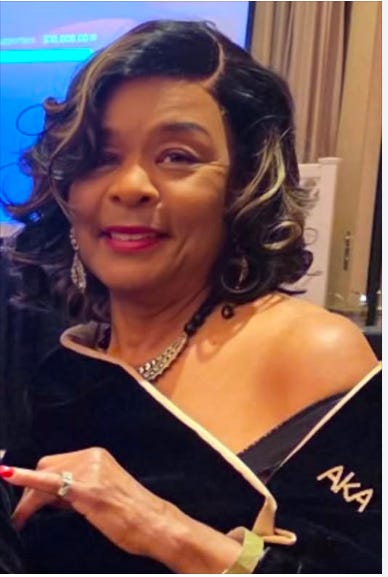
Why There Is No “Delta Queen” in Prince George’s County Politics
In Prince George’s County, the Divine Nine sororities don’t all operate with the same internal culture, political structure, or power dynamics. That’s why AKA has a clear, undisputed matriarch in Dr. Juanita Miller, while Delta Sigma Theta does not have an equivalent singular figure who functions as the “queen” or power‑center of the chapter.
The difference isn’t about talent or influence — it’s about organizational culture and how political authority is distributed.
1. AKA in Prince George’s County has a matriarchal political tradition
The reason Dr. Miller stands alone is because:
- She has decades of institutional seniority — former Delegate, former School Board Chair.
- She is the most powerful AKA in the county, and many say the state.
- She is a mentor‑maker, not just a political figure.
- Her influence is personal, relational, and hierarchical — people defer to her.
- She is widely loved by the honest actors in the county’s political ecosystem.
AKA in PG County has always had a “first among equals” structure — a senior woman whose authority is understood, respected, and rarely challenged.
That is why Miller’s position is so clear and so widely acknowledged. Before Dr. Miller there was Senator Gloria Lawlah but over time the new supercedes the past.
2. Delta Sigma Theta’s power in PG County is institutional, not monarchical
Delta Sigma Theta is extremely powerful in Prince George’s County — arguably the most civically active sorority in the region — but its power is distributed, not concentrated.
The Prince George’s County Alumnae Chapter (PGCAC):
- Is one of the largest Delta chapters in the country
- Has enormous programmatic reach
- Produces many elected officials, administrators, and civic leaders
- Operates through committees, chapters, and collective leadership, not a single matriarch
This means Delta’s influence is broad, but not centralized.
There is no single Delta who functions as the “queenmaker” or “sorority boss” in the way Dr. Miller does for AKA.
3. The most powerful Delta in PG County is a political figure — not a sorority power‑broker
Angela Alsobrooks is a Delta and is unquestionably the most powerful Delta in the county in terms of elected office.
But:
- Her power comes from her governmental position, not from Delta hierarchy.
- She does not run a Delta political machine.
- She does not function as a sorority matriarch.
- She does not occupy the “sorority queen” role that Miller does.
So while Alsobrooks is the most powerful Delta, she is not the Delta equivalent of Dr. Miller.
4. The cultural difference is the key
If you want to explain it cleanly in your article, the core truth is this:
> AKA in Prince George’s County has a matriarchal political culture. Delta has a democratic, committee‑driven political culture.
That’s why:
- AKA has a singular, widely recognized matriarch
- Delta has distributed leadership and no single queen figure
It’s not about who’s more powerful — it’s about how power is organized.
Excellent. A black boss system is still a boss system from the TWEED Era......