

THE HARVEST THAT ISN’T COMING
Rural Maryland wanted smaller government. Now the bill is due — in crops, in floods, and in lives turned upside down.
By Barry O’Connell
Maryland Wire

There’s a certain kind of Marylander — and we all know him — who believes that if something goes wrong, it’s because somebody didn’t “prepare.” Didn’t plan. Didn’t anticipate. Didn’t bootstrap hard enough. It’s a comforting worldview because it keeps the chaos at arm’s length. If the farmer loses his crop, well, he should’ve hired “legal workers.” If Crisfield floods, well, they should’ve “adapted.” If Westernport’s schoolchildren are rescued from the second floor of a building filling with river water, well, maybe they should’ve “expected” it.
But here’s the truth that’s becoming impossible to ignore:
You cannot prepare for a federal government that simply walks away.
And that’s exactly what’s happening across Maryland right now — in our farm fields, our coastal towns, our mountain communities, and our budgets.
This isn’t a theory. It’s not a partisan talking point. It’s not a metaphor.
It’s real, it’s measurable, and it’s happening to people your readers know.
I. The Workers Who Didn’t Come
Let’s start with the farms, because that’s where the denial is thickest.
Maryland agriculture — especially on the Eastern Shore — runs on H‑2A seasonal workers. Legal workers. Visa workers. The kind of workers who come in, harvest the crops, and go home. They are the backbone of vegetable farms and the poultry industry.
And this year, the backbone didn’t show up.
Not because farmers “hired illegal immigrants.”
Not because they “failed to plan.”
But because the federal government — the same one rural voters demanded be shrunk — controls the visa pipeline, the processing timeline, and the enforcement climate.
And the system jammed.
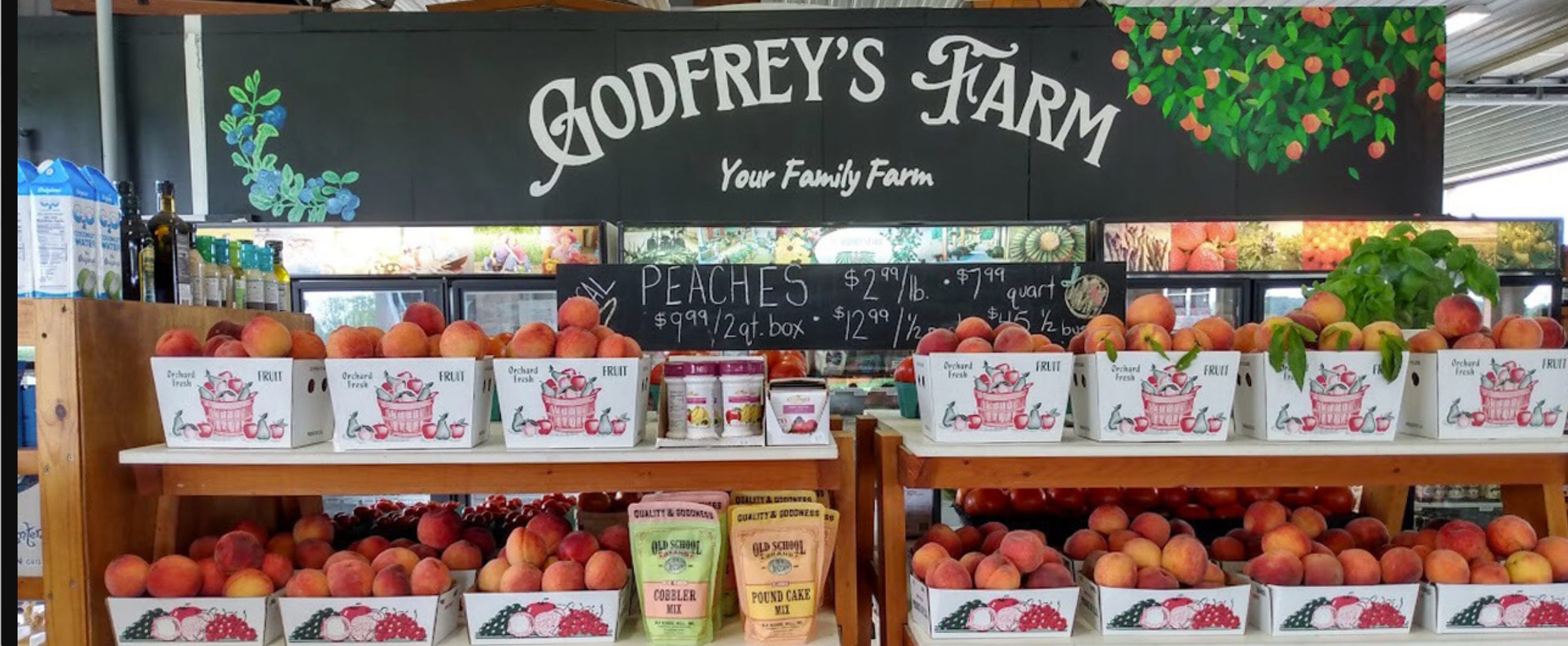
A real Maryland case: Godfrey’s Vegetable Farm, Sudlersville
This isn’t a Kansas carrot farmer on TikTok.
This is Queen Anne’s County.
Godfrey’s Vegetable Farm — 300 acres of sweet corn, tomatoes, and melons — normally hires 28 H‑2A workers. Last season, they got 17. The rest were stuck in consular delays and visa bottlenecks.
The result?
- 40 acres of produce plowed under
- Tens of thousands in lost revenue
- A shortened season they’ll never get back
You can’t “prepare” for the federal government failing to process the visas it controls.
The poultry giants are feeling it too
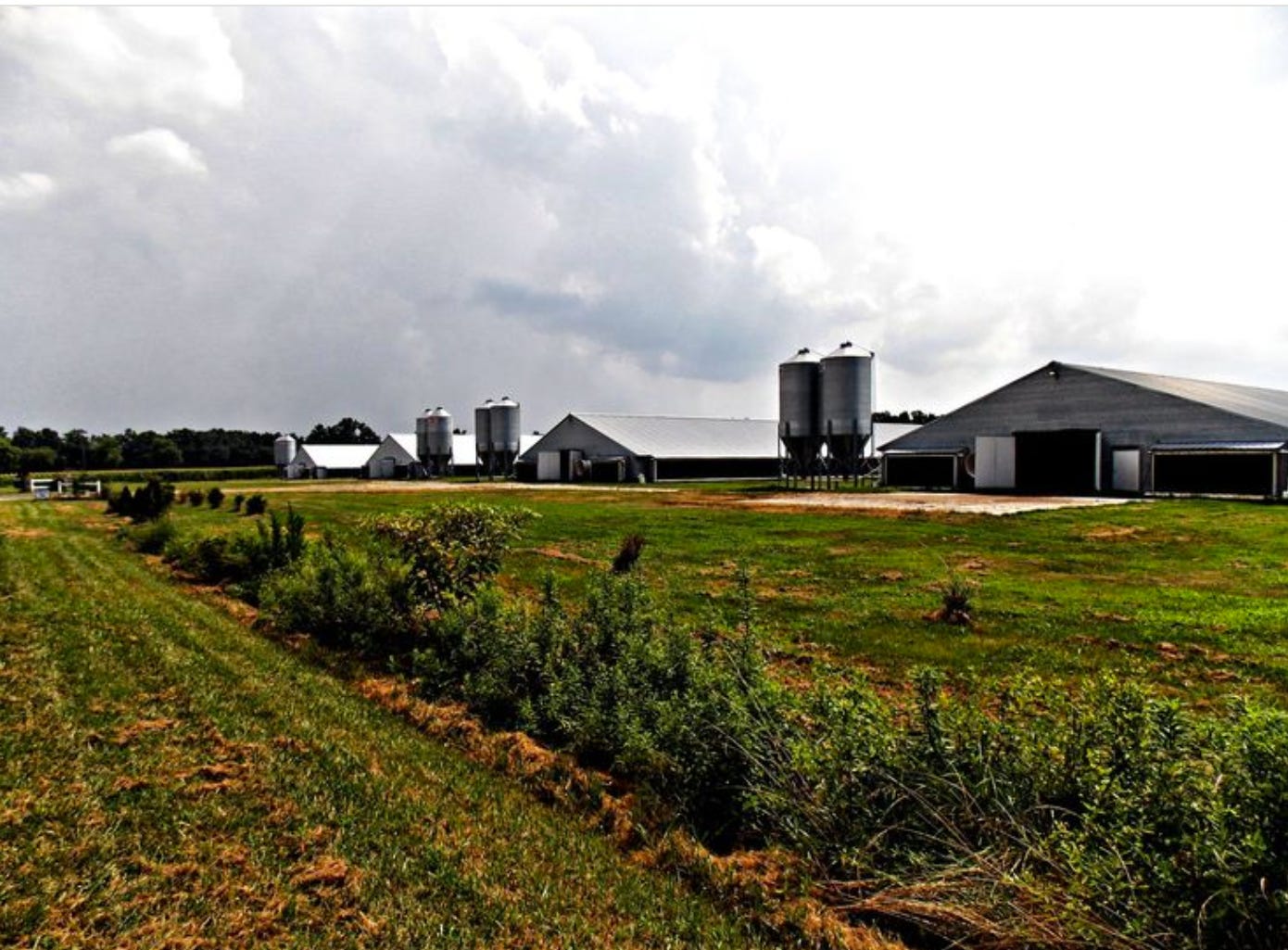
Perdue, Mountaire, and Tyson don’t publish their shortage numbers, but the signs are everywhere:
- Mountaire publicly acknowledged “persistent labor shortages.”
- Perdue has been holding weekly hiring fairs in Salisbury and Princess Anne — something unheard of a decade ago.
- Poultry growers report empty chicken houses because they can’t get enough workers to clean, catch, or process birds.
When Perdue can’t staff a plant, the pain radiates outward:
- Contract growers lose income
- Feed mills slow production
- Truckers lose hours
- Local economies shrink
This isn’t a hypothetical.
This is the Shore.
II. Crisfield: The FEMA Grant That Vanished
Now let’s talk about Crisfield — the most flood‑vulnerable town in Maryland, sitting barely three feet above sea level.
Crisfield did everything right.
- They applied for a $36 million FEMA grant.
- They were awarded the grant.
- They hired engineers.
- They began the work.
And then the federal government — the same one residents voted to shrink — canceled the grant outright.
No warning.
No replacement.
No path forward.
Crisfield is now left with:
- rising seas
- sinking land
- failing storm drains
- and no federal partner
You can’t “prepare” for a government that pulls the plug after the work has already begun.
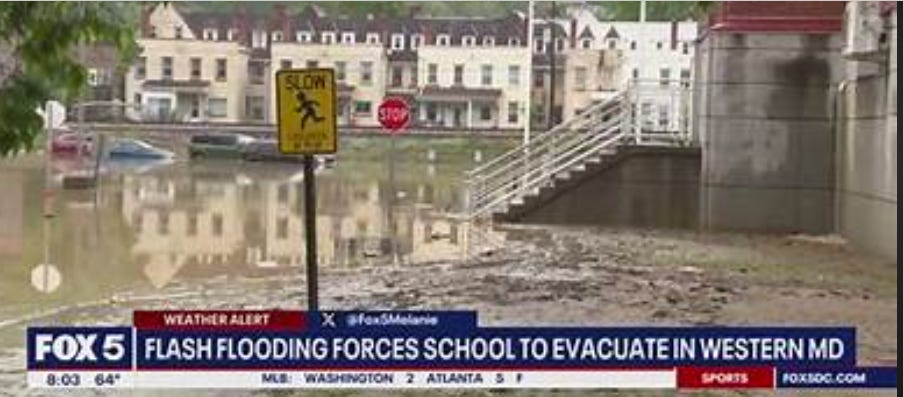
III. Westernport: The Flood FEMA Said Didn’t Count
On the opposite end of the state, in Allegany County, the town of Westernport drowned in a catastrophic flood.
- Children were evacuated from the second floor of a school
- Homes were destroyed
- Roads washed out
- The water plant was knocked offline
Governor Moore requested a Presidential Disaster Declaration.
The White House said no.
FEMA declared the damage “not severe enough,” despite $15.8 million in documented losses.
So Westernport — a town that overwhelmingly voted for smaller government — is now relying on:
- donated dehumidifiers
- church basements
- volunteer labor
- GoFundMe
This is what “small government” looks like when the river rises.
IV. The Pattern Nobody Wants to Admit
Here’s the through‑line your readers will recognize, even if they don’t want to say it out loud:
- You can’t “prepare” for missing farm labor when the federal government controls the visas.
- You can’t “prepare” for a canceled FEMA grant when the federal government pulls the funding.
- You can’t “prepare” for a denied disaster declaration when the federal government decides your town doesn’t count.
- You can’t “prepare” for health insurance premiums that double because federal subsidies were cut.
Maryland’s rural communities — the ones that voted most heavily for a shrinking federal government — are discovering that shrinking government doesn’t shrink the floods, or the labor shortages, or the cost of living.
It just shrinks the help.
V. The Maryland Wire Bottom Line
This isn’t happening in far‑off states.
This isn’t happening to people who “should’ve planned better.”
This isn’t happening to strangers.
It’s happening to:
- Crisfield
- Westernport
- Sudlersville
- Salisbury
- Princess Anne
- Caroline County
- Wicomico County
- Allegany County
It’s happening to the farmers who feed us, the watermen who define us, the poultry workers who keep the Shore alive, and the small towns that hold the state together.
And Annapolis — already in a budget crisis — is left to clean up the mess.
Because when the federal government steps back, the water steps forward.
When the federal government steps back, the crops rot.
When the federal government steps back, the bills rise.
And the people who demanded smaller government are learning what that actually means.
Let’s add small farms that rely on agritourism and on-farm sales from direct product and value added products.
The Maryland Tourism Development Board is in breach of its enabling statute: TPA2008.
The 18-year old pre digital law embeds eight tax codes, weighted primarily to hotels. Therefore: no agriculture sales are recorded. What’s not recorded is not funded or marketed.
The Agriculture Commission agritourism chair in three meetings in 2024 reported farms stating falling sales, poor foot traffic and inability to reach regional markets.
What has the Farm Bureau or Maryland Department of Agriculture done? Farm Bureau ignored an email asking for a position on agritourism and the MDA doubles down by refreshing a logo and issuing a statewide agritourism guide in October heavily focused on regulation. But they refuse to take ownership of the sector. They won’t need regulations when small farms start selling out to developers for data centers or housing developers.
The Governor issued an Agritourism EO in July stating that agritourism and value added makers are economic growth engines, but appointed no lead agency to direct policy. The EO remains window dressing with no agency stepping forward to create agritourism. workgroups to address these glaring problems, absent an enabling agency.
All it will take is one nasty avian flu to destroy the state’s agriculture sector whose revenue is based on two supply chains: poultry and grains for animal feed. Did we learn nothing from COVID? Diversification of supply chain shores up food security and resiliency.
I’ve never seen such backward executive level governance in my life layered with ineffective cabinet leadership across the, Department of Commerce and the Maryland Department of Agriculture, and the legislature. The Economic Matters Committee is the TPA2008 enabling committee.
EMC had an opportunity last year to advance new legislation: The Visitor Economy Modernization Act and dropped the ball. They were also presented with a new software utility to manage real time tourism data, and a regional tourism governance model: all designed to modernize the state tourism apparatus which is in structural collapse. MODPA - the new data privacy law kicked the last leg out from under the OTD: they no longer have even modeled data to rely on. The state is data blind.
But they are ok with arranging the deck pillows on the Agriculture Titanic.