


THE RED‑BOTTOM SIGNAL: WHAT KRYSTAL OREADHA’S PHOTO REALLY SAYS ABOUT POWER, BRANDING, AND THE RUMOR ECOSYSTEM IN PRINCE GEORGE’S COUNTY
Maryland Wire — Magazine Edition
There are moments in politics when a single image does more damage—or more good—than a thousand speeches. In Prince George’s County, where political narratives move fast and rumor ecosystems move faster, visuals matter. They don’t just decorate a politician’s brand; they define it.
So when Council leadership posts a relaxed, confident photo with the unmistakable flash of Christian Louboutin red soles—shoes that retail north of 2,600 dollars—the political class doesn’t see footwear. They see messaging. They see a brand pivot. And they see a story being told, whether the storyteller realizes it or not.
In this case, the story landed with a thud.
Within minutes, women across the county recognized the shoes. Within hours, the comments began: admiration from some, disbelief from others, and from one particularly blunt observer, a nickname that stuck in the group chats: “The new Don Corleone of Prince George’s County.”
That comparison isn’t about crime. It’s about aesthetic. It’s about tone. It’s about the way certain symbols—luxury, power, sudden wealth—activate old suspicions and breathe life into dormant narratives.
And Prince George’s County has no shortage of narratives.
For months, whispers have circulated about envelopes, developers, and the quiet transactional culture that has long shaped local politics. These are not proven allegations. They are not statements of fact. They are simply the stories people tell when they don’t trust what they see. And in politics, perception is often the only reality that matters.
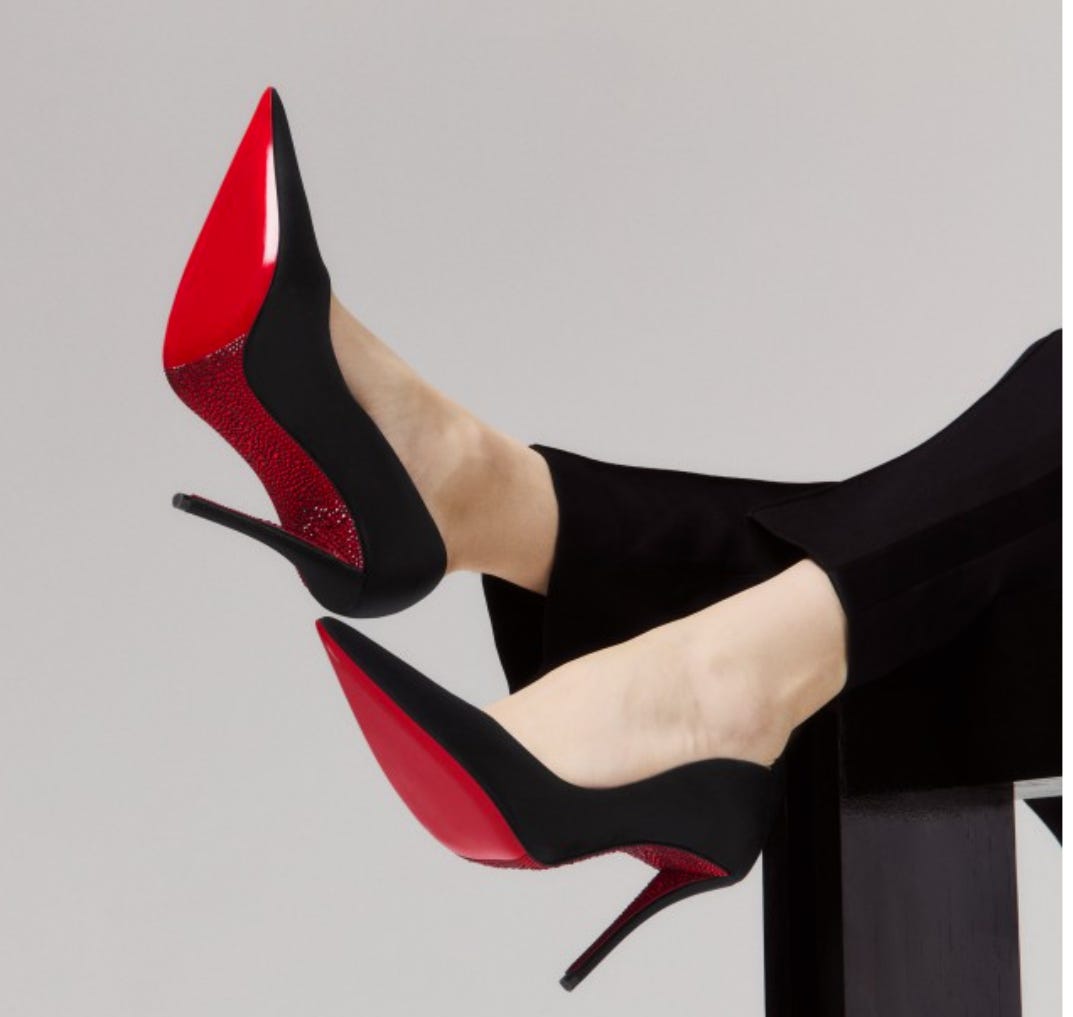
Which is why the Louboutin photo was a mistake—not morally, but strategically.
Luxury symbols are never neutral. They carry cultural weight. They signal class, access, and power. They also signal distance. When a politician goes from “everyday sneakers” to “red‑bottoms,” the public doesn’t see a fashion upgrade. They see a narrative jump. And narrative jumps are dangerous because they create a vacuum that rumors rush to fill.
In the rumor ecosystem surrounding this particular official, the red soles didn’t just land—they detonated.

Suddenly, the whispers about developer money had a visual anchor. Suddenly, the idea of envelopes slid across a table didn’t feel abstract. Suddenly, the “girlboss empire” branding took on a harder edge, one that many residents interpreted not as empowerment but as provocation.
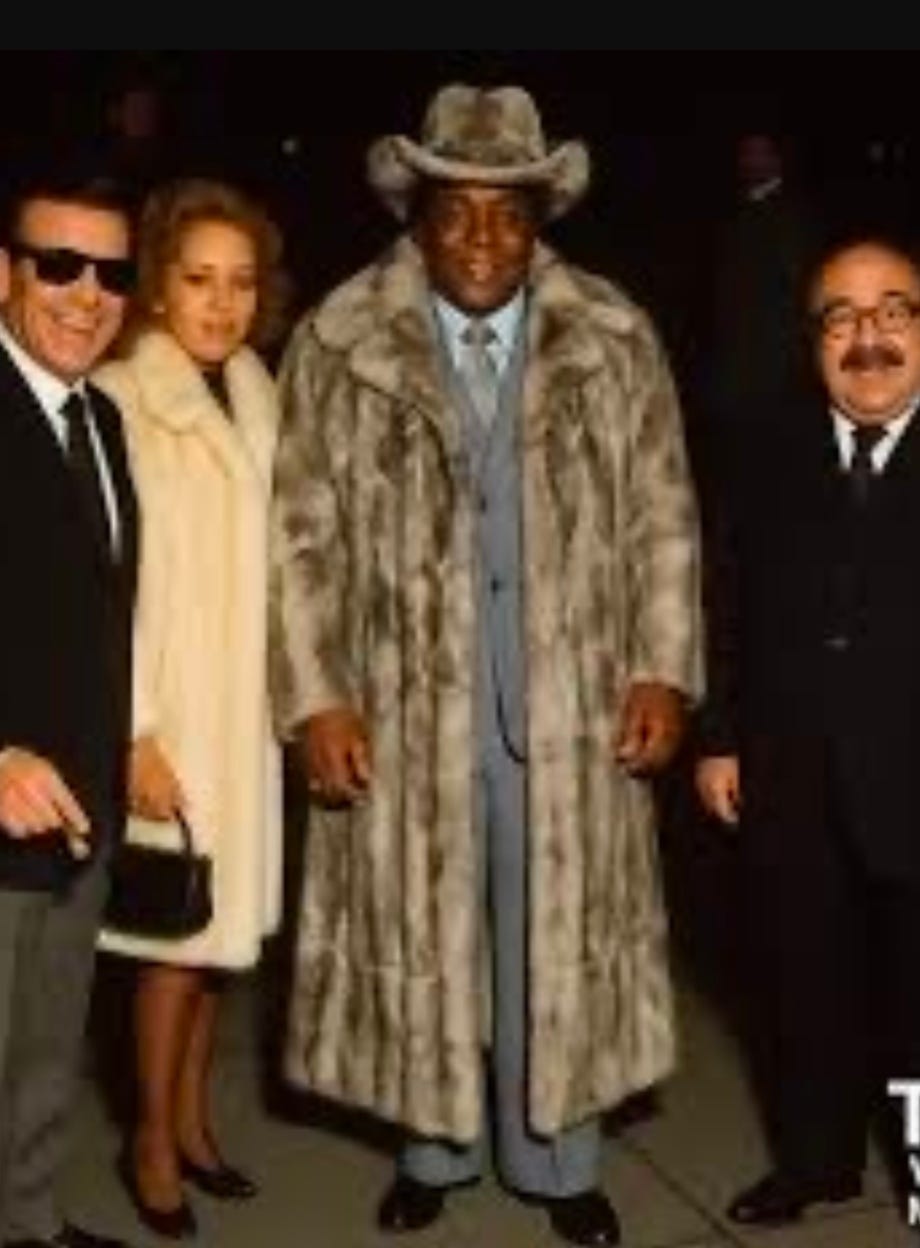
It’s the Frank Lucas problem—not the criminality, but the optics.
Lucas famously wore a $140,000 chinchilla coat to a boxing match, a gift from his wife. It wasn’t illegal. It wasn’t immoral. But it was loud. It was flashy. And it was the moment investigators realized he was living far above his supposed means.
The coat didn’t prove anything.
It simply validated what people already suspected.
That’s the danger here.
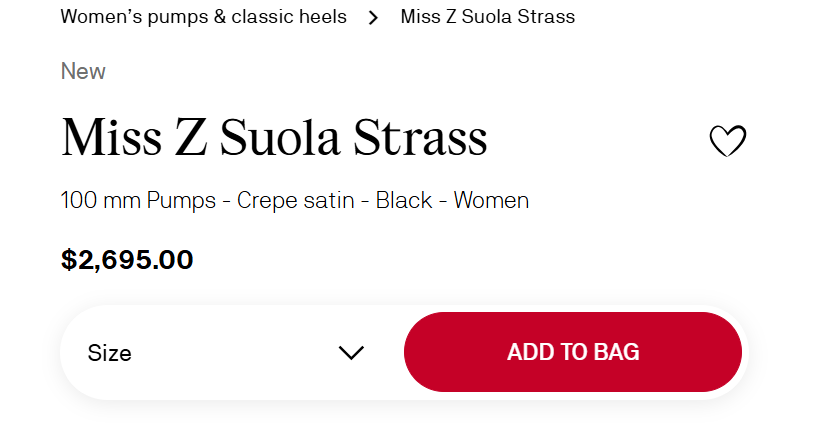
The Louboutins don’t prove wrongdoing.
But they reinforce the emotional logic of the rumors.
They tell a story that her critics have been waiting to hear.
They give shape to the suspicions her allies have struggled to quiet.
They turn a political leader into a character in someone else’s narrative.
And in politics, once you become a character, you lose control of the plot.
Branding is not about what a politician intends to say.
Branding is about what the public hears.
And what they heard in this photo was not confidence, or empowerment, or success.
They heard: “I’m the boss now.”
But in Prince George’s County, “boss” is a dangerous word.
It carries the scent of back rooms, envelopes, and whispered deals.
It evokes a political culture that voters are increasingly tired of tolerating.
A council chair—cannot afford to look like a figure out of a gangster film, even unintentionally.
Not in a county where corruption stories have shaped the political imagination for decades. Not in a county where residents are already primed to believe the worst.
The tragedy is that this was avoidable.
The damage wasn’t in the shoes.
It was in the signal.
In politics, you don’t get to choose whether you’re sending a message.
You only get to choose whether you understand the one you’re sending.
I’m not familiar with PG County politics other than perception of corruption and questionable ethics issues. But you’re correct that it’s not about shoes per se, but the message conveyed.
Consider
In Prince George’s County, food insecurity has reached a critical level according to the most recent data from the Capital Area Food Bank (CAFB) 2024-2025 Hunger Report.
The county currently faces the highest rate of food insecurity in the Greater Washington (DMV) region.
📊 Key Statistics for Prince George’s County (2024-2025)
• Overall Food Insecurity: 50% of households. This is a staggering increase and significantly higher than the regional average.
• Child Insecurity: Approximately 1 in 4 children (around 26%) are estimated to be food insecure, though some high-poverty pockets see even higher local percentages.
• The "Food Desert" Factor: Roughly 44% of residents live in areas classified as food deserts, where healthy, affordable food is difficult to access without a vehicle.
• Financial Strain: Data shows that 55% of food-insecure households in the county reported that their financial situation worsened over the last year, largely due to housing costs and food price inflation.
📍 Recent Developments & Resources
Due to the high demand, several new measures have been implemented in 2025:
• New Permanent Pantries: In late 2024 and throughout 2025, the Prince George’s County Department of Social Services opened new permanent food pantries in the North County and South County service centers to address gaps in access.
• SUN Bucks Program: The county is heavily utilizing the new Maryland SUN Bucks program, which provides food assistance to families with school-aged children during the summer months when school meals are unavailable.
• Funding Surges: As of late 2025, Governor Moore announced emergency grants (including $1.5 million specifically through CAFB for PG and Montgomery counties) to help food banks keep up with a surge in demand.
In Prince George's, the geography of hunger is often tied to the Capital Beltway (I-495)—with the highest insecurity rates concentrated inside the loop and along the southern border.
📍 High-Impact ZIP Codes & Neighborhoods
According to the most recent health and food equity assessments, the following areas face the highest barriers to food access:
• 20743 (Capitol Heights / Marshall Heights): One of the most severely impacted areas with limited full-service grocery stores relative to population density.
• 20747 (District Heights / Forestville): High concentration of "ALICE" households (working families struggling to make ends meet).
• 20784 & 20785 (Landover / Hyattsville / Cheverly): Significant "food swamps" where fast food is abundant but fresh produce is scarce.
• 20744 & 20748 (Fort Washington / Oxon Hill): Southern regions where transit barriers make it difficult for residents without cars to reach affordable markets.
• 20772 & 20774 (Upper Marlboro / Largo): While these areas have more farmland, they often lack the retail infrastructure to distribute that food locally.