

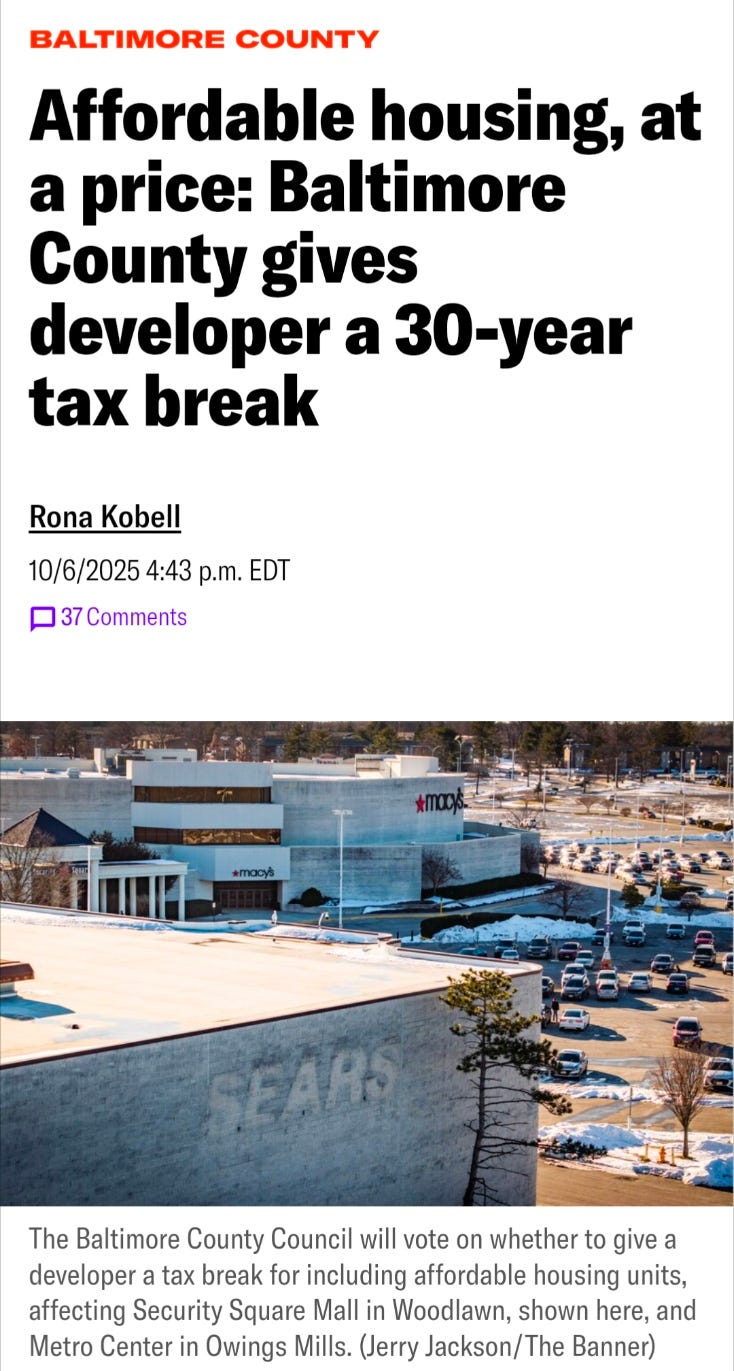
Rona Kobell’s Hit Job on Howard Brown
After reading the full article carefully, several elements stand out that could signal subtle bias or framing tendencies rather than plain factual reporting:
1. Imbalance in Framing
The opening paragraphs spotlight the “politically connected developer” and the “$16.5 million tax break,” immediately drawing attention to the scale and relationship aspects of the deal rather than its policy rationale. That phrase—politically connected—sets a tone of favoritism or insider dealings before readers encounter any data or context.
By paragraph structure, the article leads with controversy points (connections, prior ownership, approval vote), not neutral description of policy intention. This style front-loads skepticism.

2. Word Choice and Association
Certain descriptors carry connotative weight:
- “Politically connected developer” – implies influence.
- “Boutique bills” – repeated later in the piece via a quoted critic; placed without balancing testimony from supporters.
- “He demolished the historic Samuel Owings House...just hours before a judge was to hold a hearing” – this historical reference adds emotional color to Brown’s profile. Its inclusion 30 years later implies a pattern motive (“pattern of favor-trading”) even though the event’s relevance to current housing policy is limited.
Positive or neutral statements from Brown or supporters are paraphrased briefly or attributed indirectly, while critical voices (Jones, Stewart, Marks, Crandell) receive more direct quote space.
3. Source Weighting
Kobell gives significant space to critics of the deal:
- Housing advocate Nick Stewart (running for county executive)
- Two councilmen expressing frustration
- A long contextual recall of Brown’s 2020 inspector general report
Meanwhile, nobody from Brown’s camp or the Venable firm is quoted directly. The developer’s side is filtered through councilmanic proxies (“Brown’s attorneys came to Councilman Jones”) and administration paraphrases. This asymmetry makes readers hear opposing voices at length, supporters only second‑hand.
4. Historical Pattern Insertion
The last third of the article shifts from news event to historical pattern narrative, recounting Brown’s demolition incident and inspector general report. Those sections enlarge skepticism and frame the present bill as part of a continuous ethical theme.
Such retrospective linking is legitimate background, but stacked near the conclusion it can steer reader perception toward “here we go again,” reinforcing distrust even when current wrongdoing is not alleged.
5. Tone Toward Officials
Councilmembers Jones and Young are portrayed as scheming or calculating—“attempted several times before,” “partnered in hopes that the tax break could cover both properties”—instead of as policy advocates. The framing undercuts motive legitimacy and emphasizes political strategy.
Yet, Rona Kobell adds a contrasting line of approval from the County Executive, which mildly balances the piece by ending on an optimistic government quote. Still, this comes after long segments highlighting past improprieties, making the closing note feel perfunctory.
6. Omission Indicators
Other counties are referenced only indirectly (White Marsh, Middle River). There’s no detailed data comparing Baltimore County’s affordable‑housing benchmarks to other jurisdictions. The absence of such comparative metrics makes the argument seem moral, not analytical.
Including figures (e.g., affordability ratios or fiscal offsets) would have grounded the discussion and reduced impressionistic tone.
Overall Assessment
While factually supported and detailed, the article leans toward skeptical framing of Howard Brown and the County Council’s dealings with him. The bias operates not through false statements but through:
- loaded descriptors,
- quote imbalance favoring critics,
- inclusion of historical scandals that distance objectivity,
- foregrounding controversy over policy mechanics.
It’s not overt partisan rhetoric; it’s more narrative bias—storytelling that contextualizes legislation through personalities and ethical history. The result subtly encourages readers to view the bill as another insider favor rather than a legitimate housing incentive debate.
The piece is not straight reporting It is a hit job on Howard Brown because he does not support Izzy Patoka. WHY IS THE BALTIMORE BANNER PUTTING THE SCREWS TO HAROLD BROWN?