

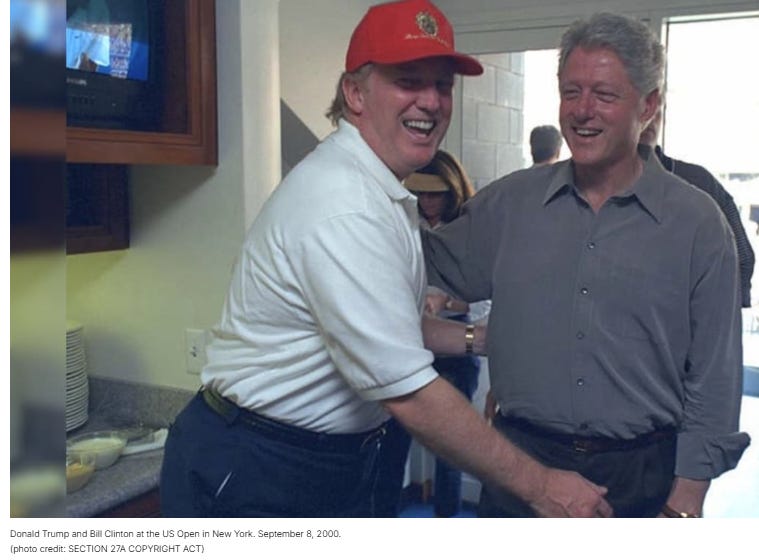
An Open Letter to Congressman Kweisi Mfume
A Friendly Warning About What Happens When Oversight Becomes Embarrassment Theater
Congressman Mfume,
I am writing as a Marylander who understands both the seriousness of congressional oversight and the danger of turning it into something else.
Your chairman, Congressman James Comer, is publicly threatening to subpoena former President Bill Clinton and to pursue contempt charges if he does not comply. The stated rationale is accountability. The obvious subtext is embarrassment.
That is where things get risky.
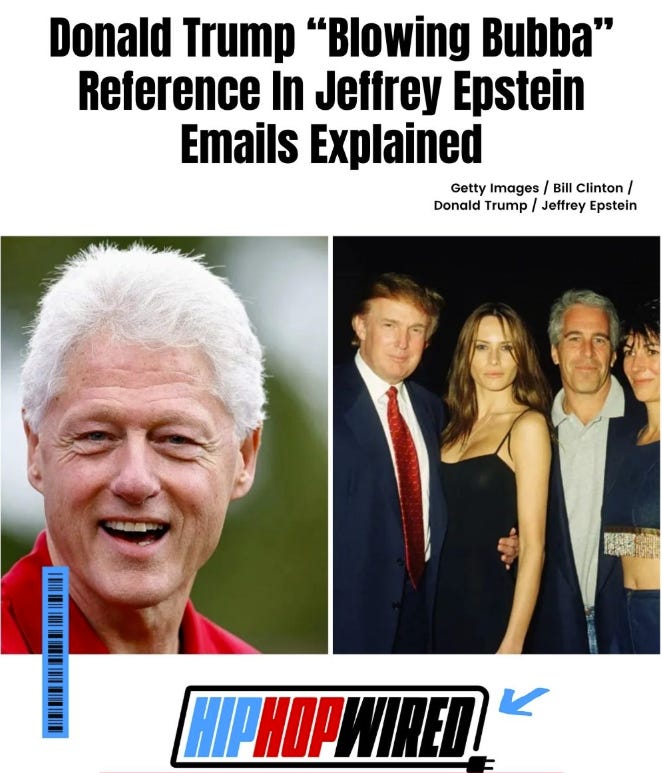
As you know, the House Oversight Committee has already released materials related to the Epstein investigation that include a crude 2018 email exchange between Jeffrey Epstein and his brother, Mark Epstein. In that exchange, Mark Epstein urged Jeffrey to ask a Trump associate whether Vladimir Putin possessed compromising material involving Donald Trump and an individual referred to as “Bubba.”
The email was described by its author as a private, joking exchange. A spokesperson later claimed that “Bubba” referred to a private individual and not to former President Clinton. Fair enough. No allegation was proven, and none should be inferred.
But the email is now part of the public record because Congress placed it there.
Once that happened, something important changed.
If the Oversight Committee decides to haul Bill Clinton before it, not to establish new facts but to publicly embarrass him, it cannot reasonably expect the spotlight to remain one-directional. A witness who has spent decades being called “Bubba” is entitled to answer a very simple clarifying question:
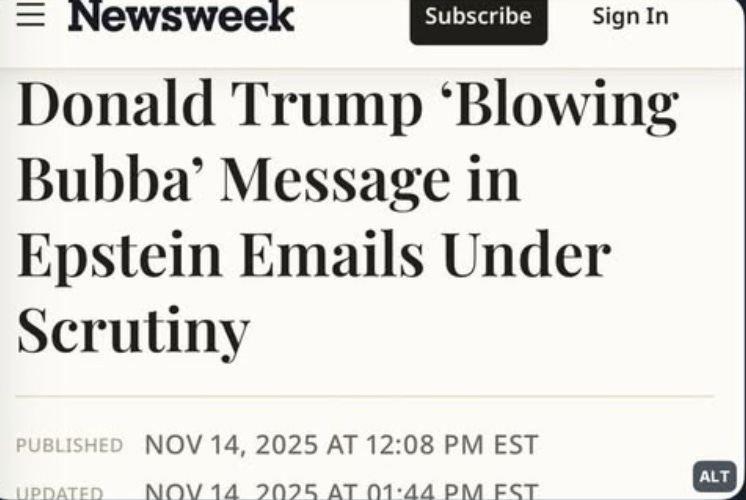
Are you the “Bubba” referenced in the email Congress itself released?
That question does not allege misconduct. It does not assert truth. It merely seeks to clarify whether a nickname long associated with the witness refers to him or to someone else.
And once that question is asked, the committee has a problem.
Because if the answer is no, then Congress has been circulating salacious material about an unidentified private individual. And if the answer is yes, then the focus of embarrassment instantly shifts from the Clintons to the Trumps, regardless of whether the underlying claim is nonsense.
That is not a threat. It is a structural reality of how hearings work once rumor replaces relevance.
This is why congressional oversight traditionally avoids becoming a venue for humiliation. Once the committee abandons that restraint, it loses control of where the inquiry leads and who ends up looking foolish.
As Maryland’s representative on the committee, you are in a unique position to remind your chairman of a basic principle: subpoenas are not props, witnesses are not punchlines, and embarrassment cuts both ways.
Sometimes the wisest course is not to escalate, but to stop before everyone involved regrets it.
Respectfully,
Barry O’Connell
Maryland


