

The Annapolis Power Shift: Who’s Winning, Who’s Losing, and the New Rules of Maryland Labor
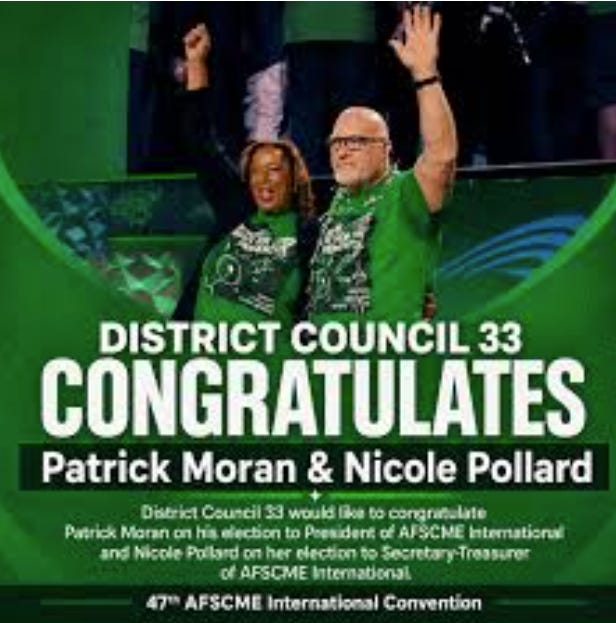
Patrick Moran’s recent election as International President of AFSCME isn't just a personal career milestone—it is a signal flare for where political power is moving in Maryland.
For years, standard political reporting framed Maryland labor as a monolithic block: strong, public-sector-heavy, and aligned with State House leadership. But if you look under the hood of the Moore administration, the reality is far more dynamic. Labor in Maryland isn't rising or falling as a single unit. It is splitting into two distinct speed lanes:
The Expansion Zone: Statutory gains have fueled unprecedented growth in white-collar public sectors, state middle management, public defenders, and cultural institutions like county library systems and major art museums.
The Friction Zone: Private-sector logistics, traditional manufacturing, and university systems face structural budget drag, employer pushback, and stagnant density.
Understanding who is winning and who is losing is only half the story. The real story for insiders is how labor power is being exercised inside State Circle.
🛑 PAYWALL BREAK FOR SUBSCRIBERS 🛑
Subscribe to The Maryland Wire to read the rest of this analysis, including how state government affairs teams are leveraging labor fractures to pass—or kill—legislation in Annapolis.
Paid Tier Content
The Death of the Old Annapolis Playbook
The traditional model of statecraft was linear: interest groups lobbied the Governor’s legislative team, executive agencies negotiated separately with public unions, and corporate affairs teams fought their battles in General Assembly committee rooms.
That three-tier system is dead. Today, top Annapolis government affairs directors and labor chiefs frequently bypass intermediate agency bureaucracies entirely. Instead, they form direct, bilateral coalitions to pre-package deals for the Moore administration and legislative leaders before bills ever see a committee hearing.
When a major policy or development project aligns a public-sector union with state business interests, it creates an almost unstoppable force in Senate Finance or House Economic Matters. But that dynamic works both ways.
The Counter-Play: How Lobbyists Split Labor to Kill Bills
For corporate strategists and government affairs teams looking to defeat unfavorable legislation, the objective is rarely to fight labor head-on. The highest-yield strategy in Annapolis opposition politics is driving wedges into the labor coalition itself.
Organized labor in Maryland is composed of distinct factions whose interests routinely clash:
OPPOSITION STRATEGY
┌─────────────────────────┴─────────────────────────┐
▼ ▼
BUILDING TRADES & CONSTRUCTION PUBLIC SECTOR UNIONS
(Building Trades Councils) (AFSCME, MSEA)
• Focus: Job volume, capital projects, • Focus: Agency budgets, staffing,
procurement, economic development workplace rules, benefit steps
└─────────────────────────┬─────────────────────────┘
▼
LEGISLATIVE FRICTION
(Coalition fractures; bill stalls in committee)
Peeling Off the Trades: When complex regulatory, environmental, or procurement mandates threaten to slow down major projects, savvy state lobbyists do not go to the media; they go directly to the Building Trades. Showing that a bill delays construction or reduces man-hours turns building trade unions into active opposition, crippling the bill's momentum.
Exposing Operational Costs: When proposed legislation creates unfunded mandates that strain state agency operations, public-sector unions like AFSCME will fight the administrative burden to protect their members' working conditions, even if the bill is sponsored by friendly allies.
Why This Matters for the Moore Administration
The Moore administration relies heavily on maintaining a unified coalition. When a government affairs team successfully highlights a policy rift—forcing the executive branch to choose between building trades and public-sector workers—the administration will almost always pull back to avoid picking a winner between key political allies.
In modern Annapolis, stopping a bill doesn't require winning a floor debate. It requires knowing precisely where the fault lines lie between State Circle, the bargaining table, and the union hall—and placing the wedge right in the middle.