


Prince George’s County Is One Signature Away From an Anti‑Business Disaster
Lobbyist Bruce Bereano says he’s never seen a more unprofessional hearing — and warns that a lawsuit is already inevitable if the bill becomes law.
By Barry O’Connell | Maryland Wire
Prince George’s County is now standing at a crossroads — and the next move belongs entirely to County Executive Aisha Braveboy. She can either veto a bill that business leaders, immigrant shop owners, and veteran advocates call arbitrary, discriminatory, and legally indefensible… or she can sign it and trigger what lobbyist Bruce Bereano says will be an immediate, multi‑group court challenge.
And according to Bereano — who has testified in Annapolis, D.C., and counties across Maryland for more than fifty years — he has never seen a government meeting as unprofessional, hostile, or disrespectful as the Prince George’s County Council hearing where this bill was pushed through.
A $5,000 Fee Targeting Only Certain Businesses — and Getting More Arbitrary by the Day
The bill imposes a $5,000 annual “use and occupancy” fee on a narrow list of businesses: liquor stores, tobacco retailers, gun shops, and self‑storage facilities. The fee increases every year.
But the council then amended the bill to say:
- Gas stations must pay the fee
- Gas stations with convenience stores do not have to pay the fee
That single carve‑out, Bereano argues, is the definition of arbitrary government action — and the kind of inconsistency that courts strike down.
He told me plainly: “This amendment alone makes the bill arbitrary and capricious. It will not survive judicial review.”
He also said there is already a coordinated push underway to convince the County Executive not to subject residents and businesses to a bill that is, in his words, “a lawsuit waiting to happen.” Bereano represents one group of affected businesses, but he said all the groups are now preparing to come together if the bill becomes law.
“I Have Never Seen a More Unprofessional Meeting”
Bereano has been testifying for half a century. He has seen contentious hearings, controversial bills, and political theater in every corner of Maryland.
But what he witnessed in Prince George’s County this week, he said, was “the most unprofessional, rude, and embarrassing meeting” of his career.
He described:
- Witnesses being mocked
- Immigrant business owners being ridiculed for not knowing the name of the mayor of their town
- Hard‑working residents — people juggling jobs, families, church, and survival in a tough economy — being treated with open contempt
These were not political operatives or paid advocates. These were small business owners, many of them immigrants, many of them with limited English, who came to testify about a fee that could put them out of business.

Bereano said he had never seen a council chair treat citizens the way Chair Krystal “Girl Boss” Oriadha did that night.
A Bill That Sends a Dangerous Message: Prince George’s County Is Not Safe for Business
Bereano stressed that this is not just a bad bill — it is a bill that sends a county‑wide signal:
> If the Council can impose onerous fees on a whim, no business is safe.
He warned that the bill will make the County Executive’s job of recruiting new businesses “far more difficult,” because companies will see Prince George’s County as a place where:
- Rules change without warning
- Certain industries are singled out
- Fees are imposed without evidence
- Political hostility replaces professionalism
And Bereano’s critique is not coming from an outsider. He reminded me that:
- His son, daughter‑in‑law, and grandchildren live in Prince George’s County
- He lived in the county for many years
- He loves the county deeply and hates to see what is happening to it
This is not a man rooting against the county. This is a man pleading with its leaders not to damage it.
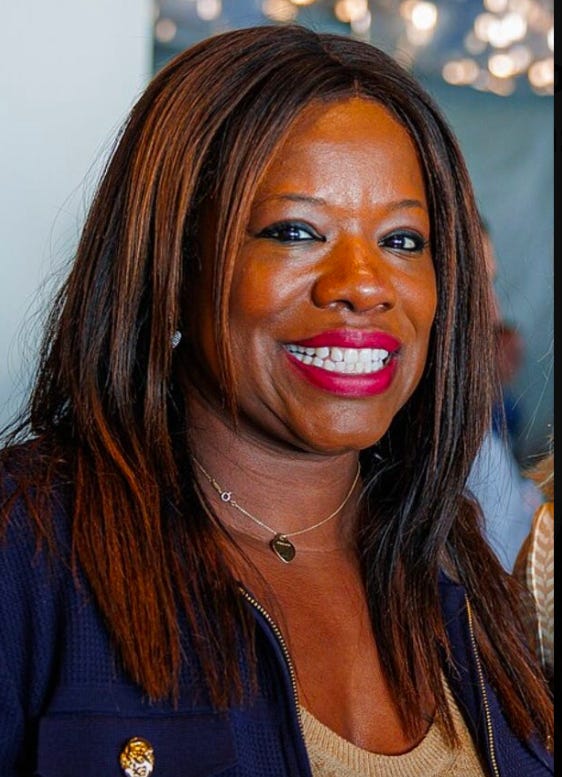
The Decision Now Belongs to County Executive Aisha Braveboy
The council passed the bill 9–2.
The public hearing was chaotic.
The business community is alarmed.
And the legal community is preparing for battle.
Now the question is simple:
Will the County Executive sign a bill that is already being described as unconstitutional, discriminatory, and anti‑business?
Or will she veto it and send a clear message that:
- Prince George’s County is open for business
- The county welcomes immigrant entrepreneurs
- The government will not target lawful businesses without evidence
- Professionalism and respect still matter in public hearings
Bereano was unequivocal:
If the bill becomes law, the lawsuits begin immediately.
The County Executive can prevent that — or she can own it.
The next move is hers.